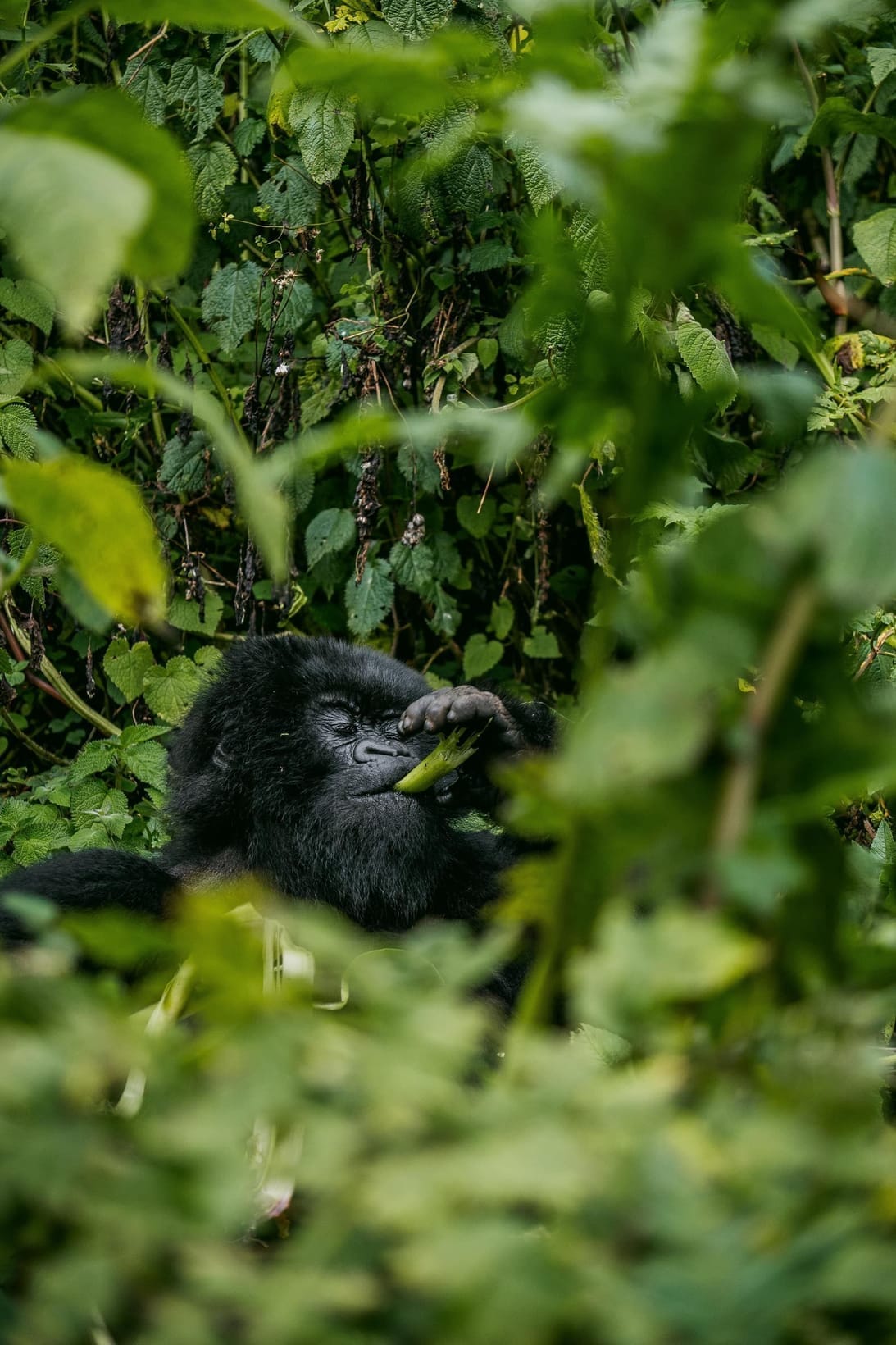
Quick answer: Choose Uganda for value and a longer, more varied safari — permits are $800 versus Rwanda’s $1,500, and there is far more to combine. Choose Rwanda for a shorter, more polished trip: Kigali is two hours from the park, against a full day’s drive to Bwindi. Same species either way.
It’s the question almost every gorilla traveller wrestles with: Uganda or Rwanda? The gorillas themselves are the same species — the same misty forests even span the border between the two countries — but the trips built around them are genuinely different. One is the value-and-adventure option with far more to see beyond the gorillas; the other is the shorter, more polished, premium-priced one.
As a Uganda-based operator we’ll be upfront about our home turf, but the honest answer really does depend on you — your budget, your time, your fitness, and what else you want from the trip. Here’s a straight comparison to help you decide. (If DR Congo is also in the mix, our three-way Uganda vs Rwanda vs DR Congo comparison covers all three.)
Uganda vs Rwanda Gorilla Trekking at a Glance
- Permit cost: Uganda ~USD $800; Rwanda USD $1,500
- Access: Rwanda is closer — a few hours’ drive from Kigali; Uganda’s Bwindi is a long drive or short flight from Entebbe
- Terrain: Uganda’s Bwindi is dense, steep rainforest; Rwanda’s volcano slopes are more open
- Gorilla families & permits: Uganda has more of both, and more availability
- Wider safari: Uganda offers far more to add on — chimps, big game, the Nile; Rwanda is more compact
- Style & budget: Uganda spans budget to luxury; Rwanda leans premium/luxury
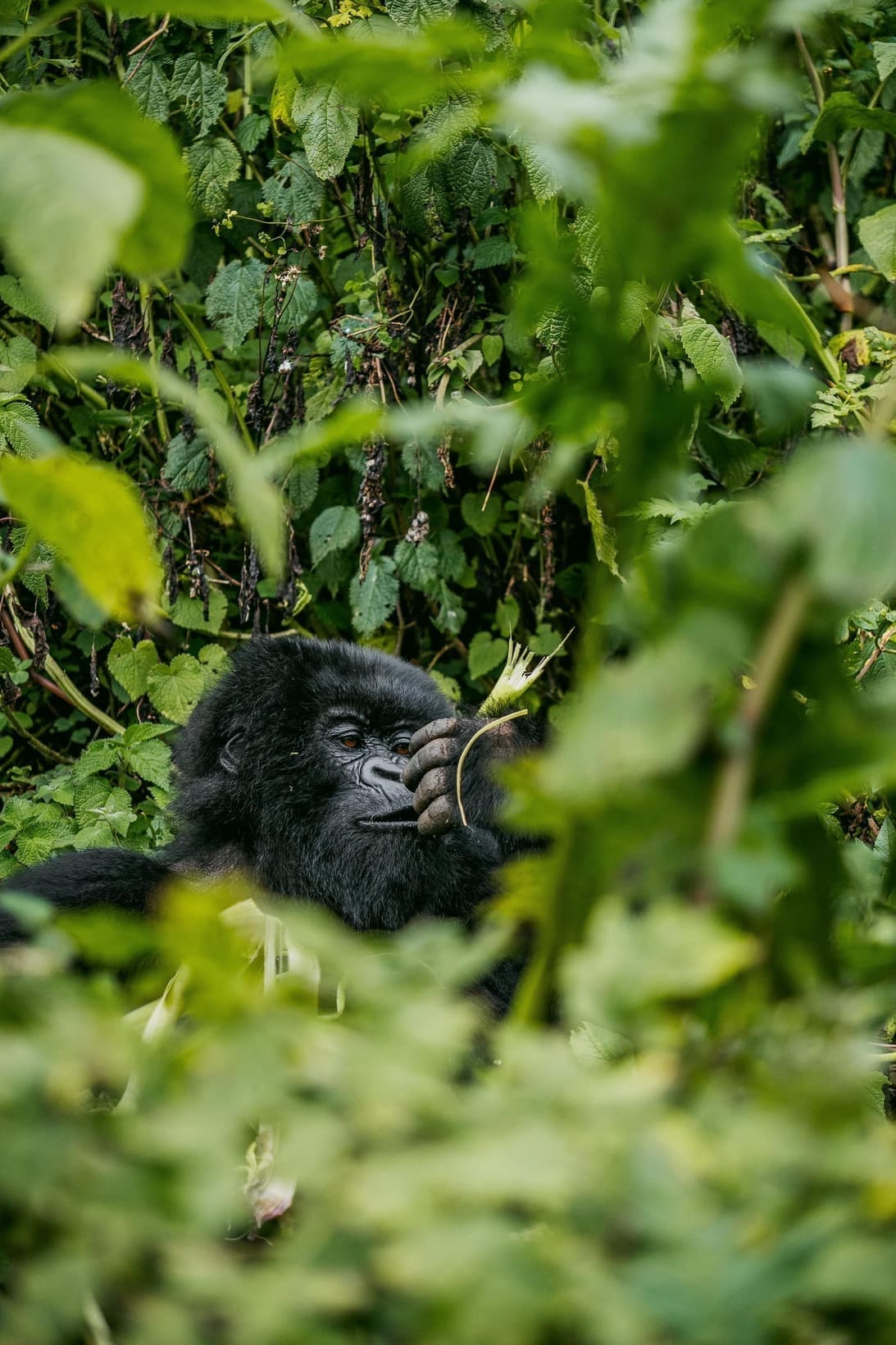 Both countries track the same Virunga population — the gorillas don't recognise the border
Permit Cost: The Single Biggest Difference
Money is where the two countries diverge most sharply. A Uganda gorilla permit costs around USD $800 per person for foreign non-residents, and Uganda even discounts it to about $600 in the low-season months (April, May, and November). Rwanda’s permit is a flat USD $1,500 per person, with no seasonal discount.
That’s a $700 difference per person on the permit alone — multiplied across a family or a group, it becomes the deciding factor for many travellers. Both permits buy you the same core experience: park entry, expert guides and trackers, armed ranger escort, and one strictly protected hour with a habituated gorilla family. [VERIFY / KEEP CURRENT: permit prices are government-set and change periodically — Uganda $800 (peak) / $600 (low season) and Rwanda $1,500 were current at time of writing. Congo/DRC is a cheaper third option (~$400) if you ever want to mention it.]
Rule of thumb: choose Uganda if value matters and you want more safari for your money; choose Rwanda if you’re short on time and prioritise easy access and top-end lodges.
Getting There & Travel Time
This is Rwanda’s strongest card. Its gorillas live in Volcanoes National Park, only a few hours’ drive from Kigali International Airport — you can land, sleep, trek, and be back in the capital inside a tight few days. It’s ideal if your holiday is short or you’re adding gorillas onto another trip.
Uganda’s prime gorilla forest, Bwindi Impenetrable Forest, sits in the far south-west — a scenic but long drive (most of a day) from Entebbe, or a short domestic flight to a nearby airstrip. The upside of that distance is everything you pass and can add along the way, which is the heart of Uganda’s appeal.
The Trek Itself: Terrain & Difficulty
Both treks are unpredictable — you go where the gorillas are, and that can mean 30 minutes or the better part of a day on foot. But the character of the walk differs. Bwindi is true tangled rainforest: steep, muddy, dense, and humid, with the terrain that gave the forest its “impenetrable” name. Rwanda’s trekking is on the more open slopes of the Virunga volcanoes — often higher in altitude, but with somewhat clearer paths.
Neither is a gentle stroll, and fitness helps in both. If you’re weighing up how hard it will be and how to prepare, our gorilla trekking tips cover fitness, porters, kit, and what the day actually involves.
The Wider Trip: What Else You Can See
For many travellers this, not the permit price, is what tips the balance — and it strongly favours Uganda. A gorilla trek in Uganda slots naturally into a country bursting with other wildlife: chimpanzee tracking in Kibale, tree-climbing lions and a Kazinga Channel boat safari in Queen Elizabeth, the thundering Nile at Murchison Falls, and some of the best birding in Africa. You can genuinely build a two-week odyssey around a single gorilla permit.
Rwanda is more compact and more curated — beautiful, easy, and polished, but with less big-game variety to string together. If you want the gorillas to be the opening act of a much bigger show, Uganda gives you more stage. Our Uganda gorilla & wildlife safari is designed to do exactly that, and a gorilla & primates safari pairs the gorillas with chimpanzees in one trip.
Lodges & Budget
Rwanda has deliberately positioned itself at the luxury end, with a cluster of world-class lodges around Volcanoes National Park and prices to match. Uganda spans the full range — from community-run budget lodges to genuinely high-end properties on the edge of Bwindi — so you can trek the same gorillas whether you’re travelling lean or celebrating something special.
So Which Should You Choose?
Choose Rwanda if you’re short on time, want the easiest possible access from the airport, are set on a luxury lodge, and don’t mind paying a premium for convenience and polish.
Choose Uganda if you want better value on the permit, a wilder and more adventurous trek, more gorilla families and permit availability, and — above all — the chance to combine gorillas with chimps, big game, and the rest of an extraordinary safari country. For most first-time visitors who want depth as well as gorillas, Uganda is our honest recommendation.
Can You Do Both?
You can. The two countries border each other, and some travellers trek in both to see gorillas in two very different settings — or combine a Uganda safari with a short Rwanda add-on. It’s the most expensive route (two permits), but for a serious gorilla enthusiast it’s a remarkable trip.
Uganda vs Rwanda Gorilla Trekking FAQ
Is gorilla trekking cheaper in Uganda or Rwanda? Uganda — the permit is about $800 (or $600 in low season) versus Rwanda's flat $1,500, and lodges span more budgets.
Are the gorillas different? No — both countries protect mountain gorillas of the same species, in forests that actually share a border. The difference is the trip, not the animal.
Which has the easier trek? Rwanda's volcano slopes are generally more open; Uganda's Bwindi is denser and steeper. Both depend on where the gorillas move that day.
Which is better for a longer safari? Uganda, comfortably — there is far more to combine, from chimps to big game to the Nile.
How much does it cost to visit gorillas in Rwanda? The permit is $1,500 per person, a flat rate with no seasonal discount, set by the Rwanda Development Board. Uganda's is $800 in high season and $600 in April, May and November. Rwanda's ground costs — lodging and transfers — also run higher, so the total gap on a comparable trip is wider than the permit difference alone.
How long is the gorilla trek in Rwanda? Typically two to four hours of walking each way, though it can be under an hour or most of the day depending on where the family nested. Time with the gorillas is one hour, the same as Uganda. Rwanda's treks are often described as shorter, but that is mainly the drive: Volcanoes National Park is about two hours from Kigali, against most of a day from Entebbe to Bwindi. The walking itself is comparable, and the Virunga slopes are steep.
Plan Your Gorilla Trek
Still torn? That’s exactly the kind of decision our planners help with every day — matching the country, season, permit, and lodges to the trip you actually want. Whether it’s a focused short gorilla-tracking trip or a longer gorilla & wildlife safari, tell us what you have in mind and we’ll build it around you. It may also help to read up on how many mountain gorillas are left and why your permit fee matters so much.