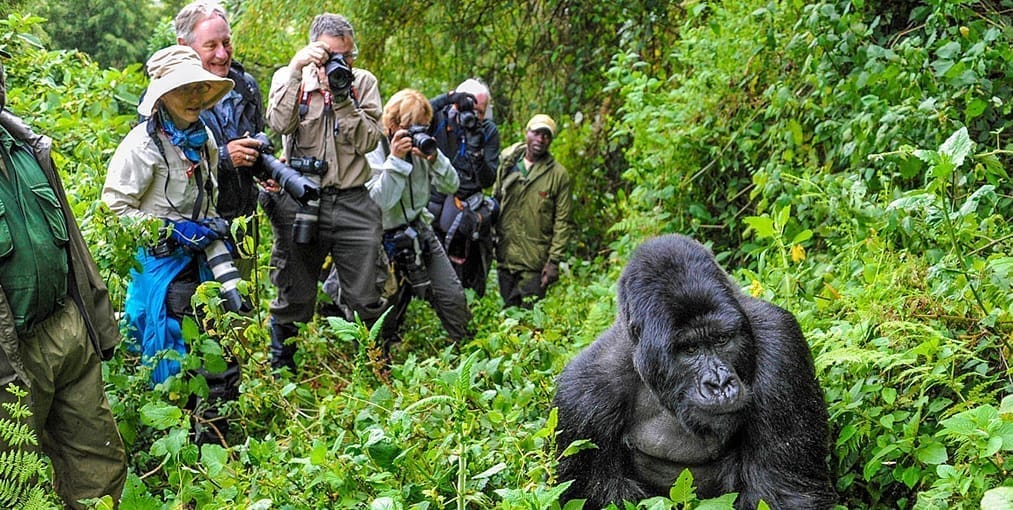
There are fewer than 1,100 mountain gorillas left on earth. Almost all of them live in the Virunga Massif — a chain of volcanoes straddling Uganda, Rwanda, and the DRC — and in Uganda's Bwindi Impenetrable Forest. Seeing them in the wild is one of the most quietly overwhelming things a person can do.
But it takes planning. This guide covers everything you need to know before you book your permit — where to go, when to trek, what it costs, how to prepare, and what that hour with a gorilla family is actually like. For the broader picture — every country, cost, and decision in one place — see gorilla trekking in Africa: the complete guide.
Where to Go: Bwindi vs. Mgahinga
Uganda has two gorilla trekking destinations. Bwindi Impenetrable Forest is the main event — it holds about half the world's mountain gorilla population across four sectors (Buhoma, Ruhija, Nkuringo, and Rushaga), with more than a dozen habituated families between them. Mgahinga Gorilla National Park is smaller, hosts a single habituated family, and sits on the Ugandan side of the Virungas.
For most visitors, Bwindi is the right answer. More permit availability, more gorilla families to visit, and more accommodation options at every price point. Mgahinga is a lovely, quieter alternative — but its lone family occasionally wanders across the border into Rwanda or the DRC, so sightings are slightly less certain.
Uganda vs. Rwanda: Where Should You Trek?
This is the question we get asked most. Both offer world-class gorilla trekking — the deciding factors are budget, time, and the kind of trip you want.
- Cost: a Uganda permit is USD $800; Rwanda charges USD $1,500 for the same one-hour experience. That gap alone sways many travellers toward Uganda.
- Access: Rwanda's Volcanoes National Park is about a 2.5-hour drive from Kigali airport, making it faster for a short trip. Bwindi is more remote — a scenic domestic flight or a long drive from Entebbe.
- The trek itself: Bwindi is dense, steep rainforest; Rwanda's terrain is more open volcanic slopes, often with shorter hikes. Neither is "easy," but Rwanda can be gentler.
- The bigger picture: Uganda pairs naturally with chimpanzee tracking, the Big Five in Queen Elizabeth National Park, and the source of the Nile — so it makes for a richer multi-stop safari.
Our take: if value and a full safari matter most, choose Uganda. If you are short on time and want the quickest possible gorilla encounter, our Rwanda Gorilla Trekking Safari is hard to beat. And if you genuinely cannot decide, you don't have to — our Uganda & Rwanda Double Gorilla Safari treks a family in each country on one cross-border trip.
When to Go: The Best Time to Trek
You can trek gorillas year-round — this is rainforest, so it can rain in any month. That said, the dry seasons make for firmer trails and easier hiking:
- June to September — the long dry season and the most popular window. Book permits well ahead.
- December to February — a second, shorter dry spell that is quieter than the mid-year peak.
The wetter months (March–May and October–November) mean muddier, tougher treks — but also lush scenery, fewer visitors, and the best chance of last-minute permits. For a full month-by-month view, see our guide to the best time to visit Uganda for a safari.
Getting Your Permit
Each gorilla family is visited by a maximum of eight people per day. That strict cap is what keeps the gorillas healthy — and what makes permits both precious and expensive.
- Uganda permit cost: USD $800 per person (as of 2026)
- Booking: Through Uganda Wildlife Authority (UWA) or a licensed operator like us
- How far in advance: 3–6 months for peak season (June–September, December–January); shoulder seasons have more flexibility
- Minimum age: 15 years old — this is firmly enforced, so gorilla trekking is not an option for younger children
Permits are non-refundable and non-transferable. Don't wait until you have your flights confirmed — book the permit first, then build your trip around it.
The Gorilla Habituation Experience
There is a rare, deeper alternative to the standard trek. In Bwindi's Rushaga sector, the Gorilla Habituation Experience lets a tiny number of visitors spend up to four hours with a semi-habituated family, alongside the researchers and trackers who are gradually accustoming them to human presence.
It costs USD $1,800 and only eight permits are issued each day, so it books out early. If one hour does not feel like enough — and for many people it does not — this is the trek to ask us about. Our gorilla habituation experience page covers the permit, the rules, and how the day actually runs.
Getting to Bwindi
Bwindi sits in Uganda's far southwest, and getting there is part of the adventure. You have two options:
- Fly: a scheduled or charter flight from Entebbe (or Kajjansi) to the Kihihi or Kisoro airstrip takes roughly 1–1.5 hours, followed by a short transfer to your sector. This is the fastest, most comfortable route.
- Drive: the road journey from Entebbe or Kampala is 8–9 hours, usually broken up over a couple of days with stops at Lake Mburo or Queen Elizabeth National Park — turning the transfer into a proper safari.
One important detail: permits are tied to a specific sector, so your accommodation needs to match. We handle that alignment for you when we build your itinerary.
What the Trek Is Actually Like
Treks start at 7:30 AM with a briefing at the park gate. From there, rangers and a tracker lead your group into the forest. The trek itself can be anywhere from 30 minutes to 8 hours depending on where the gorillas have moved overnight.
The terrain is real jungle — steep, muddy, and dense. Altitude in Bwindi ranges from 1,160 to 2,607 metres. Most people are fine, but it's not a gentle stroll.
How to Prepare Physically
- Walk uphill regularly in the 4–6 weeks before your trip
- If you're not a regular hiker, consider hiring a porter — they carry your bag, help you up steep sections, and the fees go directly into the local community
- Altitude acclimatisation matters: spend a night or two in a mid-altitude area before trekking
For broader trip readiness — vaccinations, insurance, money, and more — read our how to prepare for a safari guide.
What to Wear and Bring
- Long-sleeved shirt and long trousers (protects against nettles and insects)
- Waterproof hiking boots — non-negotiable
- Garden gloves (the stinging nettles are genuine)
- Rain jacket
- 2 litres of water minimum
- Camera without flash — flash is not permitted near gorillas
- A small snack
Our complete safari packing list covers the rest of your bag for the wider trip.
The One-Hour Rule & Gorilla Etiquette
Once rangers locate the family, you get exactly one hour with the gorillas. No more. This is strictly enforced to protect their health and minimise stress. In that hour, a few rules keep both you and the gorillas safe:
- Stay at least 10 metres away (though the gorillas often ignore this themselves)
- If a silverback approaches or charges, stand still, crouch slightly, and look away — never run
- Keep your voice low and movements slow and calm
- No flash photography, no eating, drinking, or smoking near the family
- Follow every instruction from your ranger without hesitation
Most people say the hour passes in about five minutes. And then they spend the rest of the trip thinking about it.
Health Requirements
If you are sick — cold, flu, stomach bug — you will be asked not to trek that day. Gorillas are highly susceptible to human respiratory illnesses. This is taken seriously. Your permit may be deferred if you inform UWA in advance; it will not be refunded.
Masks are worn within 10 metres of gorillas as a precaution. Your guides will have them for you. You will also need a yellow fever certificate and the right visa to enter Uganda.
Where to Stay
Accommodation near Bwindi runs the full range, and because permits are sector-specific, your lodge should sit close to the sector on your permit:
- Luxury: intimate forest lodges with private decks, guiding, and full-board dining right on the park edge
- Mid-range: comfortable lodges and tented camps with en-suite rooms and reliable hot water
- Budget: simple, warm community-run guesthouses that put money straight back into the villages around the park
Is It Worth the Cost?
That USD $800 goes directly to UWA and funds anti-poaching patrols, veterinary care for the gorillas, and community projects around the park. The gorilla population has been growing steadily since conservation efforts began — a rare piece of good news in African wildlife.
Every person we have ever taken gorilla trekking has said the same thing afterward: it was worth every dollar.
Make It Part of a Bigger Safari
Gorilla trekking is unforgettable on its own, but it pairs beautifully with the rest of Uganda — chimpanzee tracking in Kibale, tree-climbing lions and boat safaris in Queen Elizabeth National Park, and the thundering Nile at Murchison Falls. Browse our safari itineraries for ideas, or read answers to common questions on our FAQ page.
When you are ready, get in touch and we will secure your permit and build the trip around it.
Gorilla Trekking Tips FAQ
How fit do I need to be for gorilla trekking? Reasonably fit. A trek can be anywhere from one to six hours of steep, muddy hiking each way at altitude, so some hill or stamina training in the months beforehand helps. Porters are available to carry your bag and give a hand on tough sections.
What should I wear for gorilla trekking? Long sleeves and trousers in neutral colours, sturdy waterproof boots with ankle support, gaiters, gardening gloves for grabbing vegetation, and a waterproof jacket. Tuck your trousers into your socks to keep biting ants out.
How do I get a gorilla permit? Permits are issued by the Uganda Wildlife Authority and sell out in peak season, so book months ahead. We secure and confirm your permit and date as part of the itinerary.
How close do you get to the gorillas? Visitors are asked to stay at least 10 metres from the gorillas, though the gorillas don't always follow the rule and may pass closer. Once the family is found, you get exactly one hour with them.
Is gorilla trekking worth the cost? For most travellers, yes. An hour a few metres from a wild mountain gorilla family is a genuine once-in-a-lifetime encounter, and the permit fee directly funds the conservation that keeps the gorillas alive.