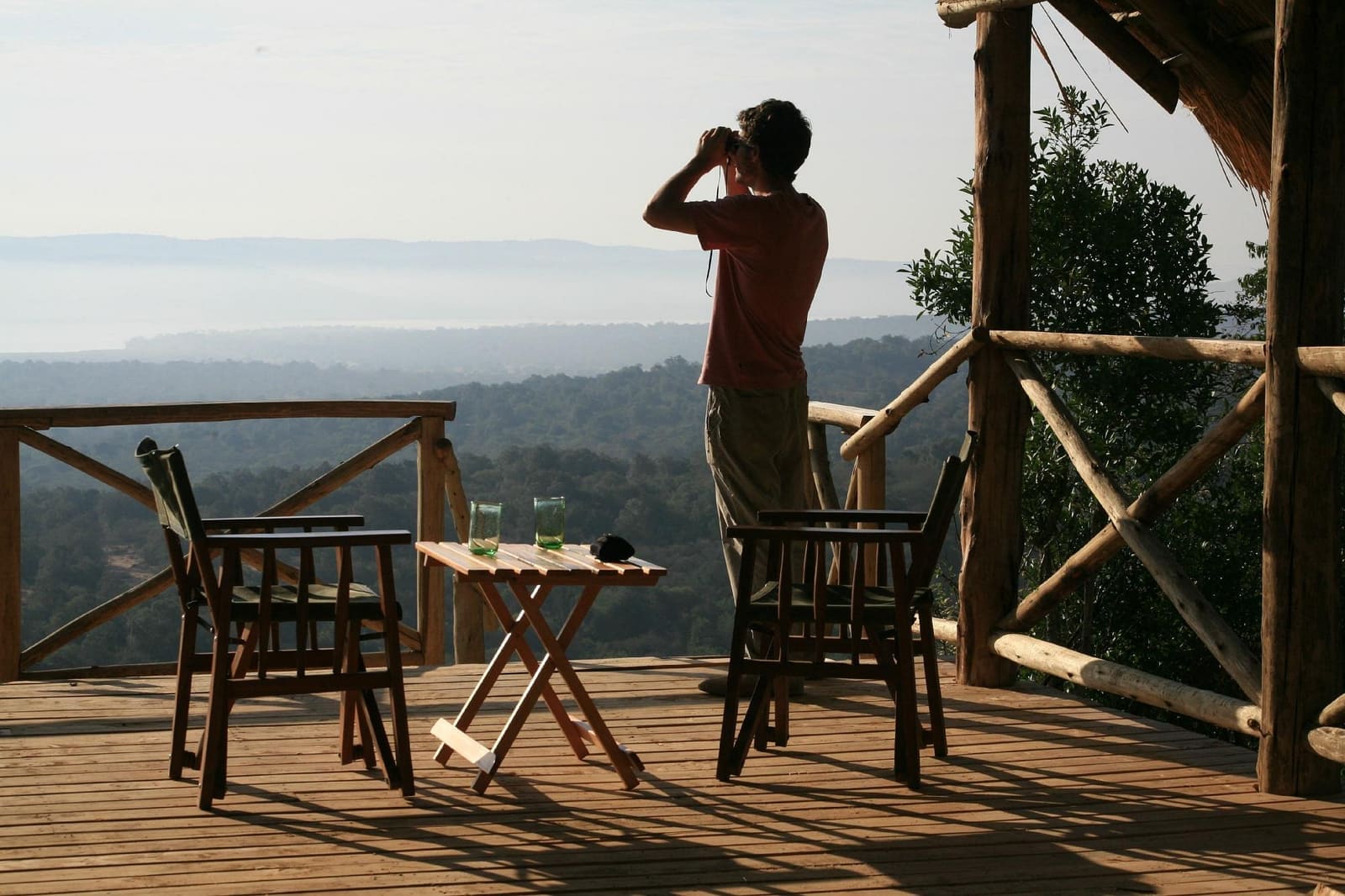
Lake Mburo is easy to underestimate. It’s Uganda’s smallest savanna park, it sits conveniently on the main road between Kampala and the gorillas, and it’s often treated as a one-night stopover. That undersells it: Mburo has wildlife found nowhere else in the country, and it’s one of the only Ugandan parks where you can safely walk, cycle, and ride a horse among the animals.
Here’s your complete guide to Lake Mburo — what makes it different, the activities that set it apart, and how to fit it into a Uganda itinerary.
Lake Mburo at a Glance
Lake Mburo National Park covers roughly 370 square kilometres of western Uganda, a mosaic of acacia woodland, rolling grassland, rocky outcrops, and open water — five lakes and a broader wetland system thread through the park, with wetlands covering around a fifth of its area. It’s Uganda’s smallest savanna park by some distance, and one of its most conveniently located, roughly midway between Kampala and the gorillas of Bwindi.
Image: Zebra grazing beside the lake at Lake Mburo, acacia trees on the horizonThe Only Park With Impala and Zebra Together
Lake Mburo is the only national park in Uganda with impala (the antelope that gave Kampala its name — see impala facts) and one of the very few with plains zebra, so seeing the two together on the same open grassland is a genuinely Mburo-only sight. It’s also the best place in the country to see the giant eland, the world’s largest antelope, along with topi and abundant birdlife — over 350 recorded species, drawing serious birders on their own.
Walking, Cycling & Horseback Safaris
Because Lake Mburo has no resident lions, it’s one of the only Ugandan parks where walking safaris, guided cycling, and horseback rides among the wildlife are all offered — a completely different way to experience the bush than from a vehicle window, and a real point of difference from the bigger savanna parks. A two-hour boat cruise on the lake adds hippos, crocodiles, and waterbirds at close range.
Where It Fits in a Uganda Trip
Mburo’s location is its other great strength: it sits right on the main road south-west from Kampala toward Bwindi, making it a natural, scenic overnight break rather than a special detour. Many travellers use it to unwind after a long travel day, or as a gentle warm-up before the physical demands of a gorilla trek.
Best Time to Visit Lake Mburo
Lake Mburo is rewarding year-round, since its wildlife doesn’t depend on seasonal migration. The dry months (June–September and December–February) make walking and cycling activities easiest underfoot; the wetter months bring lush green scenery and excellent birding. See the wider picture in the best time to visit Uganda.
How to Visit Lake Mburo
Lake Mburo is easily reached by road from Kampala, and works best as a stop en route to or from the gorillas rather than a stand-alone trip. You can build it into a Lake Mburo safari, or fold it into a longer gorilla itinerary as the perfect scenic stopover.
Lake Mburo FAQ
What makes Lake Mburo different? It’s the only Ugandan park with impala, one of the few with zebra, and one of the only ones where walking and horseback safaris are offered thanks to the absence of lions.
Is Lake Mburo worth visiting on its own? It’s best used as a scenic stop on the road to or from Bwindi rather than a stand-alone destination, though its activities are genuinely distinctive.
Can you walk among the animals? Yes — guided walking, cycling, and horseback safaris are all available, unusual for a Ugandan savanna park.
How long should I stay? One or two nights is typically enough to enjoy a game drive, the boat cruise, and one of the walking or horseback activities.
Add It to Your Route
Lake Mburo is proof that a small park can still surprise you. Tell us your route and we’ll build it into a Lake Mburo safari or slot it neatly into your journey toward the gorillas.