If you could only choose one Ugandan park to explain the country’s wildlife range in a single visit, Queen Elizabeth would be the answer. Savanna, wetland, crater lakes, and forest gorge sit side by side, and the result is one of the highest mammal counts of any national park in Africa — from tree-climbing lions to hippo-packed channels to forest chimpanzees, all within one park boundary.
Here’s your complete guide to Queen Elizabeth National Park: its landscape, its wildlife, the famous Kazinga Channel boat safari, and how to plan a visit.
Queen Elizabeth at a Glance
Queen Elizabeth National Park covers roughly 1,978 square kilometres of south-western Uganda, straddling the equator between Lake Edward and Lake George. Its landscape is unusually varied for one park — open savanna, papyrus wetlands, at least ten volcanic crater lakes, patches of forest, and the Ishasha sector’s riverine woodland in the far south. More than 95 mammal species have been recorded here, one of the highest totals of any African park.
Image: A boat on the Kazinga Channel with hippos and elephants along the bankThe Kazinga Channel
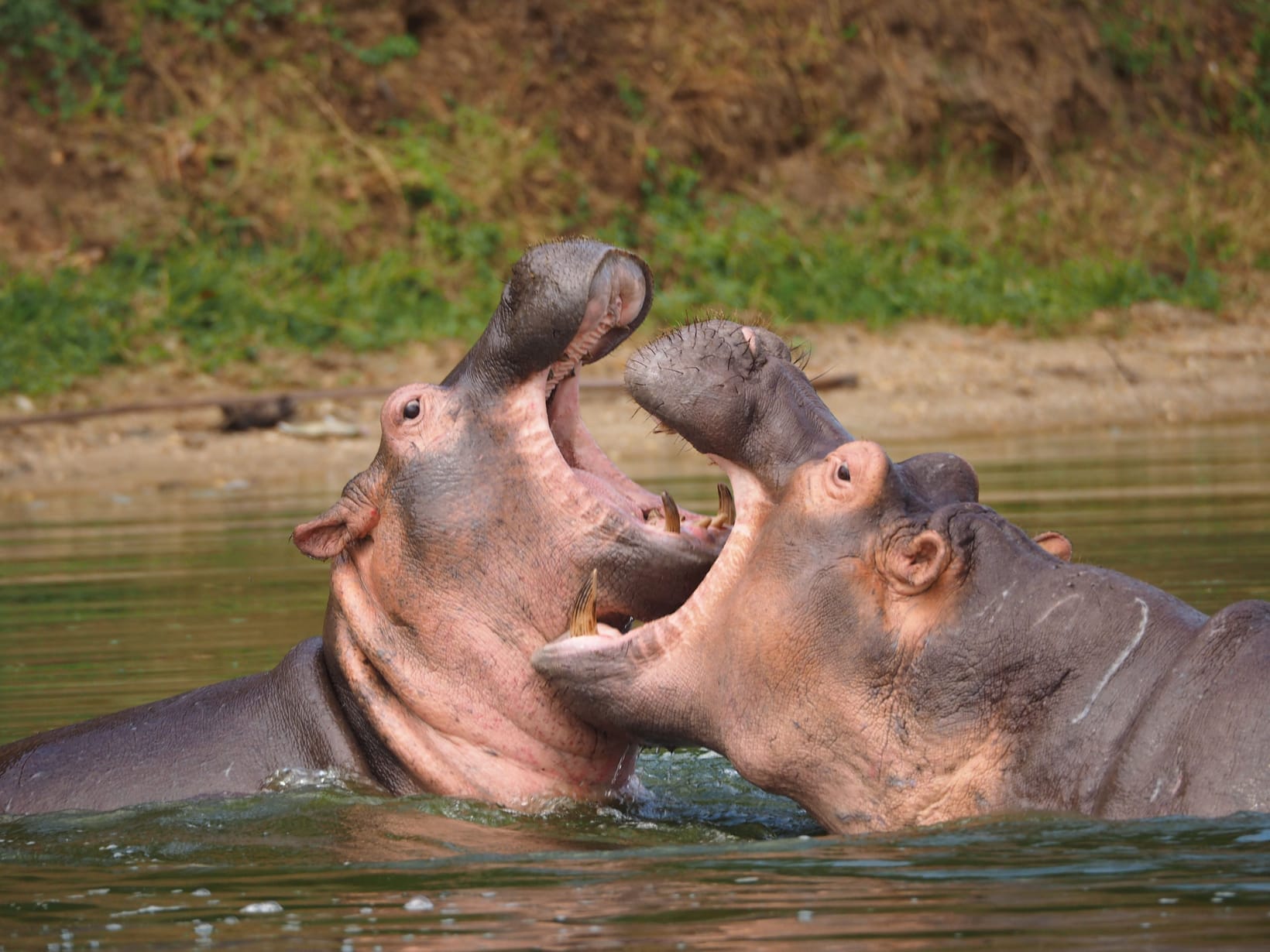
The park’s ecological heart is the Kazinga Channel, a 32-kilometre natural waterway connecting Lake Edward and Lake George. The boat safari along it is one of the best wildlife experiences in Uganda: enormous hippo pods, some of Africa’s densest elephant concentrations coming down to drink, basking crocodiles, and a non-stop parade of waterbirds, often at astonishingly close range.
The Tree-Climbing Lions of Ishasha
In the park’s remote southern sector, lions have learned to climb into the branches of fig trees — one of the strangest and most photographed sights on an East African safari, and rare enough that it’s worth its own deep dive: see the tree-climbing lions of Ishasha.
Kyambura Gorge: Chimps in a Rift Valley
A forested gorge cut into the savanna, Kyambura (nicknamed the “Valley of Apes”) holds a small, habituated chimpanzee community — a surprising and beautiful contrast to the open plains above, and an easy add-on for travellers who want a taste of primate trekking without a special trip to Kibale.
Game Drives & the Kasenyi Plains
The Kasenyi area in the park’s north is the classic game-drive ground — open plains thick with Uganda kob (Uganda’s national antelope), and the lions that hunt them, plus regular sightings of elephant, buffalo, and hyena. Birders will find the crater lakes and wetlands exceptional too, with over 600 species recorded park-wide.
Best Time to Visit Queen Elizabeth
The park rewards a visit year-round, but the dry seasons — roughly December to February and June to September — bring the easiest game viewing as animals concentrate around water sources. See our fuller breakdown in the best time to visit Uganda.
How to Visit Queen Elizabeth
Queen Elizabeth sits centrally in Uganda’s south-west, making it a natural link between Kibale’s chimps and Bwindi’s gorillas. Build it into our Queen Elizabeth express safari or combine it with gorilla trekking on our gorilla & Queen Elizabeth safari.
Queen Elizabeth National Park FAQ
What makes Queen Elizabeth special? Its landscape diversity — savanna, wetland, crater lakes, and forest in one park — supports over 95 mammal species, among the highest of any African park.
Is the Kazinga Channel boat safari worth it? Yes — it’s widely considered one of the best wildlife boat trips in Africa, for hippo and elephant sightings alone.
Can I see the tree-climbing lions here? Yes — in the remote Ishasha sector in the park’s south.
How long should I spend in Queen Elizabeth? Two to three nights allows a game drive, the Kazinga Channel boat safari, and either Ishasha or Kyambura Gorge.
Plan Your Queen Elizabeth Safari
Few parks pack in this much variety. Tell us your dates and we’ll build Queen Elizabeth into a Queen Elizabeth safari or a longer journey through Uganda’s south-west.