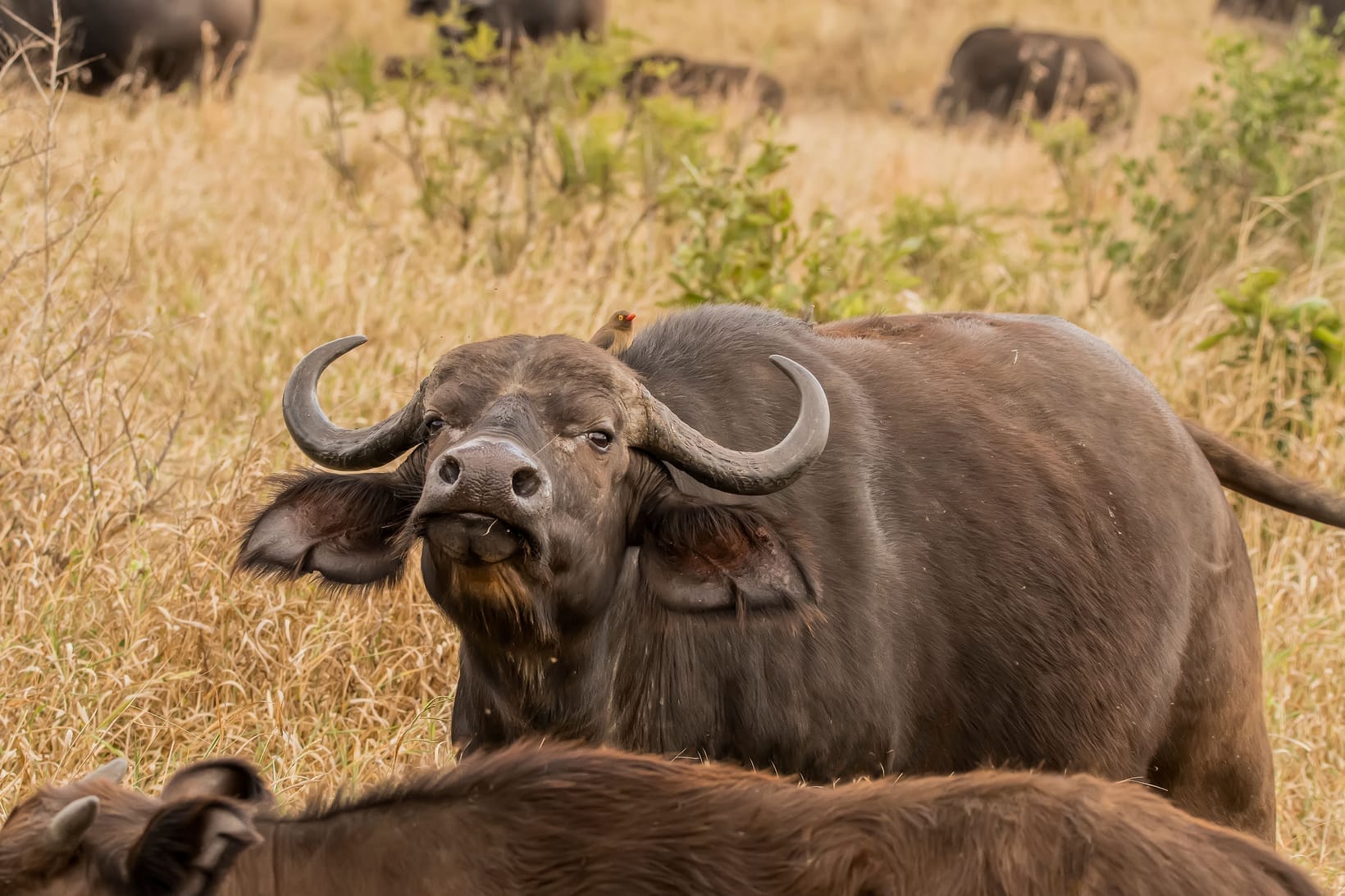
Of the Big Five, the African buffalo is the one experienced guides treat with the most caution — not the lion, not the elephant. Bulky, short-tempered, and unpredictable, it’s earned the nickname “Black Death” among old hunters, and it’s a genuinely common sight on a Uganda game drive.
Here are the facts behind the African buffalo — why it has such a fearsome reputation, how it lives, and where to see it in Uganda.
African Buffalo Facts at a Glance
- The most dangerous of the Big Five: responsible for more hunter and guide injuries than lion, leopard, or elephant
- Massive herds: from a few dozen to well over a thousand animals
- Fused horns: males develop a hard “boss” where the horns meet across the forehead
- “Dagga boys”: old bull buffalo that leave the herd and are considered the most dangerous of all
- Common across Uganda’s savanna parks
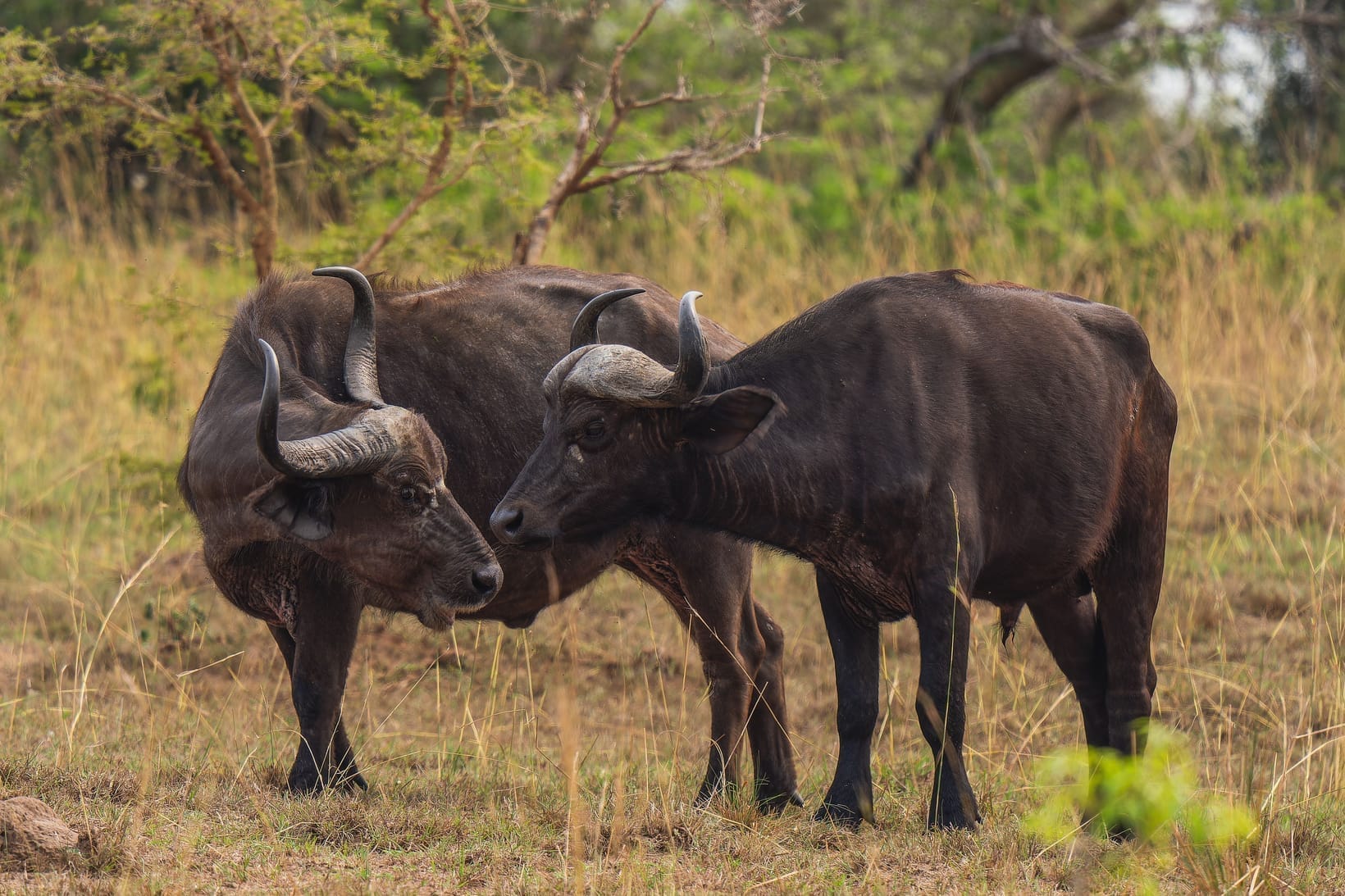 Old bulls that leave the herd — dagga boys — are the most dangerous
Why Buffalo Are the Most Feared of the Big Five
The “Big Five” label originally came from hunters ranking which animals were most dangerous to pursue on foot — and the buffalo consistently topped the list. Unlike a lion, which usually gives warning before charging, a buffalo can turn and attack with almost no notice, and it does so with real intent, using its weight and horns to gore and trample rather than simply flee. Herd members will also come to the defence of a wounded or threatened animal, turning a single confrontation into a genuinely dangerous group response.
The Horns and the “Boss”
Both sexes carry horns, but a mature bull’s are far more formidable — curving out and down before hooking sharply upward, spanning close to a metre across. In older males the base of the horns fuses into a thick, bony “boss” across the forehead, an almost helmet-like shield that makes a frontal charge even harder to survive.
Herd Life
African buffalo are intensely social, gathering in herds that can range from a few dozen animals to well over a thousand where grazing is good — among the largest herds of any African mammal. Old bulls, known as “dagga boys” (from the local word for the mud they wallow in), eventually leave the main herd to live in small bachelor groups or alone. Cut off from the safety of numbers and often irritable, dagga boys are considered by many guides to be the single most dangerous animal encountered on a walking safari.
Where to See Buffalo in Uganda
Buffalo are widespread and easy to find across Uganda’s savanna parks — Queen Elizabeth, Murchison Falls, and Kidepo Valley all hold large, healthy herds, often grazing right alongside the road on a game drive.
African Buffalo FAQ
Why is the buffalo considered so dangerous? It attacks with little warning, uses its weight and horns with real aggression, and herd members will defend a threatened animal — a combination that makes it one of Africa’s most unpredictable large animals.
What is a “dagga boy”? An old bull buffalo that has left the main herd, often considered the most dangerous individual buffalo to encounter.
How big are buffalo herds? From a few dozen animals to well over a thousand where grazing is abundant.
Are buffalo easy to see on safari? Yes — they’re among the most commonly seen Big Five animals across Uganda’s savanna parks.
See the Big Five in Uganda
The buffalo’s reputation only adds to the thrill of spotting one safely from a vehicle. Tell us your dates and we’ll build a Big Five game drive into a Queen Elizabeth safari or your wider Uganda itinerary.