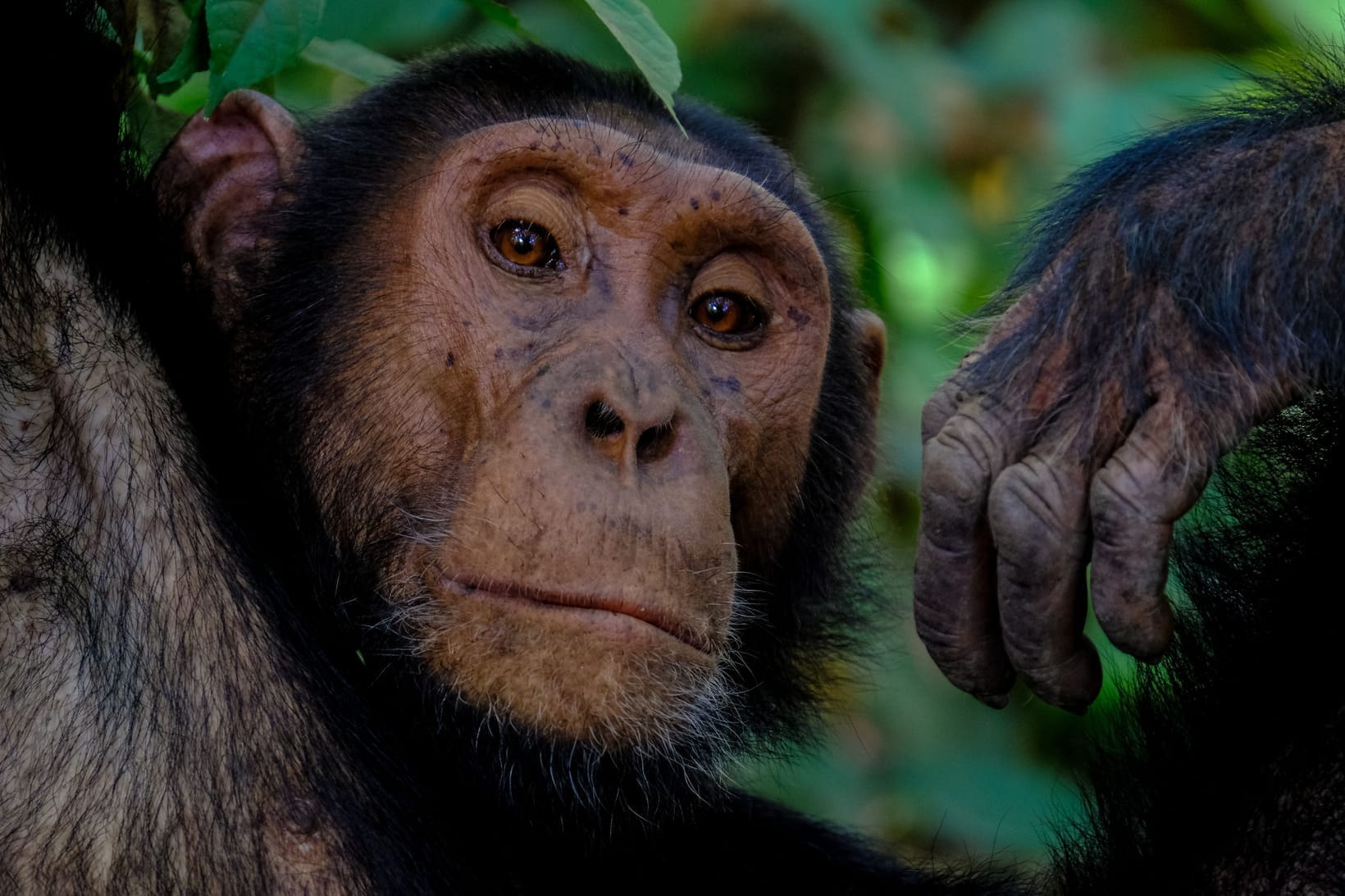
If gorilla trekking is Uganda’s headline act, chimpanzee tracking is its brilliant, underrated support — and nowhere does it better than Kibale Forest. Home to the highest density of primates in Africa, Kibale offers the continent’s finest chances of spending an hour with a wild chimpanzee community, our closest living relatives, as they hoot, feed, groom, and swing through the canopy overhead.
One number worth carrying into the decision: the Uganda Wildlife Authority puts the chimpanzee sighting success rate for the habituated Kanyanchu community at over 90%. That is unusually high for a wild primate encounter, and it is the reason Kibale is the default recommendation over Kyambura Gorge or Nyungwe.
Here’s everything you need to know before you go: what the trek is actually like, what it costs, when to visit, how hard it is, and how it fits into a wider Uganda safari.
Why Kibale Forest?
Kibale Forest National Park sits in western Uganda, just east of the Rwenzori Mountains near the town of Fort Portal. It protects one of the loveliest tracts of tropical rainforest in the country and shelters an extraordinary 13 primate species— the richest concentration anywhere in East Africa.
Its star residents are around 1,500 chimpanzees, several communities of which are habituated to human presence, which is what makes reliable, close-up tracking possible. But you’ll share the forest with red colobus, black-and-white colobus, red-tailed and L’Hoest’s monkeys, grey-cheeked mangabeys, olive baboons, and, after dark, bushbabies and pottos.
Image: Wild chimpanzee in the Kibale Forest canopyWhat Chimpanzee Trekking Is Actually Like
The day starts with an early briefing at Kanyanchu, the park’s main tracking centre. From there, rangers lead small groups into the forest on foot, following the previous night’s nests and, before long, the sound of the chimps themselves — a rising chorus of pant-hoots and screams that carries a long way through the trees.
Chimp tracking feels faster and more energetic than a gorilla trek. Chimps move fast and spend much of their time high in the canopy, so you’ll often be looking up, following a party as it feeds and travels. When they drop to the forest floor to move between fruiting trees, you can find yourself remarkably close. As with gorillas, once your group finds the chimps you have one hour in their company.
Chimpanzee Trekking Cost & Permits
You need a permit, and numbers are capped to protect the chimps and keep the experience calm. A standard Kibale chimpanzee permit costs around USD $250 per person for foreign non-residents — a fraction of a gorilla permit.
[VERIFY / KEEP CURRENT: 2026 UWA sources quote the Kibale chimp permit at roughly $250–$300 for foreign non-residents; the chimpanzee habituation experience is higher (~$400). Permit rules also changed in 2026 — full payment is now required at booking. Confirm the exact figures you want printed, and whether to show prices at all per your policy.]
For something deeper, Kibale also offers a Chimpanzee Habituation Experience (CHEX): instead of one hour, you spend a full day with researchers and a semi-habituated community, following them from their morning nests. It costs more and suits serious primate enthusiasts and photographers.
How Hard Is It? Difficulty & What to Bring
Chimp tracking is generally less strenuous than gorilla trekking — Kibale’s terrain is flatter and the trails are better established — but it’s still a forest walk that can last anywhere from one to four hours or more, often over damp, uneven ground. Reasonable fitness makes it more enjoyable. Bring:
- Sturdy, waterproof walking shoes or light boots
- Long trousers and a long-sleeved shirt (insects, undergrowth)
- A light rain jacket — it’s rainforest
- Drinking water and insect repellent
- A camera without flash — flash is not allowed
- Binoculars, since chimps are often high in the canopy
The same health rules that protect gorillas apply here: if you’re unwell you may be asked not to trek, and you keep a respectful distance. Much of this overlaps with our gorilla trekking tips, which are worth a read even for a chimp-only trip.
Best Time for Chimpanzee Trekking
Chimps can be tracked year-round, but the drier months — roughly June to September and December to February — make for easier trails and more comfortable walking. In the wetter months the forest is lush and quieter with visitors, and fruiting patterns can actually make chimps easier to locate. Timing largely comes down to your wider itinerary; our guide to the best time to visit Uganda breaks it down month by month.
Chimps vs Gorillas: Which Trek?
They’re different experiences, not competing ones. A gorilla trek is slower, steeper, and hushed; chimp tracking is quicker, noisier, and spent largely looking upward. The best news is that in Uganda you don’t have to choose — many trips do both. We compare the two apes in detail in gorilla vs chimpanzee.
Where Kibale Fits in Your Trip
Kibale pairs naturally with Queen Elizabeth National Park next door, and with a gorilla trek further south. You can visit it as a focused short break on our Kibale chimpanzee safari, or fold it into a bigger loop such as the gorilla & primates safari, which combines Kibale’s chimps with Bwindi’s gorillas.
Chimpanzee Trekking FAQ
How much does chimpanzee trekking cost in Uganda? A Kibale permit is around $250 per person for foreign non-residents — far less than a gorilla permit. The full-day habituation experience costs more.
How likely am I to see chimps? Very likely in Kibale, where communities are well habituated — though, as with all wild animals, sightings are never guaranteed.
Is chimp trekking hard? Generally easier than gorilla trekking — flatter terrain and better trails — but still a forest walk of one to four hours.
What’s the minimum age? Chimpanzee tracking typically has a minimum age (often 12), the same as gorilla trekking. <span style={{ opacity: 0.75 }}> [VERIFY: confirm the current UWA minimum age you want stated.] </span>
Track Chimps in Kibale
An hour beneath a feeding chimpanzee community — all pant-hoots, drumming, and uncannily human expressions — is one of Uganda’s great wildlife moments. Tell us your dates and we’ll build it into a Kibale chimpanzee trip or a longer primate safari.