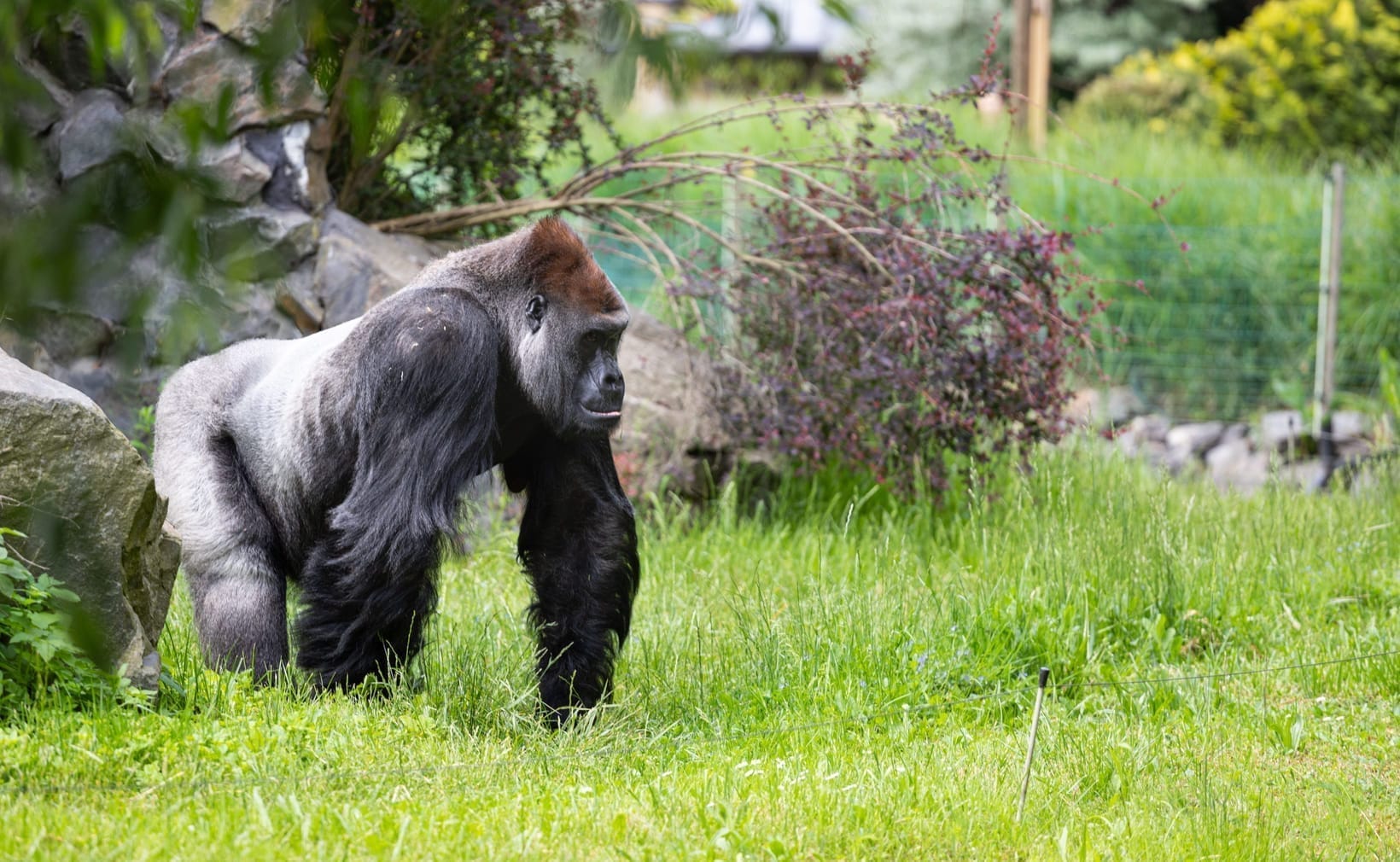
Quick answer: A wild silverback gorilla stands about 1.5–1.8 m (5–6 ft) upright and weighs roughly 135–220 kg (300–485 lb) — around twice the size of an adult female, with an arm span reaching 2.6 m.
Photographs never quite prepare you for it. A silverback gorilla can stand nearly six feet tall, weigh as much as three grown men, and spread his arms wider than a doorway — and then he sits down and gently eats a handful of leaves. That combination of raw power and quiet gentleness is exactly what makes meeting one so unforgettable.
So how big is a silverback, really? Here are the honest numbers on height, weight, and strength — and a straight answer on the strength myths that get wildly exaggerated online.
What Is a Silverback, Exactly?
“Silverback” isn’t a species — it’s a rank. A silverback is a fully mature male gorilla, usually around 12 years or older, named for the saddle of silver-grey hair that spreads across his back and hips as he matures. In mountain gorillas, the silverback is the undisputed leader of his family group: he decides where they travel, settles disputes, and defends them against rivals and threats. Everything about his size is built for that job.
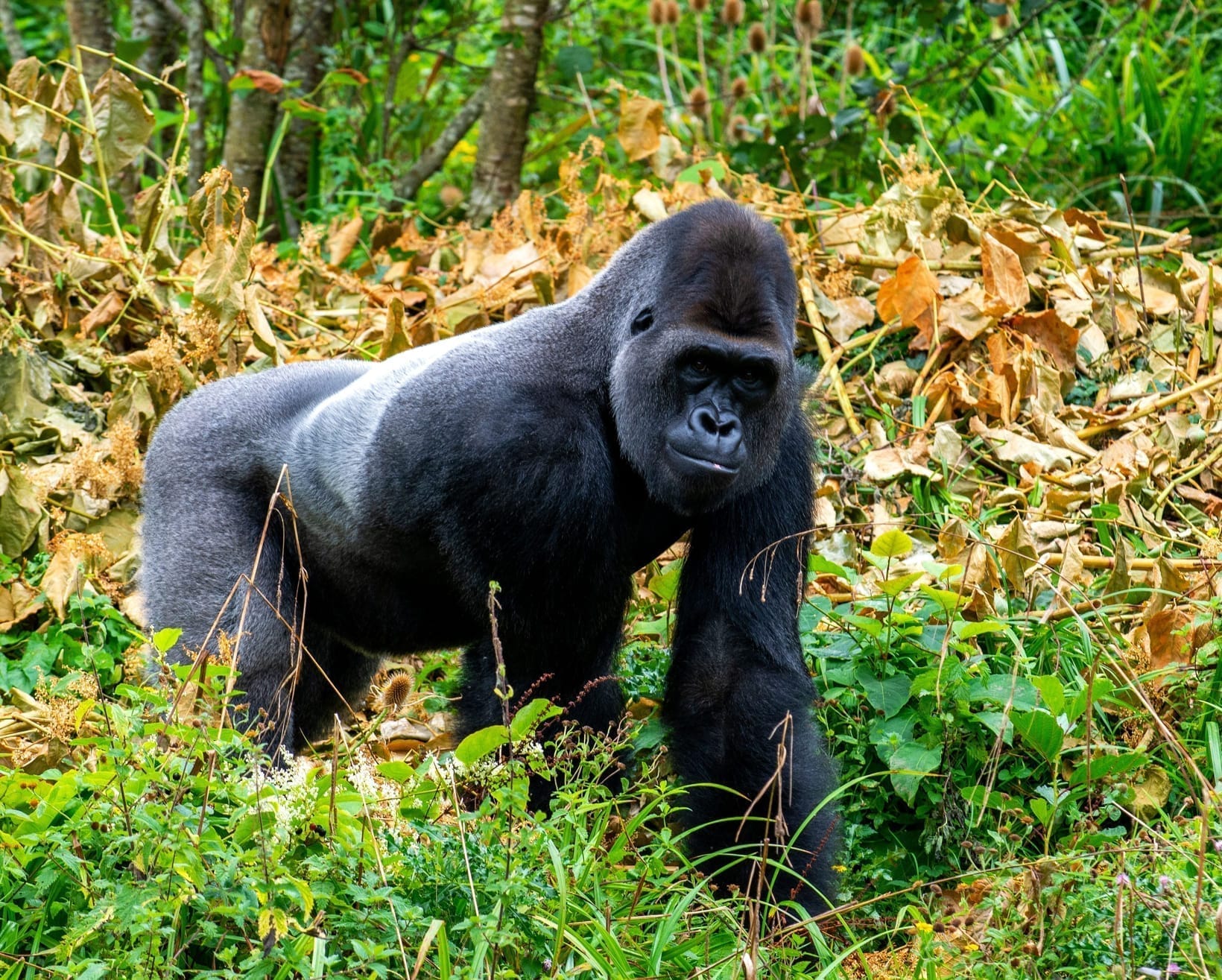 A silverback's silver saddle marks him as the mature leader of his family
How Tall Is a Silverback Gorilla?
Standing upright, a silverback mountain gorilla typically reaches 1.5 to 1.8 metres (5 to 6 feet)— about the height of an adult man. But height undersells them, because gorillas are built wide and deep rather than tall. Their arm span is enormous: a big male can stretch his arms to around 2.6 metres (8.5 feet) from fingertip to fingertip, far wider than his standing height, with a chest and shoulders to match.
How Much Does a Silverback Weigh?
This is where the numbers get serious. A wild adult silverback mountain gorilla generally weighs 135 to 220 kg (300 to 485 lb). Females are roughly half that — typically around 70 to 100 kg — which is one of the largest size differences between males and females of any primate.
- Adult male (silverback):~135–220 kg (300–485 lb)
- Adult female:~70–100 kg (150–220 lb)
- Newborn: around 1.8–2 kg — smaller than a human baby
Note that captive gorillas, with rich diets and less exercise, can grow considerably heavier than wild ones — some of the record weights you see quoted online are zoo animals, not the leaner, more muscular gorillas you meet in the forest.
Just How Strong Is a Silverback?
Very — but this is also where the internet loses its mind. You’ll see confident claims that a silverback can lift ten times its body weight, or is “nine times stronger than a human.” The honest truth is that these figures come from a small number of old, unrepeated tests and rough extrapolations, and no one has rigorously measured a wild gorilla’s maximum strength. Treat the exact multipliers as folklore, not fact.
What we can say with confidence is grounded in anatomy: a silverback carries dense, powerful muscle across his arms, shoulders, chest, and jaw. His bite force comfortably exceeds a lion’s, built for grinding tough vegetation. He can snap thick branches, bend small trees, and move with startling speed and force when he chooses to. You do not need an exaggerated statistic to be impressed — standing near one in the wild makes the point on its own.
The remarkable thing isn’t how dangerous a silverback is — it’s how rarely he uses that strength. Most of his power goes into display, not violence.
Why Are They So Big? A Diet of Leaves
Here’s the paradox that catches everyone off guard: one of the largest, most powerful land animals in Africa is essentially a vegetarian. Mountain gorillas are overwhelmingly herbivorous, feeding on leaves, shoots, stems, and pith, with occasional fruit and the odd insect. An adult silverback can eat 18 to 30 kg of vegetation a day to fuel that bulk.
That leafy diet is actually the reason for the size and shape. Digesting large volumes of fibrous plants requires a big gut, which needs a broad, deep torso to house it — hence the barrel chest and pot belly. The gorilla is big because it eats low-energy food in enormous quantities, not because it hunts.
Silverback vs Human vs Chimpanzee: A Size Check
To put a silverback in perspective: he outweighs an average man roughly two to three times over, and outweighs a chimpanzee — his fellow great ape — by four or five times. A chimp tips the scales at around 40–60 kg; a big silverback can be north of 200 kg. If you’re curious how these two apes compare beyond size, we cover it in gorilla vs chimpanzee.
Are Silverbacks Aggressive?
Given the size and strength, people expect gorillas to be ferocious. They’re the opposite. Silverbacks are generally calm, protective, and remarkably tolerant. The famous chest-beating display — standing tall and drumming the chest with cupped hands — is theatre designed to avoid a fight, not start one, warning off rivals so that actual combat rarely happens.
On a trek, this is why the rules exist: keep your distance, stay calm, avoid direct staring, and follow your guide’s lead. Do that, and a silverback will usually carry on feeding a few metres away as if you’re barely there. We cover the etiquette and preparation in full in our gorilla trekking tips.
Silverback Size FAQ
How tall is a silverback gorilla? About 1.5–1.8 m (5–6 ft) standing upright, with an arm span up to around 2.6 m.
How much does a silverback gorilla weigh? Typically 135–220 kg (300–485 lb) in the wild; females are roughly half that.
How strong is a silverback gorilla? Extremely powerful, but the popular “x times stronger than a human” figures are unverified. What is certain is that they can snap thick branches and have a bite force greater than a lion's.
What do gorillas eat to get so big? Mostly leaves, stems, shoots, and pith — up to 18–30 kg of vegetation a day. They are essentially gentle giants running on greenery.
See a Silverback for Yourself
No statistic really lands until you’re standing in the forest and a silverback shifts his weight a few metres away. If you’d like that moment, it’s the heart of our Uganda gorilla & wildlife safari — tell us your dates and we’ll build the trip around it.