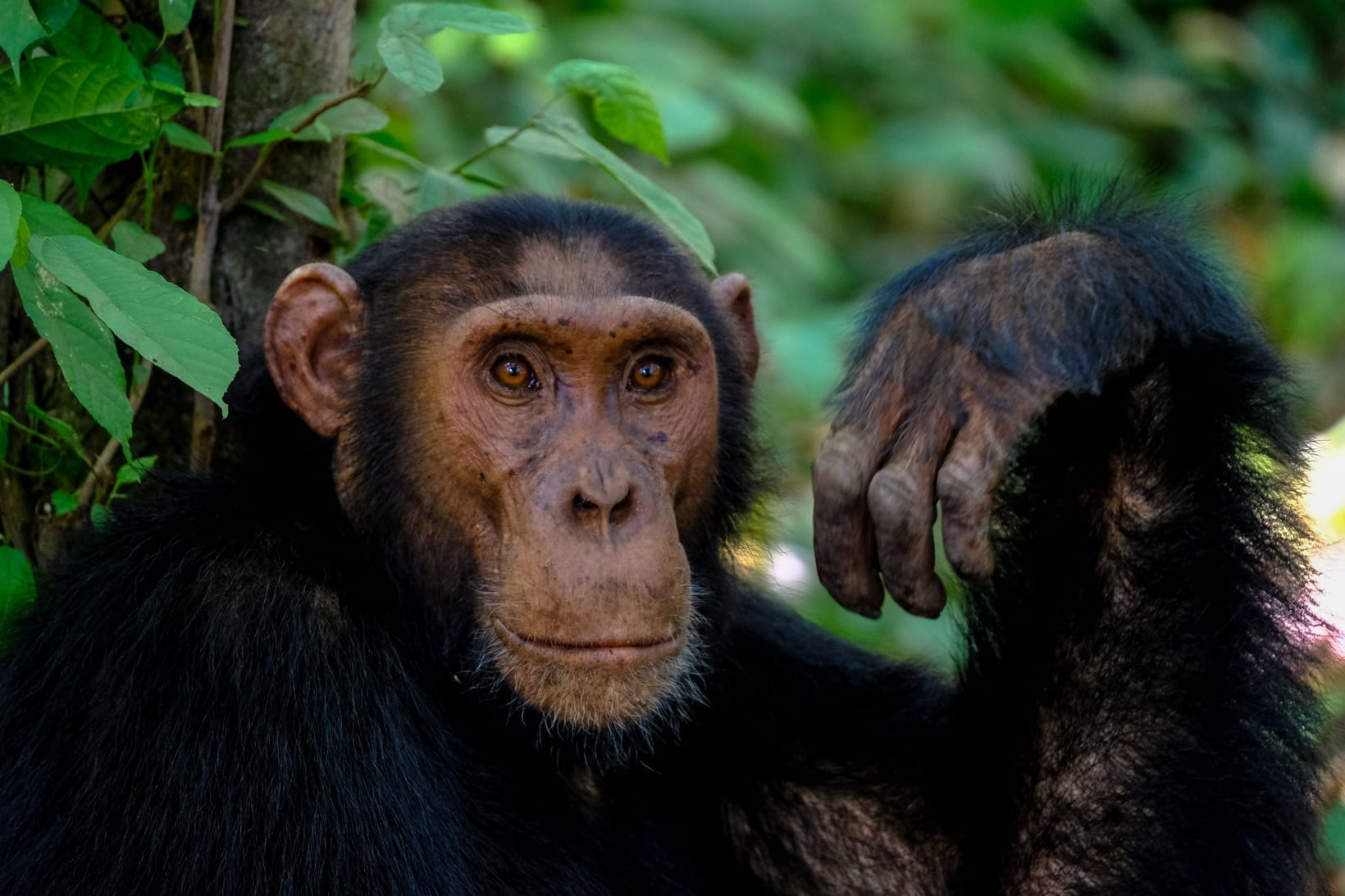
Kibale is the primate capital of Africa — and chimpanzees are only the start of it. This dense, mid-altitude rainforest in western Uganda packs more primate diversity into one park than anywhere else on the continent, alongside outstanding birding and one of the country’s best community wetland walks.
We’ve covered chimp trekking itself in detail elsewhere — here’s the wider guide to Kibale Forest as a whole: its size, its other primates, its birds, and how to build it into your trip.
Kibale at a Glance
Kibale National Park covers around 795 square kilometres near Fort Portal in western Uganda, a mix of moist evergreen and semi-deciduous forest at an altitude that keeps it pleasantly cool. It adjoins Queen Elizabeth National Park to the south via a forested corridor, historically used by elephants moving between the two protected areas.
Image: Dense rainforest canopy of Kibale Forest, dappled light on the trailThirteen Primate Species
Kibale holds an extraordinary 13 primate species— the highest density of primates found anywhere in Africa. Chimpanzees are the headline (more than 1,500 live in the park, and we cover trekking them fully in chimpanzee trekking in Kibale), but the wider cast is just as remarkable:
- Red colobus and black-and-white colobus— striking, leaf-eating monkeys often seen high in the canopy
- Grey-cheeked mangabey— noisy, characterful, and often heard before seen
- L’Hoest’s monkey, red-tailed monkey, and vervet monkey— among the forest’s more common sightings
- Olive baboon and nocturnal galagos (bushbabies) rounding out the list
Exceptional Birding
Kibale is also one of Uganda’s premier birding forests, with more than 375 recorded species, including the much sought-after green-breasted pitta. Even travellers who came purely for the chimps often find the birding stops them in their tracks.
Bigodi Wetland Sanctuary
Just outside the park, the community-run Bigodi Wetland Sanctuary offers a gentler, excellent complement to forest trekking — a guided boardwalk and trail through papyrus swamp alive with monkeys, birds, and butterflies, with proceeds supporting the local community. It’s a lovely half-day addition for anyone who wants more time in the area beyond the chimp trek itself.
Best Time to Visit Kibale
Kibale can be visited year-round, since forest wildlife doesn’t migrate the way savanna game does. The dry seasons (roughly June–September and December–February) make trails easier underfoot, while the wetter months keep the forest lush, though muddier. See our wider guide to the best time to visit Uganda.
How to Visit Kibale
Kibale sits near Fort Portal in western Uganda, an easy add-on to a Queen Elizabeth or gorilla itinerary given its position between the two. Build it into our Kibale chimpanzee safari or a longer route pairing it with gorillas and primates across the south-west.
Kibale Forest FAQ
Why is Kibale called the primate capital of Africa? It holds 13 primate species — the highest primate density on the continent — including over 1,500 chimpanzees.
Is Kibale only about chimps? No — it also offers rich birding, several other primate species, and the Bigodi Wetland walk just outside the park.
How does Kibale connect to Queen Elizabeth? A forested corridor links the two parks, historically used as an elephant migration route, making them a natural pairing on an itinerary.
How long should I spend at Kibale? One to two nights covers a chimp trek and the Bigodi wetland walk comfortably.
Explore the Primate Capital
Whether it’s the chimps or the wider forest that draws you, Kibale rewards time spent looking up into the canopy. Tell us your plans and we’ll build it into a Kibale safari shaped around your trip.