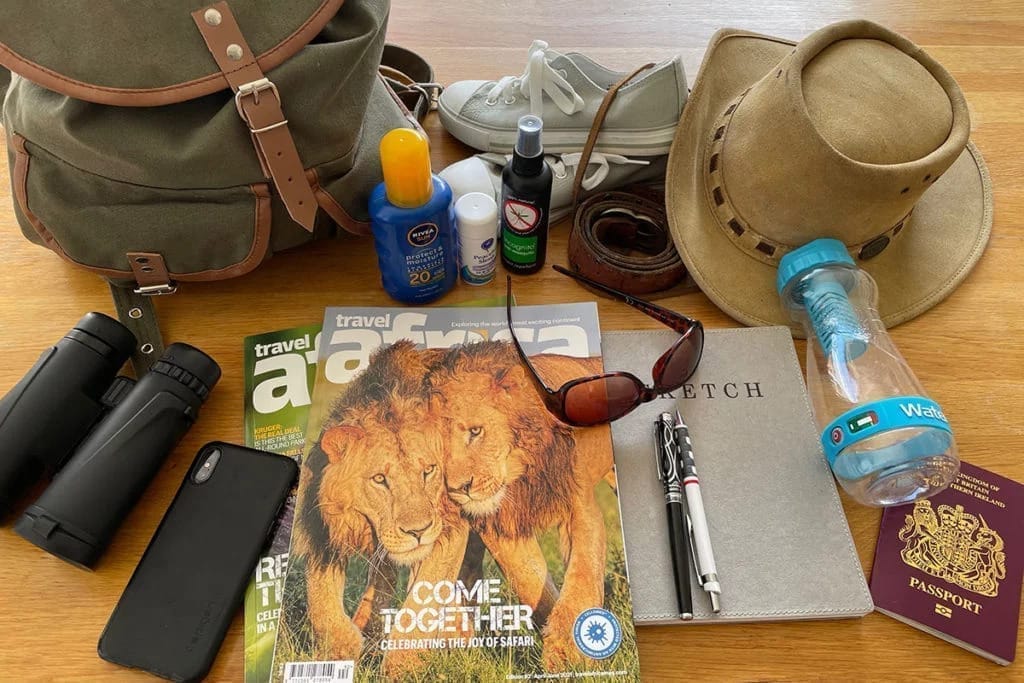
Quick answer: Pack neutral-coloured, breathable layers (khaki, olive, tan, grey), a fleece and waterproof for cold mornings, closed walking shoes, binoculars, insect repellent, and sun protection — all in a soft-sided bag under 15kg if your trip includes bush flights. Most lodges do laundry, so three or four changes is plenty.
Most people pack too much. Safari vehicles have limited luggage space (particularly on bush flights between camps, which cap bags at 15kg soft-sided), and you'll be in the same vehicle or walking the same trails every day. You don't need outfit variety. You need the right gear.
Here's what actually matters.
Clothing
The golden rule: neutral colours. Khaki, olive, tan, brown, grey. Bright colours startle wildlife and attract insects. White gets dirty immediately. Camouflage is illegal in several African countries (Uganda, Rwanda, Kenya among them) — avoid it entirely.
- 3–4 lightweight long-sleeved shirts (moisture-wicking, quick-dry)
- 2 pairs of lightweight trousers — convertible zip-off are useful
- 1 pair of shorts for warm afternoons at the lodge
- Fleece or mid-layer jacket — mornings on the game drive are cold
- Waterproof outer jacket (rain and wind)
- Comfortable walking shoes or lightweight hiking boots
- Sandals for evenings
- Wide-brimmed hat
- Underwear and socks (merino wool is excellent — it dries fast and doesn't smell)
- Swimsuit if your lodge has a pool
- Warm beanie if going to altitude (Bwindi, Mgahinga, Kilimanjaro)
Gear and Accessories
- Binoculars— arguably the single most important item. 8x42 is the standard safari binocular; 10x42 if you want more magnification. Don't skimp on these.
- Camera — phone cameras are better than you think for close wildlife. For serious photography, a 100–400mm zoom lens is the sweet spot. Bring more memory cards than you think you need.
- Power bank — vehicle charging is available in most game drives but not always reliable
- Universal travel adapter
- Headlamp (not a torch — you need your hands free)
- Dry bag or ziplock bags — dust and occasional rain will get into everything
- Lightweight daypack for gorilla or chimp trekking days
Health and Toiletries
- Malaria prophylaxis — speak to a travel doctor before your trip. Uganda is a malaria zone. Doxycycline, Malarone, or Lariam depending on your medical history.
- DEET insect repellent (50% concentration)— the lower-strength products don't work reliably in the tropics
- High-SPF sunscreen (factor 50 minimum)
- Lip balm with SPF
- Hand sanitiser
- Basic first aid kit (blister plasters especially)
- Antihistamine tablets
- Immodium and rehydration sachets
- Any prescription medication in original packaging with a doctor's letter
- Altitude sickness medication (Diamox) if you're doing anything above 2,500m — discuss with your doctor first
Documents and Admin
- Passport (valid for 6+ months beyond travel dates)
- Printed copies of all permits (gorilla, chimp, Kilimanjaro)
- Travel insurance documents — comprehensive policy including medical evacuation
- Yellow fever vaccination certificate (required for entry into Uganda)
- Emergency contacts list on paper, not just in your phone
What to Leave at Home
- Anything you'd be devastated to lose
- Expensive jewellery
- More than 2 pairs of shoes (heavy and bulky)
- Hair dryers or straighteners (power adapters vary, luggage space is limited)
- Half your wardrobe — most lodges offer laundry service
The Soft-Sided Bag Rule
If your itinerary includes any bush flights between camps — and many Uganda itineraries do — you will be required to use a soft-sided bag (duffel-style), not a hard-shell suitcase. Hard cases don't fit in the small Cessna luggage holds. Most lodges and camps have storage for any items you don't need at the next destination.
Our recommended approach: one soft-sided 15kg bag plus a small personal daypack. Everything you need, nothing you don't.
Safari Packing FAQ
What should I wear on safari? Neutral colours — khaki, olive, tan, brown, or grey — in light, breathable layers. Avoid bright colours, which startle wildlife, and white, which shows dust immediately. Mornings and evenings are genuinely cold, so pack a fleece and a light waterproof.
How much luggage can I bring on safari? If your itinerary includes bush flights between camps, you are limited to roughly 15kg in a soft-sided duffel bag. Hard-shell suitcases do not fit in small Cessna luggage holds. One 15kg soft bag plus a daypack covers almost any safari.
Do I need hiking boots for a safari? For game drives, comfortable closed shoes are enough. For gorilla or chimpanzee trekking you need proper waterproof hiking boots with ankle support — the forest floor is steep, muddy, and uneven.
What do most people forget to pack for a safari? Binoculars, insect repellent with DEET, a headtorch, spare camera batteries, and any prescription medication in its original packaging. Lodges rarely sell these, and you will want binoculars on the very first drive.
Should I pack laundry for every day? No. Most lodges and camps offer same-day or next-day laundry, so three or four changes of clothing is plenty even on a two-week trip. Packing a full wardrobe is the most common mistake.