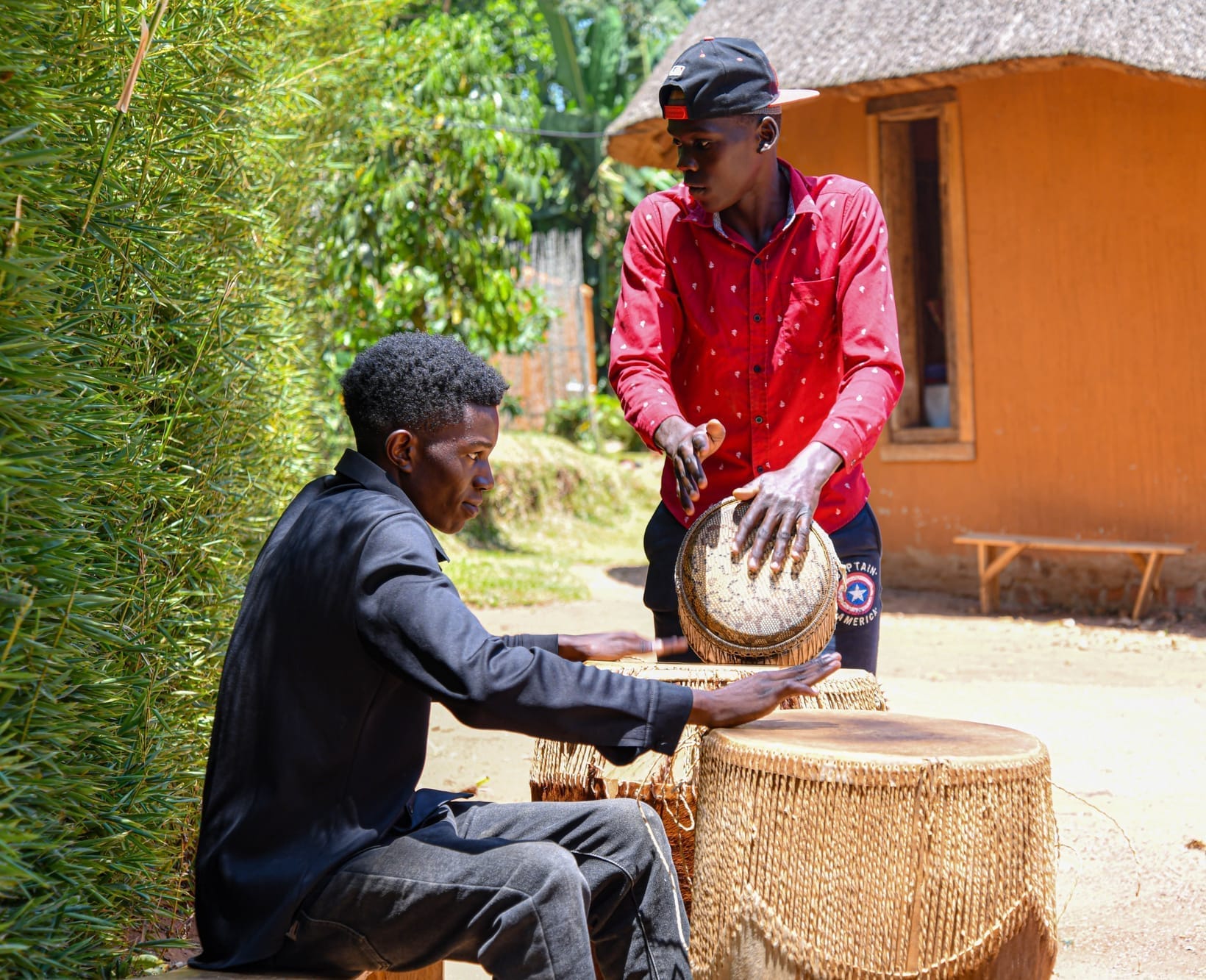
With more than 56 tribes, Uganda holds an extraordinary range of traditional music and dance — each community with its own instruments, rhythms, and movements, many still performed at ceremonies, weddings, and cultural festivals today. A cultural evening on a Uganda trip is one of the most memorable ways to experience this living heritage.
Here’s an introduction to Uganda’s traditional music and dance: the instruments, the dances, and where to see them performed.
Traditional Instruments
- Adungu— an eight-stringed arched harp, used by the Alur and Acholi peoples of northern Uganda, with a warm, resonant sound
- Endingidi— a one-stringed fiddle played with a bow, found across several central and western regions
- Entenga— a set of tuned royal drums from the Buganda court, played in interlocking patterns by several musicians at once
- Amadinda/akadinda— wooden xylophones, also rooted in Buganda court music, played with the same interlocking technique
- Engalabi— a tall, narrow-waisted drum used widely in dance accompaniment
Bakisimba: The Signature Dance of Buganda
Perhaps Uganda’s best-known traditional dance, bakisimba comes from the Kiganda tradition of the Buganda kingdom — a joyful, hip-driven dance performed to distinctive drumming, said to have originated as a celebration of a king’s enjoyment of banana beer. It remains a staple of Ugandan cultural performances and celebrations today, instantly recognisable by its rolling hip movement and energetic drumbeat.
Regional Dances Across Uganda
Nearly every region has its own signature dance, tied closely to identity and ceremony:
- Kadodi, from the Bagisu people of eastern Uganda, traditionally performed during male circumcision ceremonies to encourage the initiate’s courage
- Bwola and larakaraka, from the Acholi in northern Uganda — the latter traditionally a courtship dance
- Runyege/ntogoro, from the Batooro and Banyoro in the west
- Ekitaguriro, from the cattle-keeping Banyankore, echoing the movement of long-horned Ankole cattle
This regional richness mirrors the same diversity we cover in the tribes and cultures of Uganda and what language is spoken in Uganda — each community’s music, dance, and language forming one connected cultural identity.
Where to Experience It on Safari
Many lodges and community tourism projects host cultural evenings with live drumming and dance, and a visit to a Batwa, Karamojong, or Bahima community can include traditional performance as part of a respectful cultural exchange. It’s one of the most vivid, joyful ways to experience Uganda beyond its wildlife.
Traditional Music & Dance FAQ
What is Uganda’s most famous traditional dance? Bakisimba, from the Buganda kingdom, is probably the best known and most widely performed.
What instruments are used in Ugandan traditional music? Instruments like the adungu (harp), endingidi (fiddle), and various drums and xylophones, varying by region and ethnic group.
Can travellers see traditional performances? Yes — many lodges and community tourism projects host cultural evenings featuring live music and dance.
Is dance tied to specific ceremonies? Often, yes — kadodi accompanies circumcision ceremonies, larakaraka is traditionally a courtship dance, and many others mark weddings or cultural celebrations.
Add a Cultural Evening to Your Trip
Live drumming and dance are one of the most joyful ways to experience Uganda’s culture. Tell us and we’ll build a cultural evening into your Uganda safari.