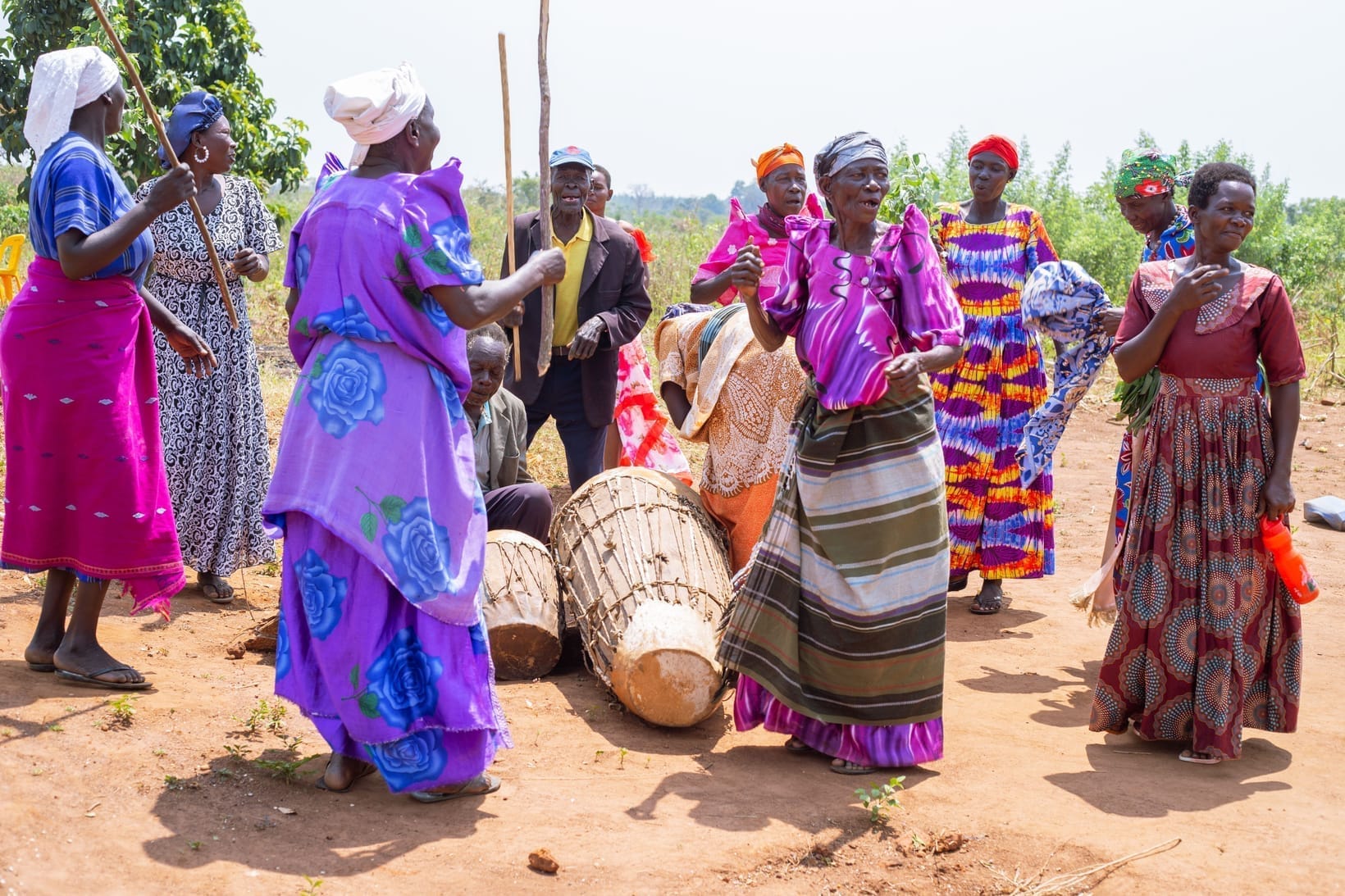
Ugandans are famously warm and welcoming, and a little cultural awareness goes a long way toward being a respectful, well-received guest. None of this is complicated — mostly small courtesies that make a real difference to how your visit feels, both to you and to the people you meet.
Here’s a practical guide to etiquette, customs, and greetings in Uganda.
Greetings Matter
A greeting in Uganda is rarely rushed. A handshake — often gentler and longer-held than you might be used to — typically comes with a genuine “How are you?” before any actual conversation begins; skipping straight to business can come across as abrupt. Learning a simple greeting in a local language, even just oli otya? in Luganda, is always warmly received — we cover a few more phrases in what language is spoken in Uganda. Showing deference to elders, greeting them first, is genuinely valued.
Image: A warm handshake greeting between a guide and a travellerA Few Physical Customs
- Use your right hand(or both) for greetings, eating, and giving or receiving objects — the left hand is traditionally considered unclean in many communities
- Avoid pointing directly at someone with a single finger; gesturing with an open hand is considered more polite
- Public displays of affection between couples are uncommon and can draw unwanted attention — a low-key approach is best
What to Wear
In Kampala, Entebbe, and Jinja, smart casual dress is entirely normal. In rural areas and villages, more conservative clothing is appreciated — covering shoulders and knees shows respect, and is expected at religious sites in particular. On game drives and treks, practical safari clothing is what matters most; see our safari packing list.
Photography and Consent
Always ask before photographing people directly — it’s simple courtesy, and most people are happy to say yes when asked. Some individuals, particularly in community visits, may expect a small appreciation for being photographed, which your guide can advise on. Avoid photographing government buildings, military or police personnel, or checkpoints, which is against the law.
A Legal Note for LGBTQ+ Travellers
Uganda has strict laws criminalising same-sex relationships, and public displays of same-sex affection can carry serious legal risk for both visitors and residents. This is an important practical fact for any traveller to know before arriving, regardless of personal views on the matter — we mention it here plainly, as several official government travel advisories also do, simply so nobody arrives uninformed.
Visiting Communities Respectfully
On cultural visits — a Batwa community near Bwindi, a Karamojong homestead in Kidepo — follow your guide’s lead on what’s appropriate, ask before entering homes or photographing individuals, and remember that tourism income genuinely matters to these communities. We go deeper on specific communities in the tribes and cultures of Uganda.
Ugandan Etiquette FAQ
Is it rude to use my left hand? Traditionally, yes — use your right hand (or both) for greetings, eating, and exchanging items where possible.
Do I need to dress conservatively? In cities, smart casual is fine; in rural areas and religious sites, covering shoulders and knees is respectful and often expected.
Can I take photos of people freely? Always ask first — it's simple courtesy, and most people are glad to say yes.
Are there legal considerations LGBTQ+ travellers should know? Yes — Uganda has strict laws against same-sex relationships and public affection; this is worth knowing before you travel.
Travel Respectfully, Travel Well
A little cultural awareness makes every interaction warmer on both sides. For the rest of your trip planning, see our guide to planning a trip to Uganda.