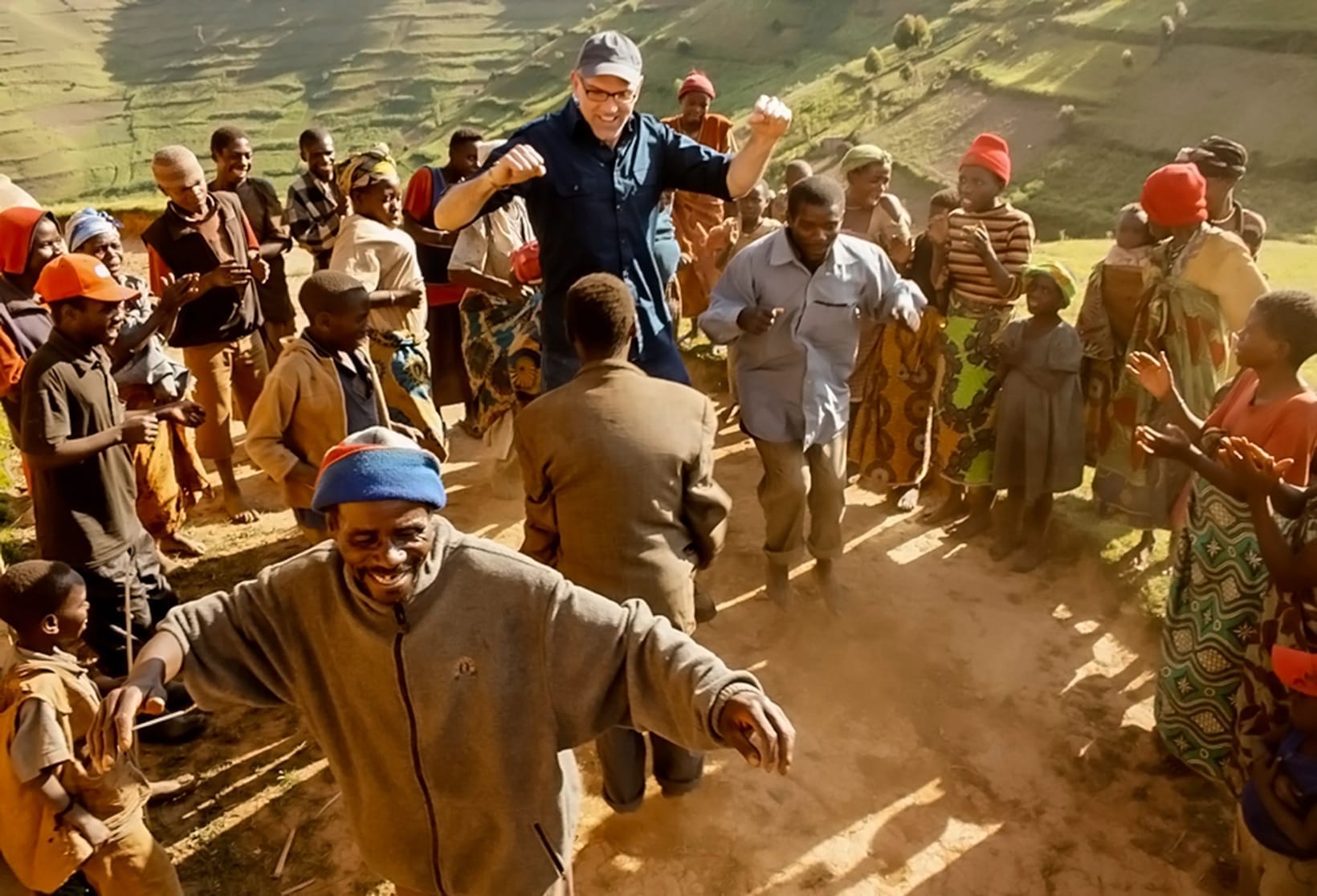
Before Bwindi and Mgahinga were national parks, they were home. The Batwa lived in these forests for generations as skilled hunter-gatherers, intimately connected to the same trees that now shelter the mountain gorillas travellers come from around the world to see. Their story is one of the most important — and most difficult — to understand about this corner of Uganda.
Here’s an honest introduction to the Batwa: their history, their displacement, and how travellers can visit their communities respectfully today.
Forest People
The Batwa are believed to have migrated into the forests of south-western Uganda from the Ituri Forest region of what is now DR Congo, living as hunter-gatherers for countless generations in what became Bwindi Impenetrable Forest, Mgahinga, and the Echuya Forest Reserve. They developed deep, specialised knowledge of the forest — its plants, its animals, and how to live within it sustainably — that few other communities on earth possess.
Image: A Batwa community elder in traditional dress at the edge of Bwindi ForestThe 1991 Eviction
In 1991, the Ugandan government gazetted Bwindi and Mgahinga as national parks to protect the critically endangered mountain gorilla — a conservation decision that undeniably helped save the species. But it came at a severe human cost: over 800 Batwa families, roughly 4,000 people, were evicted from their ancestral forest home, without compensation or alternative land. Almost overnight, a self-sufficient forest people became landless, forced to adapt to an agricultural life on the forest’s edge that their culture had never required.
We think this history deserves to be told plainly rather than glossed over, even within a blog built around the very tourism that grew from this conservation decision.
A Community Under Pressure
The consequences have been severe and lasting. Uganda’s 2024 census recorded just 3,857 Batwa— down sharply from 6,198 a decade earlier in 2014 — making them one of the smallest and most vulnerable communities in the country. Reporting has highlighted a life expectancy and child survival rate far below the national average, the result of decades without secure land, reliable income, or full integration into surrounding systems of healthcare and education.
The Batwa Trail: Tourism as a Path Forward
Since 2011, the Batwa Trail has offered a structured, community-led way for visitors to meet Batwa communities near Bwindi — walking into the forest with Batwa guides who demonstrate traditional hunting and gathering skills, fire-making, medicinal plant knowledge, and forest songs and dances, with proceeds going directly to the community. It’s become one of the most meaningful sources of income available to Batwa families today, and a genuine opportunity for cultural exchange rather than a passive display.
Visiting Respectfully
A Batwa cultural visit works best approached with the same respect you’d bring to any encounter with people, not simply a “sight” to check off — ask questions, listen to the history in the Batwa’s own words where possible, and understand that your visit directly supports a community still recovering from profound loss. We touch on this within the wider context of the tribes and cultures of Uganda, and it pairs naturally with gorilla trekking in Bwindi.
The Batwa FAQ
Who are the Batwa? An indigenous forest people of south-western Uganda, historically hunter-gatherers in what are now Bwindi and Mgahinga National Parks.
Why were they evicted from the forest? In 1991, the Ugandan government gazetted their ancestral forest as protected national parks to conserve the mountain gorilla, displacing roughly 4,000 Batwa without compensation.
How many Batwa remain today? Uganda’s 2024 census recorded 3,857 — a significant decline from 6,198 in 2014.
How can I visit respectfully? The community-led Batwa Trail near Bwindi offers a structured, income-generating cultural experience led by Batwa guides themselves.
Meet the Batwa on Your Trip
A Batwa Trail visit is one of the most meaningful cultural experiences available on a Uganda safari, both for what it teaches and for the community it directly supports. Tell us if you’d like it built into your Bwindi gorilla trekking safari.