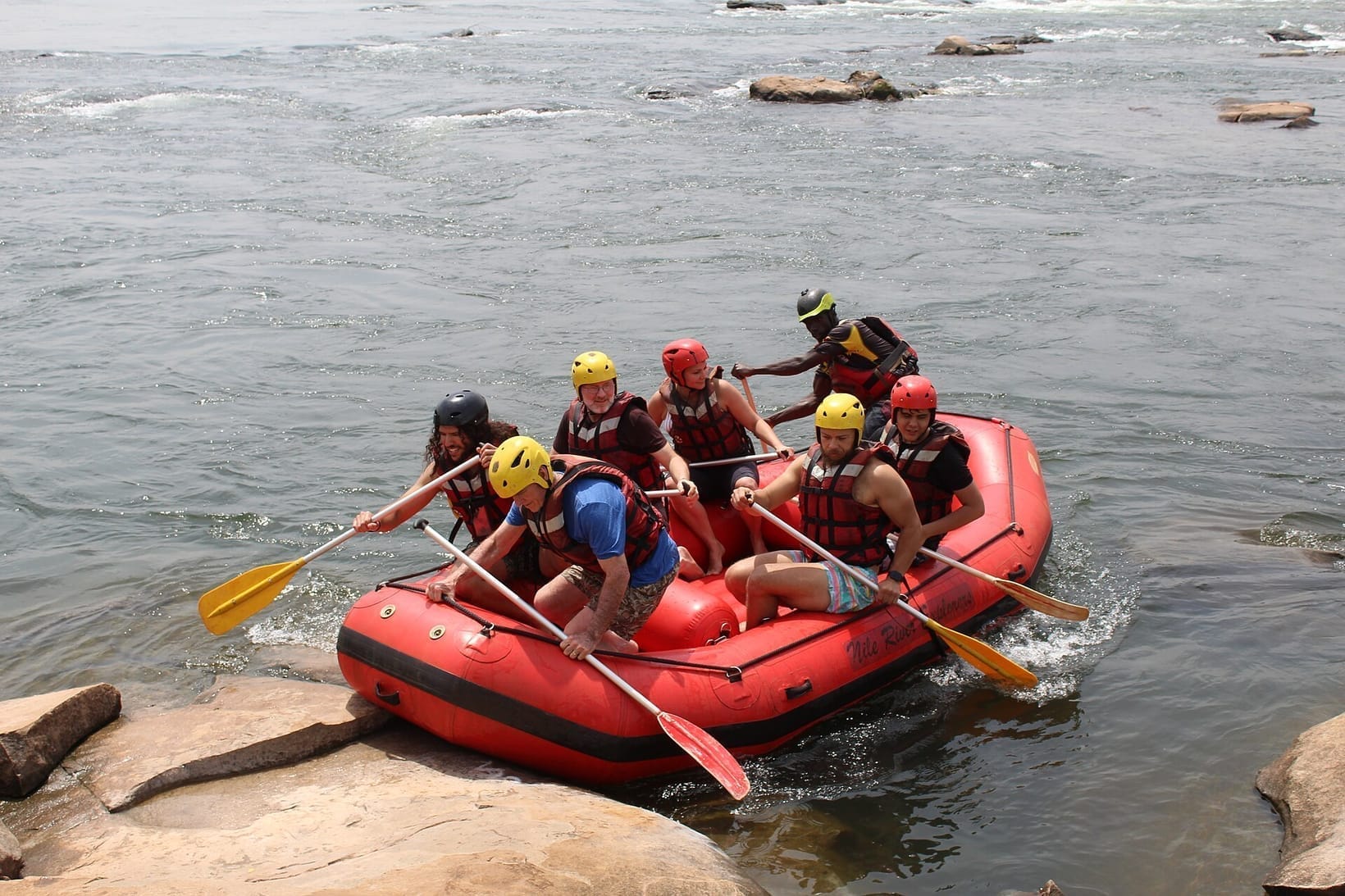
Short answerThe White Nile below Jinja is one of the world's better-known commercial rafting stretches, running up to grade five, with safety kayakers alongside and no experience required. Two dams have submerged some famous rapids since 2012, so older accounts describe a different river. Stay in Jinja that night — it takes most of a day.
This is the single most popular adventure activity in Uganda, and for a lot of visitors it is the day they talk about most afterwards — more than the game drives, occasionally more than the gorillas.
For where to sleep either side of it, see where to stay in Jinja; for the town and the Source of the Nile, the Jinja guide.
The river, and what the dams changed
The Nile leaves Lake Victoria at Jinja and immediately drops through a series of rapids. That stretch built Jinja's reputation as an adventure destination from the 1990s onwards.
Two hydroelectric projects have since altered it. The Bujagali dam, completed in 2012, flooded Bujagali Falls and several celebrated rapids. The Isimba dam, downstream, affected further sections after it came online.
What a rafting day involves
| Stage | What happens |
|---|---|
| Morning pickup | Collected from your Jinja accommodation, or from Kampala on a longer day |
| Briefing | Safety talk, kit issue — helmet and buoyancy aid |
| Flat-water practice | Paddle commands, what to do if the raft flips, how to get back in |
| The rapids | Several hours downstream, with calm stretches between |
| Lunch | Usually on the riverbank or an island |
| Finish | Take-out, transfer back |
| Meal | Most operators include a meal, often with the day's photos |
The calm stretches between rapids are a genuine part of the appeal — you float, swim off the raft, and watch fish eagles and kingfishers along the banks. It is not four hours of continuous adrenaline.
Grades, and choosing your line
River difficulty runs on a scale from one to six. Grade five is the highest run commercially; grade six means not commercially navigable.
| Grade | What it feels like |
|---|---|
| 1–2 | Moving water and small waves. The family float sections. |
| 3 | Bigger waves, some manoeuvring. Exciting, rarely alarming. |
| 4 | Powerful, technical. Flips happen. |
| 5 | The big ones. Long, powerful, a genuine chance of going in. |
Do you need to be able to swim?
Most operators will take non-swimmers. You wear a buoyancy aid that keeps you up regardless, the safety kayakers are positioned for exactly this, and the briefing covers the float position you adopt in moving water.
What matters is declaring it at booking rather than at the launch site. It affects which raft you are put in and how closely you are watched, and no guide appreciates learning it thirty seconds before a grade five.
Insurance and the small print
Other practical small print:
- Cameras get soaked. Operators sell photographs of your day for this reason. Do not take anything you mind losing.
- Glasses. Use a retaining strap or leave them behind.
- Sun. You are on open water for hours. Reef-safe sunscreen, and a rash vest is better than bare shoulders.
- Minimum ages apply and vary by operator and by which section you are running. Check if you are travelling with teenagers — see our family safari guide.
The other things to do on the water
- Bungee jumping from a tower over the Nile.
- Kayaking — tandem with an instructor on the rapids, or flat-water lessons.
- Stand-up paddleboarding on the calmer stretches.
- Sunset cruise to the Source of the Nile — the gentle alternative, and genuinely worth doing even if you raft.
- Sport fishing for Nile perch and tilapia.
- Quad biking through villages and sugar plantations inland.
Planning notes
- Stay in Jinja that night. A full day on the river followed by a drive to Kampala wastes the best part of it.
- Check the operator's transfer list before booking accommodation — most collect from a set of properties.
- Sort insurance first.
- Give Jinja two nights if you are rafting. One is a waste of the drive east.
- Plan the east as its own leg. Jinja and Sipi Falls sit in the opposite direction from the safari circuit — see how many days a Uganda safari needs.
We arrange rafting alongside accommodation so the transfers line up. Tell us what you want to do on the waterand we'll build the days around it.
Rafting the Nile: common questions
Is white water rafting on the Nile at Jinja safe? Commercial rafting on the White Nile is run by established operators with safety kayakers alongside the rafts, a rescue boat, helmets and buoyancy aids, and guides who run the river daily. Capsizing is normal and expected rather than a failure — the safety system is built around it. It is an adventure sport and carries real risk, but it is professionally managed.
Do you need rafting experience to raft the Nile? No. The great majority of people who do it have never rafted before. You get a full safety briefing and practice drills on flat water before reaching anything difficult, and the guide steers. What you need is reasonable fitness and a willingness to end up in the river.
What grade are the rapids on the Nile at Jinja? The commercial stretch includes rapids up to grade five, which is the highest grade run commercially. Operators also run a gentler family float on calmer sections, and on the day most will let you choose whether to take the harder or easier line through several of the rapids.
Did the dams ruin rafting at Jinja? They changed it. The Bujagali dam, completed in 2012, submerged Bujagali Falls and several well-known rapids, and the later Isimba dam affected further sections downstream. Commercial rafting continues on the remaining stretch and still includes grade five water, but anyone comparing accounts written before and after the dams is reading about different rivers.
Can you raft the Nile if you can't swim? Most operators will take non-swimmers, with a buoyancy aid and a clear briefing, because the safety system assumes everyone will be in the water at some point. Be honest at booking rather than at the launch site — it affects which boat you are placed in and how closely the safety kayakers watch you.
How long does a rafting trip on the Nile take? A full day runs most of the daylight hours including transfers, the briefing, the river itself and a meal afterwards. Half-day options are available. Either way, plan to stay in Jinja that night rather than driving back to Kampala.
Sources
- Uganda Tourism Board — Jinja and the Source of the Nile — adventure activitiesAccessed 28 Jul 2026