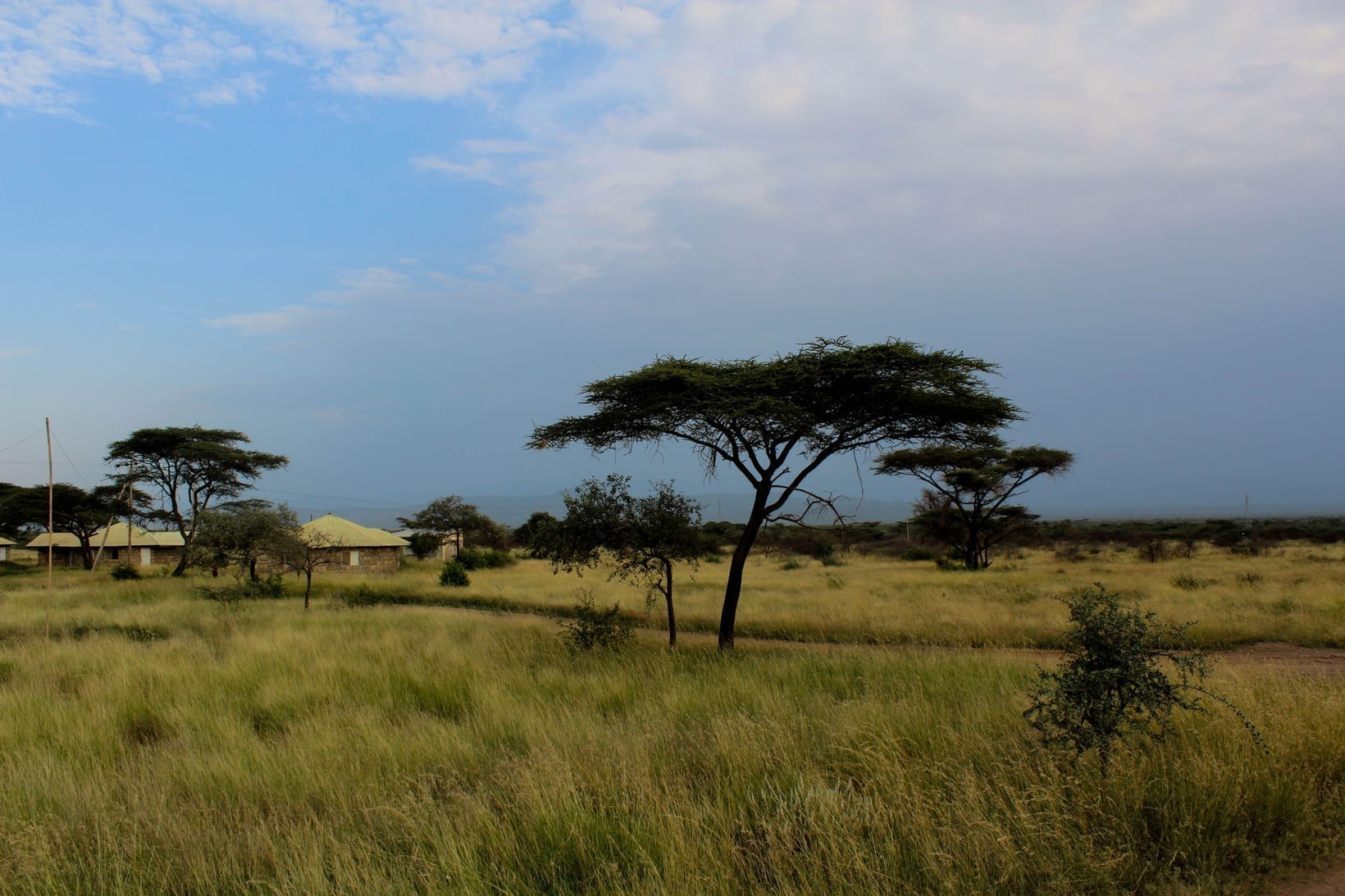
Short answerThere are no bears in Africa. Not one wild population anywhere on the continent. There used to be — the Atlas bear of North Africa, hunted to extinction by around the 1870s — but sub-Saharan Africa, where safaris happen, has never had bears at all. Nothing you will see on an African safari is a bear, including the honey badger.
Africa is so strongly associated with large dangerous animals that people reasonably assume bears are among them. They are not, and the history of why is more interesting than the bare fact.
None — and there once were
No wild bear lives in Africa today. The continent joins Australia and Antarctica as the only landmasses without them — bears are otherwise found across North America, South America, Europe and Asia.
But this is a recent absence at the northern edge. Until roughly 150 years ago the Atlas Mountains held a bear, and it was lost within recorded history rather than in deep time.
The Atlas bear, and how it ended
The Atlas bear lived in the mountains and forests of what is now Morocco, Algeria, Tunisia and Libya. It was probably a subspecies of the brown bear, smaller than its European relatives, with a shorter face and reddish-brown fur.
Rome killed it in enormous numbers first. North African bears were captured for arena spectacles across the empire, alongside the Barbary lion — a trade that ran for centuries and stripped the population badly. What survived in the mountains was then finished by firearms in the nineteenth century. The last reliable records date to the 1870s.
Why bears never spread south
Two barriers, working together.
The Sahara. Bears reached North Africa from Eurasia across the land connection at the eastern Mediterranean. Going further south meant crossing the largest hot desert on earth — impassable for a large, heat-sensitive, water-dependent omnivore.
The niche was taken. Bears are generalist omnivores that do well where there is no equivalent competitor. Sub-Saharan Africa already had that role filled several times over — by baboons, warthogs, bushpigs, honey badgers, hyenas and a full suite of large cats. An arriving bear would have found nothing unoccupied.
What people mistake for bears
| Animal | What it really is | Where in East Africa |
|---|---|---|
| Honey badger (ratel) | A mustelid — related to otters and wolverines, not bears | Widespread but seldom seen; mostly nocturnal |
| Spotted hyena | Its own family, Hyaenidae — closer to cats than dogs, and nothing to do with bears | Common in all savanna parks |
| Bushpig | A wild pig, often glimpsed as a dark bulky shape in forest | Forest and forest edge, including around Bwindi |
| Olive baboon | A monkey. Large, ground-living, and bulky from a distance | Everywhere — roadsides, lodges, savanna |
| Aardvark | Its own order entirely, Tubulidentata. Not remotely a bear. | Nocturnal and rarely seen; night drives only |
The honey badger question
This is the animal that generates the question most often, partly because of its internet reputation and partly because the alternative name — ratel — sounds like it should be something larger.
A honey badger is a mustelid, the family containing otters, weasels, martens and wolverines. It stands about 25 to 30 centimetres at the shoulder and weighs somewhere in the range of 9 to 16 kilograms. Smaller than a labrador.
The reputation is earned, though, and the anatomy is genuinely unusual: skin so thick and loosely attached that the animal can twist around inside it while held, which is why bites and grips often fail against it. Add a high tolerance for snake venom and a complete absence of caution and you get an animal that will drive much larger predators off a kill. Fierce, and not a bear.
What Africa has instead
The honest summary is that Africa does not need bears, because the large carnivore guild is already the richest on earth.
| Animal | Where you'd see it |
|---|---|
| Lion | Queen Elizabeth, Murchison Falls, Kidepo — including the tree-climbers at Ishasha |
| Leopard | All savanna parks. Present everywhere, seen rarely. |
| Cheetah | Kidepo Valley in Uganda; far more reliably in Kenya and Tanzania |
| Spotted hyena | Common in all savanna parks, and a genuine predator |
| African wild dog | Rare in Uganda; better odds in Tanzania's southern parks |
| Nile crocodile | The Nile at Murchison and the Kazinga Channel |
| Serval, caracal, African civet | Widespread, mostly nocturnal |
More on the cast in African safari animals, on the cats specifically in the big cats of Africa, and on the most misunderstood of them in spotted hyena facts. If you came here via a related myth, we have also covered whether there are tigers in Africa — there are not — and what the Big Five really looks like in Uganda.
We build Uganda trips that take in the savanna carnivores and the gorillas in one itinerary. See how our wildlife trips are routed, or tell us what you most want to see.
Bears in Africa: common questions
Are there bears in Africa? No. There are no wild bears anywhere in Africa today. The continent had one species, the Atlas bear of North Africa, which was hunted to extinction in the late nineteenth century. Sub-Saharan Africa — where safaris happen — has never had bears at all.
Were there ever bears in Africa? Yes, in the north. The Atlas bear lived in the mountains and forests of Morocco, Algeria, Tunisia and Libya, and was probably a subspecies of the brown bear. Romans captured them in large numbers for arena spectacles, and hunting with firearms finished the population; it is generally considered extinct by around the 1870s.
Is a honey badger a bear? No. Despite being called a ratel and looking vaguely bear-like, the honey badger is a mustelid — the family that includes otters, weasels and wolverines. It is roughly the size of a small dog, and its reputation comes from its ferocity and loose, thick skin rather than any relationship to bears.
What is the largest predator in Africa? On land, the lion by reputation and social hunting power, though a large Nile crocodile is considerably heavier and is the animal responsible for the most human fatalities. Spotted hyenas are the most numerous large carnivore across much of the continent, and are predators in their own right rather than only scavengers.
Which continents have no bears? Africa, Australia and Antarctica. Bears occur across North America, South America (the spectacled bear), Europe and Asia. The koala is not a bear despite the nickname — it is a marsupial.
Are there bears in Uganda or Kenya? No. Neither country has bears, and neither ever has. East Africa's large carnivores are lion, leopard, cheetah, spotted and striped hyena, African wild dog and several smaller cats, along with the Nile crocodile in the rivers and lakes.
Is a silverback a bear? No. A silverback is an adult male gorilla — a great ape, and among our closest living relatives. Bears belong to an entirely separate branch of the mammal family tree, and no bear has lived in Africa since the Atlas bear was hunted to extinction in the 1870s. The name refers to the saddle of silver-grey hair a male gorilla grows at around 12 to 15 years old.
What is a silverback bear? There is no such animal. The term conflates the silverback gorilla of central Africa with a bear, probably because both are large, dark and powerfully built. Silverbacks are gorillas, found only in equatorial Africa; the closest real equivalent by name is the North American grizzly, whose silver-tipped fur gives it its own name, and which lives on a different continent entirely.
Sources
- IUCN Red List — Ursus arctos — brown bear range and subspeciesAccessed 29 Jul 2026
- IUCN Red List — Mellivora capensis — honey badgerAccessed 29 Jul 2026
- Uganda Wildlife Authority — Wildlife and national parksAccessed 29 Jul 2026