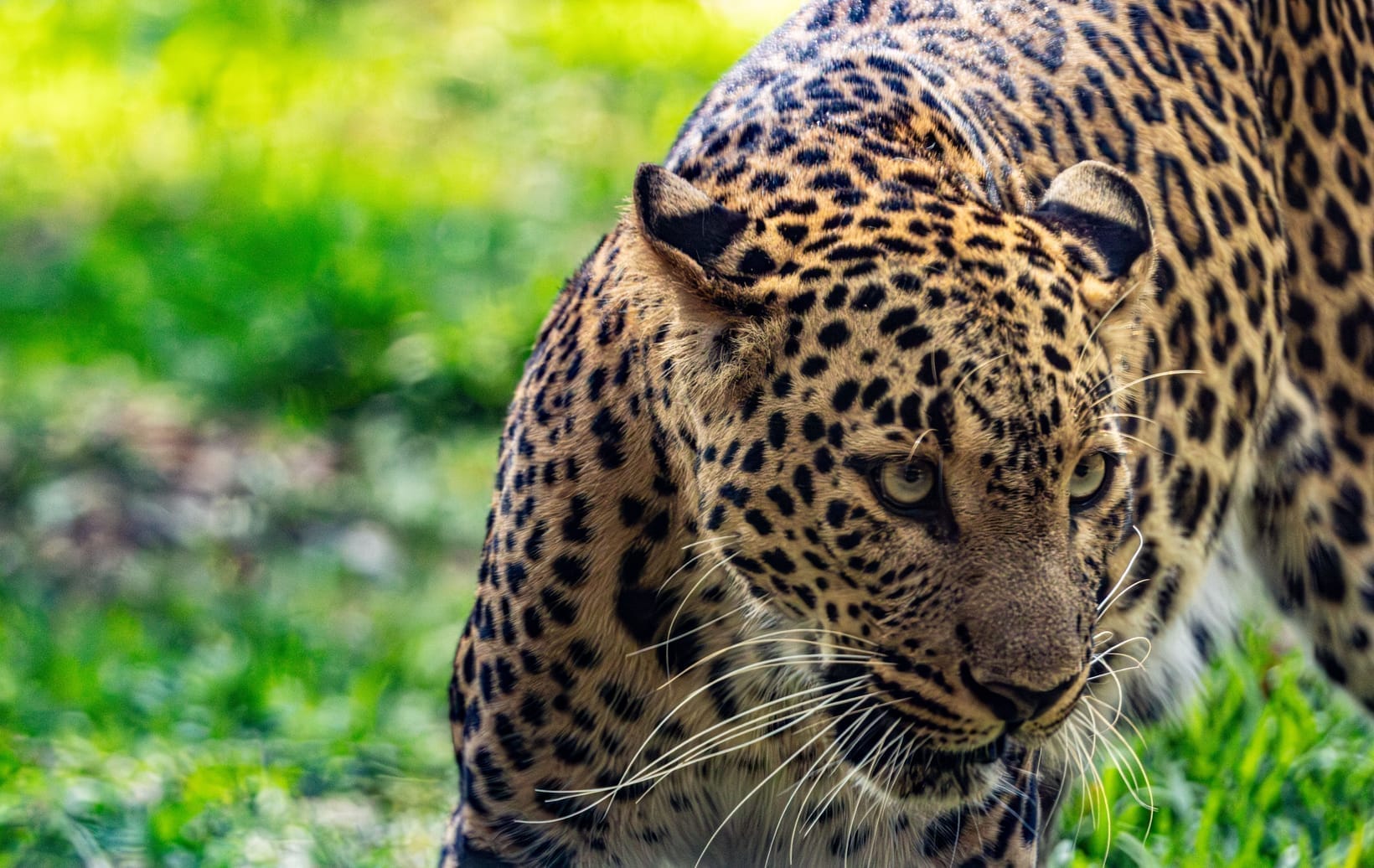
Short answerThe leopard is the most widely distributed big cat on earth and the hardest of the Big Five to see. Males weigh around 60–70 kg but can haul prey heavier than themselves vertically up a tree — which they do to keep kills from lions and hyenas. Solitary, largely nocturnal, and present in far more places than it is seen.
Most safari travellers will see lions on their first game drive and may never see a leopard at all. That is not because leopards are rare — they are the most widespread big cat in the world — but because being unseen is the thing they are best at.
The most adaptable big cat on earth
Leopards occur across sub-Saharan Africa and through much of Asia, from rainforest to desert edge to mountain, and they persist on the fringes of large cities where every other big cat has been extirpated.
That adaptability comes from three traits: they will eat almost anything from a beetle to a young antelope, they are largely nocturnal, and they need no social group to succeed. A single leopard in a small territory can go unnoticed for years.
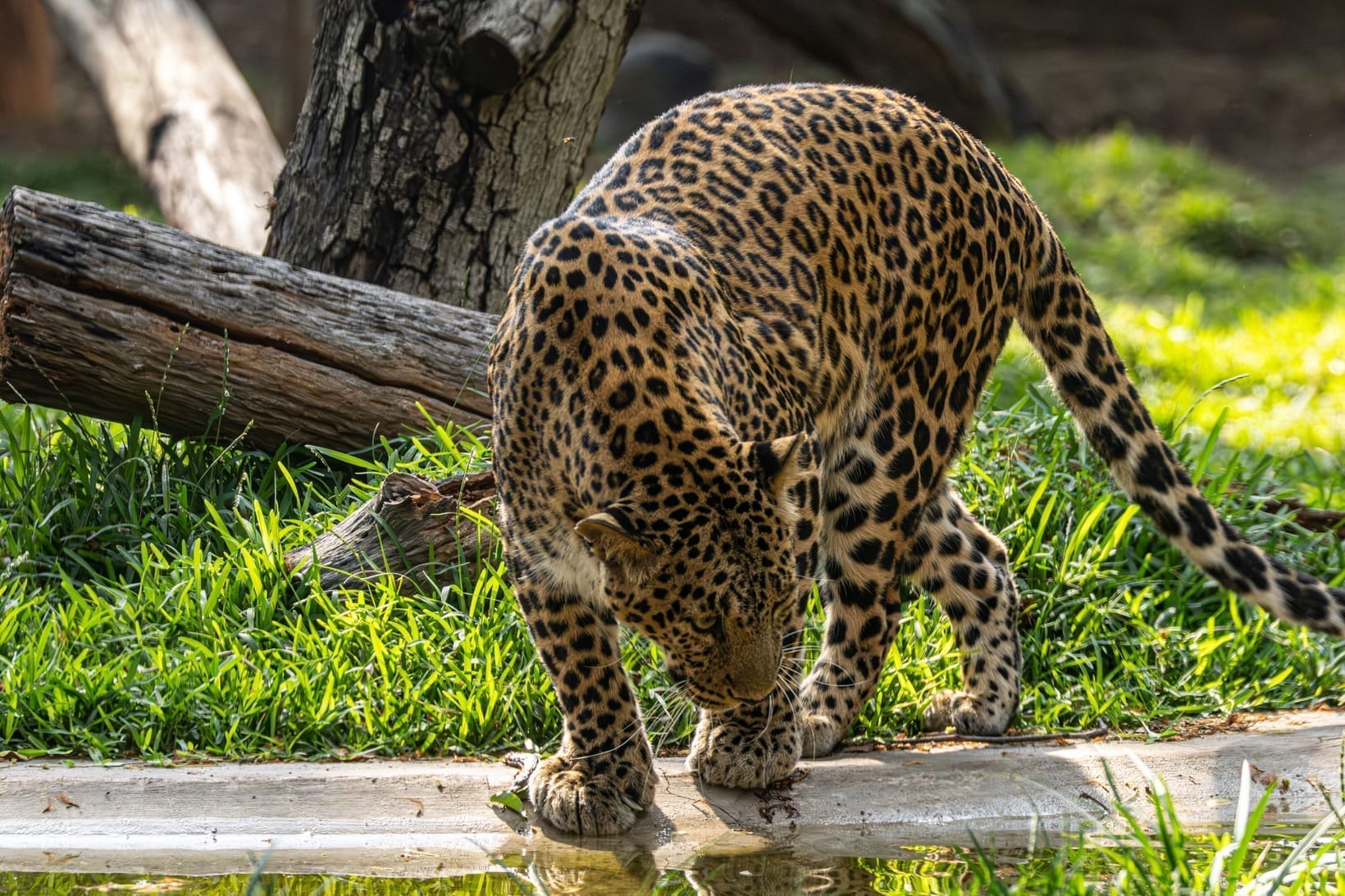 Leopards are largely solitary and most active after dark
Size and strength
| Detail | |
|---|---|
| Scientific name | Panthera pardus |
| Male weight | Around 60–70 kg |
| Female weight | Around 30–40 kg |
| Social structure | Solitary except when mating or with cubs |
| Activity | Mainly nocturnal and crepuscular |
| Diet | Extremely broad — rodents to antelope |
| Lifespan in the wild | Typically 12–17 years |
| IUCN status | Vulnerable |
Pound for pound the leopard is the strongest of the big cats. A lion is far heavier, but no lion hauls a carcass up a tree.
Why leopards drag kills into trees
Because they cannot win a fight over food. A leopard weighs a third of what a male lion does and less than a clan of hyenas can collectively bring to bear. On the ground, a leopard that kills is a leopard that is about to lose its kill.
The solution is vertical. Leopards regularly carry prey heavier than themselves — young antelope, warthog — up a vertical trunk into a fork where nothing else can follow, and feed from it over several days.
Telling a leopard from a cheetah
| Leopard | Cheetah | |
|---|---|---|
| Markings | Rosettes — spot clusters forming rings | Simple solid spots |
| Face | No tear marks | Black tear lines from eye to mouth |
| Build | Heavy, muscular, low | Slender, long-legged, deep-chested |
| Climbs | Constantly | Rarely, and not with prey |
| Active | Mostly at night | Mostly by day |
| Hunting style | Ambush at close range | Pursuit at speed |
| Retractable claws | Yes | Only semi-retractable |
The full comparison is in leopard vs cheetah, and how the predators interact is covered in do lions eat leopards, cheetahs and hyenas.
Why leopards are so hard to see
- They are nocturnal. Most game drives happen when leopards are asleep.
- They are solitary. There is no pride to give away a position.
- They are silent.No roaring contact calls — the leopard “saw” is occasional and quiet.
- The camouflage is exceptional. Rosettes dissolve a leopard into dappled shade at twenty metres.
- They avoid vehicles in parks where they are not habituated to them, which is most of Uganda.
This is why leopard sightings in Uganda are less reliable than in parts of Kenya, Tanzania or Botswana, where individual animals in heavily visited areas have grown accustomed to vehicles over generations.
Where to look in Uganda
| Park | Notes |
|---|---|
| Queen Elizabeth | Present throughout; the Mweya peninsula and Kasenyi produce occasional sightings |
| Murchison Falls | Good numbers on the Buligi plains; often seen at dusk |
| Kidepo Valley | Present in the Narus Valley, and with far fewer vehicles competing for a sighting |
| Lake Mburo | Present but rarely seen — the night drive is the best chance |
| Semuliki / forest parks | Forest leopards occur but are effectively never seen |
The practical advice: book a night game drive where one is available, ask your guide about any known individual in the area, and treat a leopard as a bonus rather than something to plan around. Travellers who set their heart on one often end a good trip disappointed.
Conservation
The leopard's huge range makes it look secure and it is not. The IUCN lists it as Vulnerable, and the species has been lost from a large share of its historical range. Because leopards persist quietly in farmland and near settlements, their decline is less visible than the lion's and correspondingly less reported.
The pressures are habitat loss, depletion of the small and medium prey they depend on, retaliatory killing over livestock, and trade in skins for ceremonial use.
See also lion facts, spotted hyena facts, and our roundup of the big cats of Africa.
Ask us about night drives if leopard is high on your list — it changes which parks and which lodges make sense.
Leopards: common questions
How big is a leopard? African leopards typically weigh around 60–70 kg for males and 30–40 kg for females, making them substantially smaller than lions but far more powerfully built for their size. Size varies considerably by region — forest leopards tend to be smaller than those in open savanna.
Why do leopards take their kills up trees? To keep them from lions and hyenas. A leopard is smaller than both and cannot defend a carcass on the ground, so hauling it into a tree removes the competition entirely. They are strong enough to carry prey heavier than themselves up a vertical trunk, which is among the more remarkable feats of strength in the animal world.
What's the difference between a leopard and a cheetah? Leopards have rosettes — clusters of spots forming rough rings — and a heavy, muscular build. Cheetahs have simple solid spots, a slender greyhound frame, and black 'tear marks' running from eye to mouth. Behaviourally, leopards are nocturnal, solitary and climb; cheetahs are diurnal, fast and do not.
Are leopards dangerous to humans? Leopards generally avoid people and are rarely seen even where they are common. They are powerful and capable of killing a human, and habituated or cornered animals have caused serious injuries, but attacks on safari visitors in a vehicle are essentially unheard of.
Where can you see leopards in Uganda? Queen Elizabeth, Murchison Falls and Kidepo Valley all hold leopards, and Lake Mburo has them too. Sightings are much less predictable than lion sightings anywhere — the best chances come on night drives in the parks that permit them, and in areas where a particular animal is known to the guides.
Are leopards endangered? The leopard is classified as Vulnerable on the IUCN Red List. Its huge range and adaptability disguise steep regional declines — the species has been lost from large parts of its historical range through habitat loss, prey depletion and conflict with people.
Sources
- International Union for Conservation of Nature — Panthera pardus (Leopard) — species assessmentAccessed 28 Jul 2026
- Uganda Wildlife Authority — Uganda's national parks — predatorsAccessed 28 Jul 2026