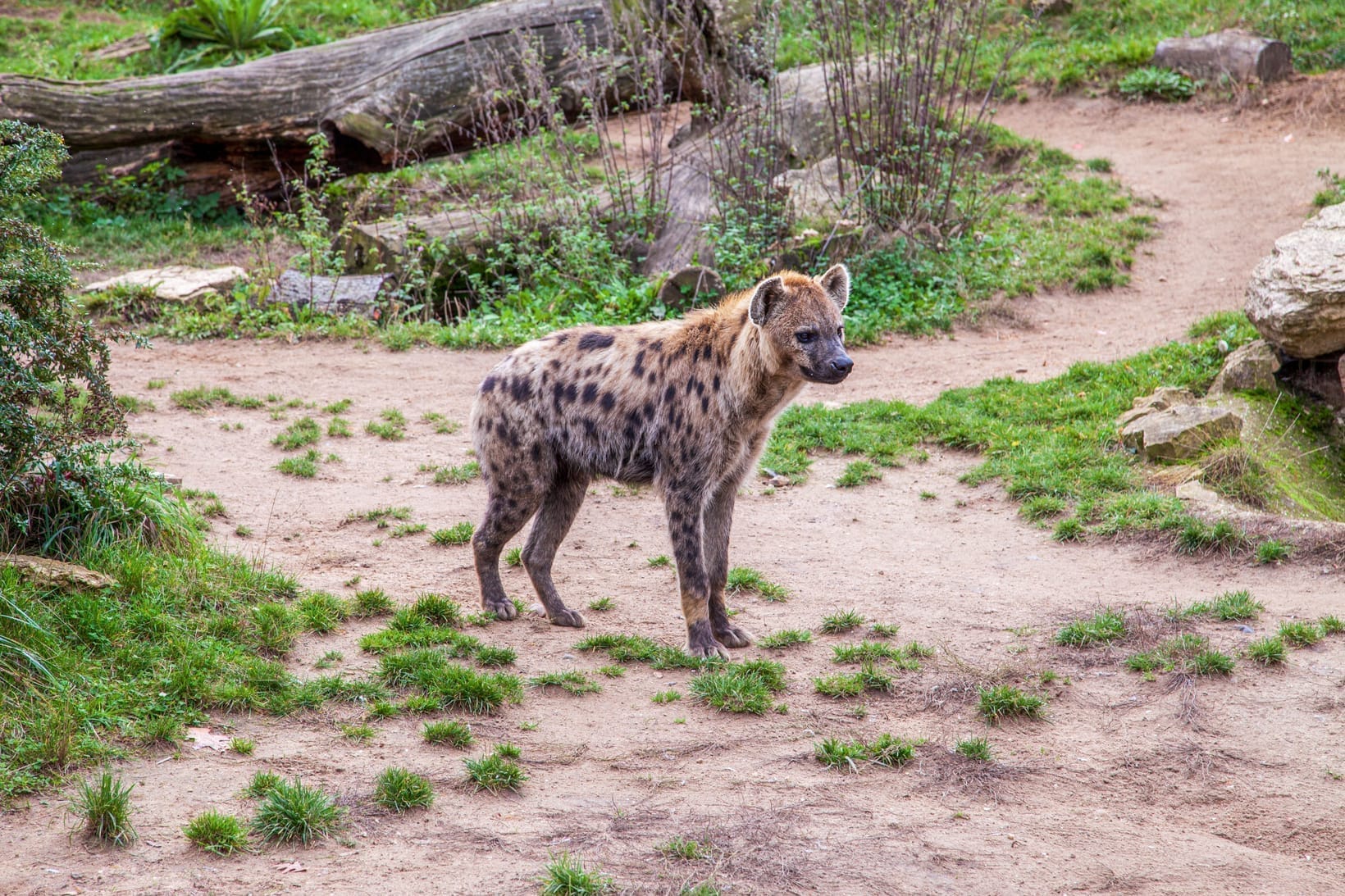
Short answerSpotted hyenas hunt the majority of what they eat — the scavenger reputation is largely wrong, and in many areas lions steal from hyenas rather than the reverse. They are not dogs but cat-relatives, they live in strictly female-dominated clans, and they have among the most powerful bites of any mammal.
No African animal has a worse reputation relative to what it actually does. The hyena arrives in most people's heads via a cartoon: a cowardly, cackling scavenger that steals from nobler animals.
Almost every part of that is wrong, and the real animal is considerably more interesting.
The scavenger myth
Spotted hyenas are capable, cooperative predators. Field studies across different ecosystems consistently find them killing the majority of what they consume, with the proportion varying by region and prey availability. In some populations the figure is overwhelming.
They hunt wildebeest, zebra, antelope and warthog, running prey down over distance rather than ambushing it — a hyena can sustain a chase far longer than any cat.
Hyenas are not dogs
They look canine — long legs, sloping back, blunt muzzle — and they are not. Hyenas sit in the Feliformia, the cat-like branch of the carnivores, alongside mongooses, civets, genets and cats. Dogs are in the other branch entirely.
The resemblance is convergent evolution: two lineages arriving at a similar body plan because both make a living by running long distances after prey.
Ruled by females
| Detail | |
|---|---|
| Scientific name | Crocuta crocuta |
| Family | Hyaenidae — Feliformia, not Caniformia |
| Social unit | Clan, sometimes dozens of animals |
| Dominance | Strictly matriarchal; all females outrank all males |
| Size | Females larger than males |
| Rank | Inherited from the mother |
| Diet | Mostly hunted; also scavenged |
| IUCN status | Least Concern, but declining in parts of its range |
Clan society is rigid. Rank is inherited maternally, much as in some primates, and a cub's position in the hierarchy is essentially set by whose daughter it is. Males typically leave their birth clan and enter a new one at the bottom of the ladder, below every female and every cub.
The jaws
A spotted hyena's skull is built around bone-crushing. The jaw musculature and the bone-anchoring architecture of the skull deliver one of the highest bite forces of any mammal for its size, and the digestive system processes what the jaws produce — bone, hide, hooves and horn.
The visible consequence, which every guide will point out: hyena droppings turn chalk-white as they dry, from the calcium in the bone.
What the laugh actually means
The famous giggle is a real vocalisation, and it does not mean amusement. It is generally produced by an animal that is excited, frustrated, or under social pressure — commonly around a kill, or while being harassed by a higher-ranking clan member.
The broader repertoire is remarkable. The long-distance whoop carries for kilometres and functions as contact and identity signalling, in something like the way a lion's roar does. Hearing a whoop answered across a valley at night is one of the better sounds on an African night drive.
Hyenas and lions
The two are direct competitors and the relationship is permanently hostile. Lions kill hyenas when they can, and hyena clans mob and harass lions — particularly lone females — to drive them off kills. Numbers decide it: a large clan can displace a small pride, and a coalition of males can hold a carcass against many hyenas.
This is intraguild competition rather than predation, and it is covered in more depth in do lions eat leopards, cheetahs and hyenas and the cheetah's side of it.
Where to see them in Uganda
| Park | Notes |
|---|---|
| Queen Elizabeth | Present on the Kasenyi plains; often heard at night from lodges |
| Murchison Falls | Good numbers on the Buligi plains |
| Kidepo Valley | Present, and the emptiness makes for undisturbed viewing |
| Lake Mburo | Present but scarce |
The practical tip: hyenas are frequently the first large carnivore visitors see, often at a den near a track where cubs are visible in the late afternoon. Ask your guide whether a den is currently active — cubs are engaging in a way the adults are not, and dens are known to guides long before they are obvious to anyone else.
For the rest of the predator guild, see African wild dog facts and leopard facts.
Ask us about night drives — they are permitted in only a few Ugandan parks and they transform what you see of the nocturnal predators.
Spotted hyenas: common questions
Do hyenas hunt or only scavenge? They hunt. Studies across different regions find spotted hyenas killing the majority of what they eat — often well over half and in some populations far more. The image of the pure scavenger is largely a myth, and in many areas it is lions that steal from hyenas rather than the other way round.
Are hyenas related to dogs? No. Despite the dog-like appearance, hyenas belong to the Feliformia — the cat-like branch of the carnivores — which makes them more closely related to mongooses, civets and cats than to dogs. The resemblance is convergent evolution, not shared ancestry.
Are female hyenas dominant? Yes. Spotted hyena clans are matriarchal, with females larger and socially dominant over all males. Rank is inherited, and a clan's lowest-ranking female outranks its highest-ranking male. It is one of the most rigidly female-dominated societies among mammals.
How strong is a hyena's bite? Extremely strong — spotted hyenas have among the most powerful bites of any mammal relative to body size, with skull and jaw musculature built for crushing bone. They can digest bone, hide and hoof, which is why hyena droppings are often white with calcium.
Why do hyenas laugh? The 'laugh' is a specific vocalisation, generally produced when an animal is excited, frustrated or under social pressure — often around a kill or when being harassed by higher-ranking clan members. It is a social signal, not amusement. Hyenas also have a large repertoire of whoops, groans and giggles.
Where can you see hyenas in Uganda? Queen Elizabeth, Murchison Falls and Kidepo Valley all hold spotted hyenas. They are most often seen and heard around dawn and dusk, and night drives in the parks that permit them are by far the best way to watch them active rather than resting.
Sources
- International Union for Conservation of Nature — Crocuta crocuta (Spotted Hyaena) — species assessmentAccessed 28 Jul 2026