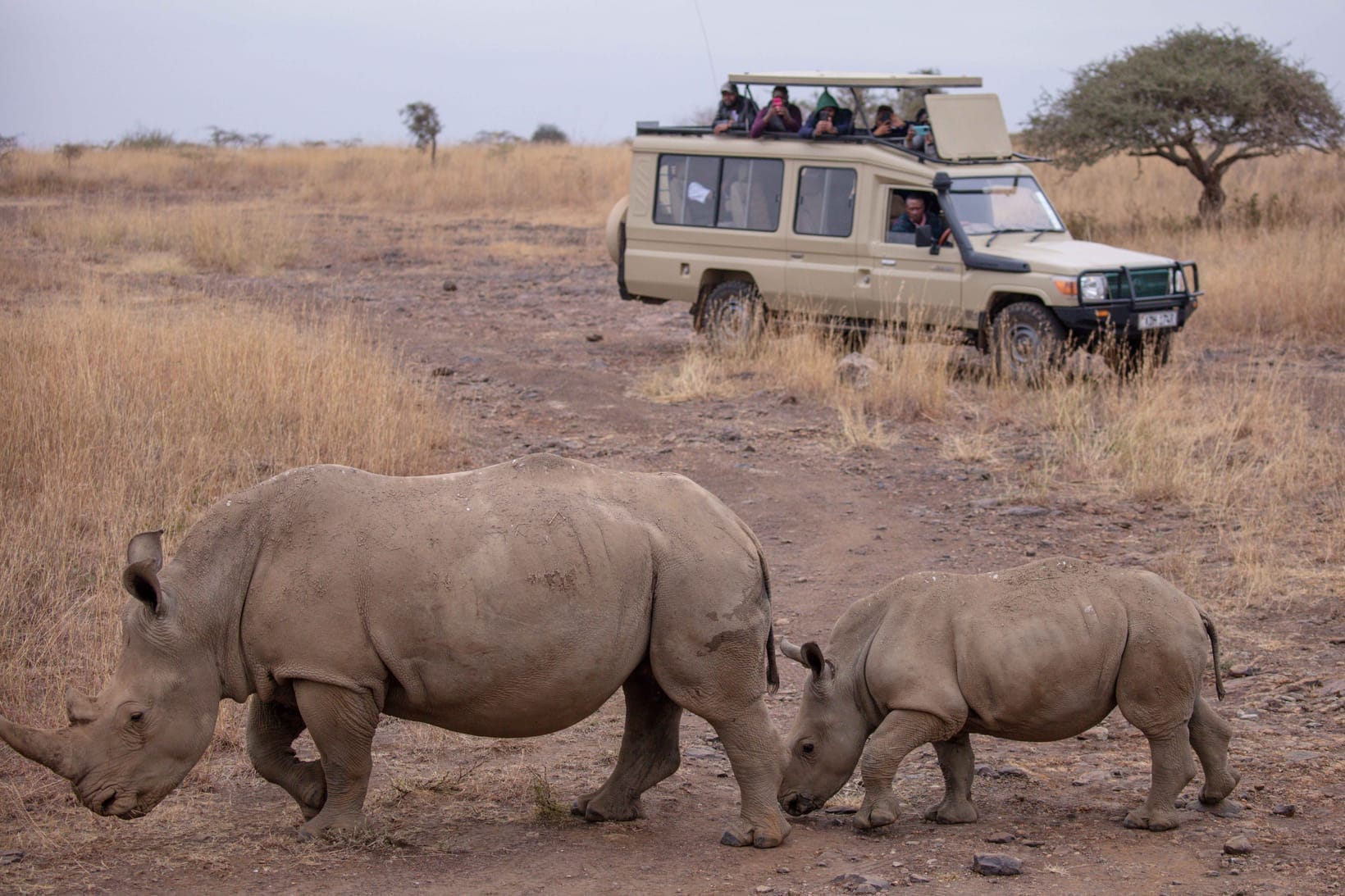
Short answerAlmost. Uganda has four of the Big Five free-ranging in its savanna parks — lion, leopard, elephant and buffalo. It has no wild rhino at all; they were poached to national extinction by the 1980s. You can see rhino in Uganda, on foot, at Ziwa Rhino Sanctuary, but that is a protected breeding reserve rather than a national park, and any operator claiming a wild Ugandan rhino is claiming something that does not exist.
You will find plenty of pages stating flatly that Uganda has the Big Five. That is true in the sense that you can see all five animals in one trip. It is misleading in the sense that matters, so here is the version with the asterisk attached.
Four in the wild, one in a sanctuary
| Animal | Wild in Uganda? | Where |
|---|---|---|
| Lion | Yes | Queen Elizabeth (including the tree-climbers at Ishasha), Murchison Falls, Kidepo Valley |
| Leopard | Yes | All three savanna parks — present everywhere, seen rarely |
| African elephant | Yes | Queen Elizabeth, Murchison Falls, Kidepo. Large and easily found. |
| Cape buffalo | Yes | Abundant in every savanna park. The easiest of the five. |
| Rhino | No — extinct in the wild since the 1980s | Ziwa Rhino Sanctuary only, a managed breeding reserve |
The rhino asterisk
Ziwa Rhino Sanctuary sits on the main road between Kampala and Murchison Falls, which is convenient enough that nearly every northern itinerary stops there. What you do is genuinely good: you track rhino on foot, with rangers, at close range — an experience you cannot have in a vehicle-only park, and one most people rate higher than they expected.
What it is not is a wild sighting. The sanctuary is fenced, the animals are monitored around the clock by armed rangers, and the population exists as a breeding project rather than a natural one. Full detail is in our Ziwa Rhino Sanctuary guide.
Where to find each of the five
Buffalo — everywhere, in large herds, from your first game drive onward. Nobody has ever missed buffalo.
Elephant — reliable in Queen Elizabeth and Murchison Falls. The Kazinga Channel boat cruise puts you alongside them at the water in the afternoon, which is the easiest elephant viewing in the country.
Lion— all three savanna parks. Uganda's signature version is the tree-climbing lions of Ishasha, in the southern sector of Queen Elizabeth, where prides habitually lie in fig trees. Behaviour recorded regularly in only a couple of places on the continent.
Rhino — Ziwa, on foot, as a half-day stop en route north.
Leopard — present in all three parks and the reason most Big Five attempts fail. See below.
The one that actually decides it
Leopard is the animal that determines whether you complete the five, and it is worth being blunt about the odds rather than selling optimism.
Leopards are common in Uganda's savanna parks and almost never seen. They are nocturnal, solitary, superbly camouflaged and actively avoid vehicles. A three-day safari has a modest chance. A week of properly timed drives has a good one. Detail in leopard facts.
| Animal | Realistic chance on a well-planned trip |
|---|---|
| Buffalo | Effectively certain |
| Elephant | Very high — near-certain with a Kazinga boat cruise |
| Rhino | Effectively certain at Ziwa — tracked on foot |
| Lion | High in Queen Elizabeth, Murchison or Kidepo |
| Leopard | The genuine variable. Improves markedly with time and night drives. |
The route that collects all five
Uganda's geography makes this straightforward, because Ziwa sits on the way to the best of the savanna.
Six days — the efficient version. Entebbe → Ziwa (rhino on foot, half a day) → Murchison Falls (2 nights: game drives for lion, elephant, buffalo, leopard; boat to the falls) → Kampala. Four of five near-certain, leopard the open question.
Eight to ten days — the version we would book. Add Queen Elizabeth and the Ishasha sector for tree-climbing lions and a second serious leopard opportunity, plus the Kazinga Channel cruise. This is the itinerary where the five genuinely comes together.
The Uganda version. Add gorillas in Bwindi and chimpanzees in Kibale, and the trip stops being about the Big Five at all — which is the honest recommendation, and the subject of the next section.
Is the Big Five the right goal in Uganda?
We would gently argue not, and it is worth saying so even though it works against selling a Big Five package.
The Big Five is a colonial-era hunting list — the five animals considered most dangerous to shoot on foot. It survives as a marketing device, and it is a genuinely useful shorthand in Kenya, Tanzania, Botswana and South Africa, where the five are the main event.
Uganda is not that country. Uganda is where you can trek mountain gorillas in the morning and chimpanzees two days later, in the same trip, with around twenty primate species and over a thousand bird species around them. Nowhere else offers that combination. Judging Uganda on a checklist built for savanna hunting misses the reason to come.
| If you want | The honest recommendation |
|---|---|
| The Big Five, efficiently | Kenya or Tanzania. Higher densities, shorter distances, rhino in the wild. |
| The Big Five plus gorillas | Uganda for the gorillas and four of the five; add Ziwa for rhino. |
| Gorillas and chimpanzees | Uganda, decisively. No other country combines them as well. |
| Both, properly | Uganda plus Kenya or Tanzania as a combined trip — the gorillas are a short flight from the Mara. |
More on that choice in Uganda vs Kenya vs Tanzania. And if the answer is both, the combination is easier than it looks — the gorillas are a short flight from the Masai Mara, where the rhino asterisk disappears entirely (see Can You See the Big Five in Kenya?).
We will build you a Big Five itinerary if that is what you want, and we will tell you where the leopard odds actually sit rather than promising five ticks. See how our Uganda trips are routed, or tell us what you most want to see.
The Big Five in Uganda: common questions
Can you see the Big Five in Uganda? Yes, but with one honest qualification. Lion, leopard, elephant and buffalo all occur wild and free-ranging in Uganda's savanna parks. Rhino do not — they were poached to national extinction by the 1980s, and the only place to see them is Ziwa Rhino Sanctuary, a protected breeding reserve rather than a national park.
Are there rhinos in Uganda? Only at Ziwa Rhino Sanctuary, which holds a managed population of southern white rhino established to reintroduce the species. There are no free-ranging wild rhino anywhere in Uganda. Both black and white rhino were wiped out during the instability of the 1970s and 1980s.
Which Ugandan park has the most of the Big Five? Queen Elizabeth and Murchison Falls each hold four of the five — lion, leopard, elephant and buffalo. Kidepo Valley also has four and offers the wildest setting of the three. None has rhino, so completing the five always means adding Ziwa.
How many days do you need to see the Big Five in Uganda? Realistically six to eight. Ziwa is a half-day stop on the road north, Murchison needs two nights, and either Queen Elizabeth or a second Murchison day gives leopard a fair chance. Trying it in under five days turns the trip into driving with occasional animals.
Is Uganda a good Big Five destination? It is a good Big Five destination and a world-class primate one, and the second is the reason to come. If ticking five species quickly is the goal, Kenya or Tanzania do it more efficiently. Uganda's argument is that it offers gorillas, chimpanzees and four of the Big Five in one country, which nowhere else does.
Where are the tree-climbing lions in Uganda? In the Ishasha sector of Queen Elizabeth National Park, in the far south of the park. The lions there habitually rest in fig and acacia trees — behaviour seen regularly in only a couple of places in Africa. Sightings are common but never guaranteed.
Sources
- Uganda Wildlife Authority — National parks and wildlifeAccessed 29 Jul 2026
- IUCN Red List — Ceratotherium simum — southern white rhinocerosAccessed 29 Jul 2026