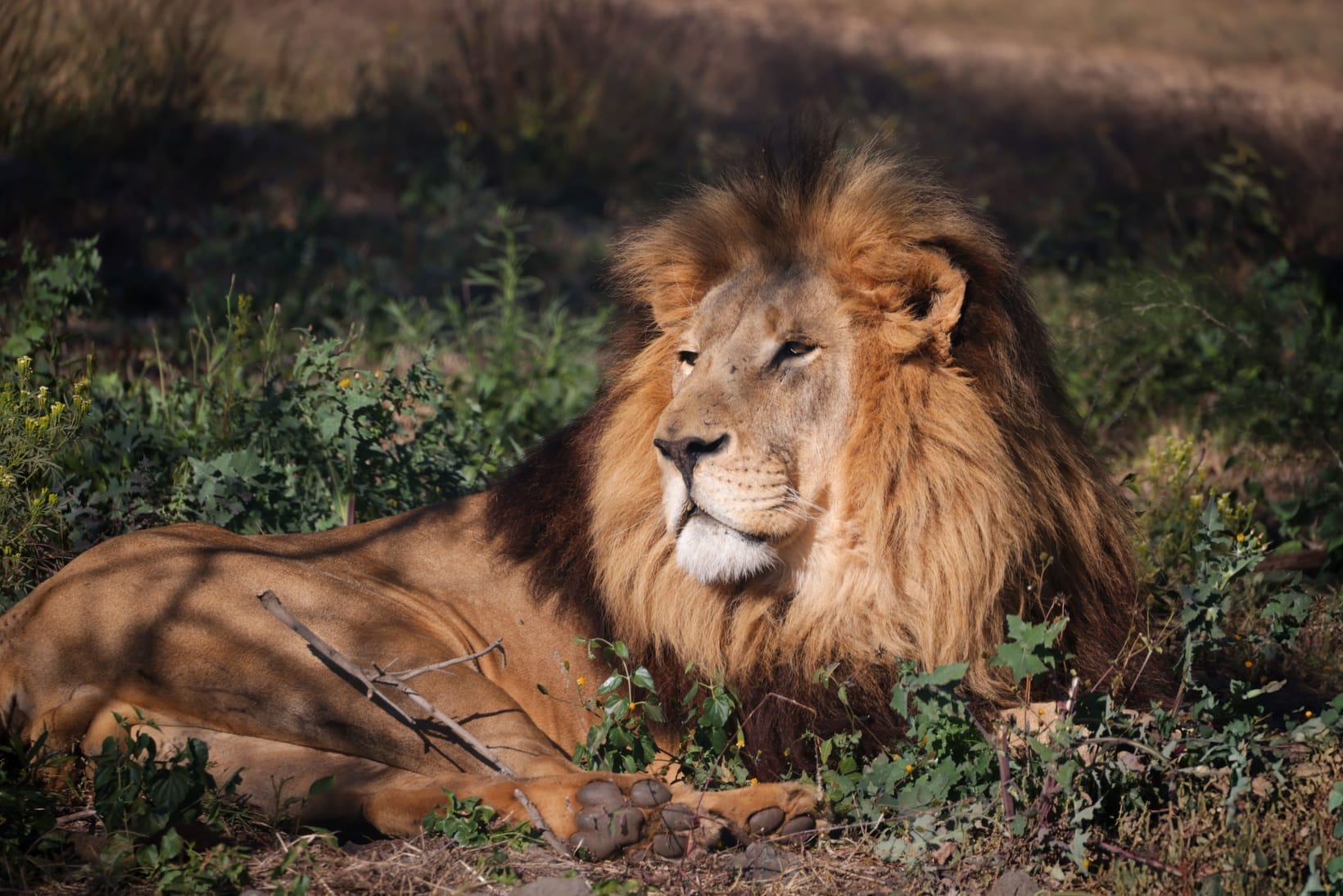
Short answerThe lion is the only genuinely social cat, living in prides built around related females. Males weigh around 180–190 kg, females around 130 kg. Lionesses do most of the hunting, cooperatively. A roar carries up to eight kilometres. In Uganda, look in Queen Elizabeth, Murchison Falls and Kidepo Valley.
Everyone arrives on safari wanting to see a lion, and almost everyone arrives with a slightly wrong picture of what one is. The mane, the roar and the hunt are real; the idle male and the tireless female are a caricature.
This is what lions are actually like, and where in Uganda you have the best chance of watching them properly. For the wider picture see our guide to African safari animals and to the big cats of Africa.
The only social cat
Of roughly forty cat species, the lion is the only one that lives in permanent social groups. Everything distinctive about lions follows from that.
A pride is built around a core of related females — sisters, mothers, daughters — who stay together for life. Males are transient. Young males are pushed out as they mature, spend a nomadic period, and eventually take over a pride, often in coalitions of two or three brothers. That tenure is usually short, a few years, before they are displaced in turn.
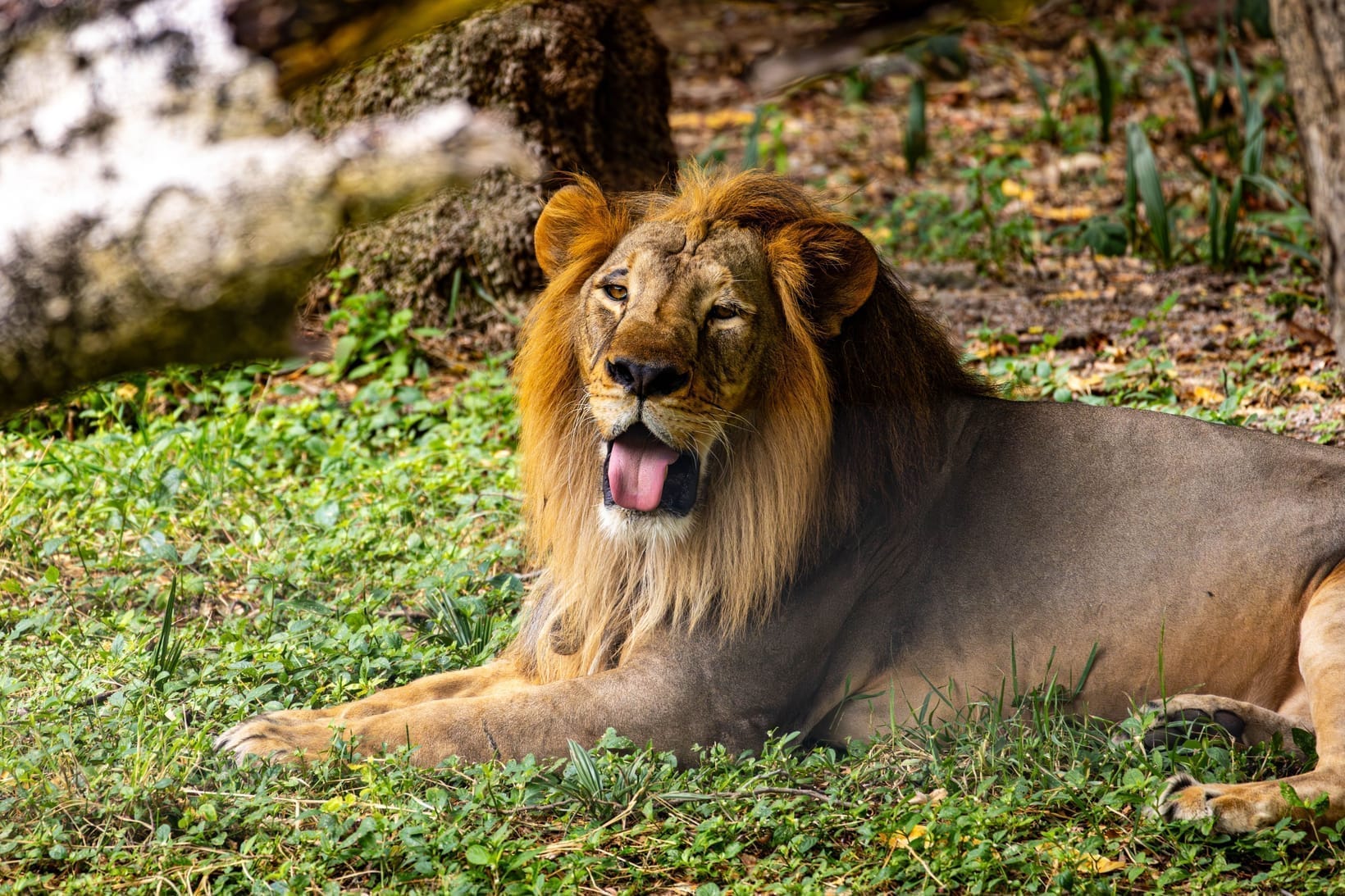 A yawn, not a roar — lions spend up to twenty hours a day resting
Size, strength and the mane
| Detail | |
|---|---|
| Scientific name | Panthera leo |
| Male weight | Around 180–190 kg |
| Female weight | Around 120–130 kg |
| Length | Up to about 3 m including tail |
| Lifespan in the wild | Typically 10–14 years; males often less |
| Pride size | Highly variable — commonly around 10–15 |
| Roar audible to | About 8 km |
| Rest per day | Up to 20 hours |
| IUCN status | Vulnerable |
The mane is the lion's signature and it carries information. Darker, fuller manes are generally associated with older, higher-testosterone, better-conditioned males, and both rival males and females appear to read them. Mane development varies considerably by region and climate — in hotter, denser habitats manes are often thinner.
How lions actually hunt
Cooperatively, mostly at night, and often unsuccessfully. Lionesses work as a group, some driving prey and others waiting in ambush, which is why a pride can take animals far larger than a single cat could manage — buffalo, and in some populations even young elephant.
Males are not passengers. Their weight is decisive on large, dangerous prey, and coalitions defend kills from hyenas and other competitors. But the pride's routine hunting is largely female work.
Lions also scavenge readily, taking kills from cheetahs and hyenas whenever the opportunity arises — the relationship runs both ways, as our posts on cheetahs and their rivals explain.
The roar
A lion's roar carries up to about eight kilometres and is one of the genuinely unforgettable sounds of an African night. It serves two purposes: advertising territorial ownership, and keeping a scattered pride in contact.
Roaring is anatomical. Lions, tigers, leopards and jaguars share a specialised larynx and vocal fold structure that allows it; cheetahs and the smaller cats do not have it and cannot roar. Cheetahs chirp instead — see how fast is a cheetah.
Where to see lions in Uganda
| Park | Where to look | Notes |
|---|---|---|
| Queen Elizabeth | Kasenyi plains at dawn; Ishasha sector in the south | The most-visited lion park, and the tree-climbers are here |
| Murchison Falls | The Buligi plains on the north bank | Good density, open country, easy viewing |
| Kidepo Valley | The Narus Valley | Uganda's most remote lion population — and almost no other vehicles |
| Lake Mburo | Rare | Low predator density is precisely why walking safaris are allowed here |
The tree-climbing lions
In the Ishasha sector of Queen Elizabeth, lions habitually rest in the branches of large fig and acacia trees — behaviour recorded in only a couple of places in Africa, the other being Lake Manyara in Tanzania.
Nobody is certain why. The leading explanations are escaping biting insects on the ground, catching a breeze in the heat, and gaining a vantage point over the plains. It may be all three, and it is likely a learned behaviour passed within the population rather than anything genetic.
Our dedicated post on the tree-climbing lions of Ishasha covers how reliably they are seen, and where to stay in Queen Elizabeth explains why Ishasha needs an overnight rather than a day trip.
How many lions are left
The African lion is listed as Vulnerable by the IUCN, and the trend across most of its range has been downward for decades. The drivers are familiar: habitat converted to farmland, prey populations depleted, and retaliatory killing where lions take livestock.
Lions have disappeared from the large majority of their historical range. The populations that remain are increasingly confined to protected areas, which makes park revenue — including what visitors pay in entry fees — directly load-bearing for their survival.
For the other predators sharing that landscape, see leopard facts, spotted hyena facts and African wild dog facts.
Tell us if lions are a priority and we will weight the itinerary towards Kasenyi, Buligi and the Narus Valley, and towards the times of day that actually produce sightings.
Lions: common questions
How big is an African lion? Adult males typically weigh around 180–190 kg and females around 120–130 kg, with males measuring close to three metres including the tail. Males are noticeably larger than females — one of the more pronounced size differences among the big cats.
Do male or female lions do the hunting? Females do the majority of hunting, usually cooperatively, and they are the more agile hunters. Males contribute more than the old cliché allows — particularly on large or dangerous prey such as buffalo, where their weight matters — but the pride's day-to-day food generally comes from the lionesses.
How far can a lion's roar be heard? Up to around eight kilometres in good conditions. It is used to advertise territory and to locate pride members, and it is produced by a specialised larynx and vocal folds that lions share with the other roaring cats but not with cheetahs or smaller species.
Why do lions sleep so much? Lions can rest for up to twenty hours a day. Hunting is short, intensely energetic and often unsuccessful, so conserving energy between attempts is the efficient strategy. It is also why midday game drives produce so many photographs of sleeping cats.
Where can you see lions in Uganda? Queen Elizabeth National Park — the Kasenyi plains for general sightings and the Ishasha sector for the famous tree-climbing behaviour — plus Murchison Falls, where the Buligi plains hold a good population, and Kidepo Valley in the far north-east, which has Uganda's densest lion population relative to visitor numbers.
Are lions endangered? The African lion is classified as Vulnerable on the IUCN Red List, with populations having declined substantially across the continent through habitat loss, prey depletion and conflict with livestock herders. Some regional populations are in far worse shape than the global category suggests.
Sources
- International Union for Conservation of Nature — Panthera leo (Lion) — species assessmentAccessed 28 Jul 2026
- Uganda Wildlife Authority — Queen Elizabeth and Kidepo Valley National Parks — wildlifeAccessed 28 Jul 2026