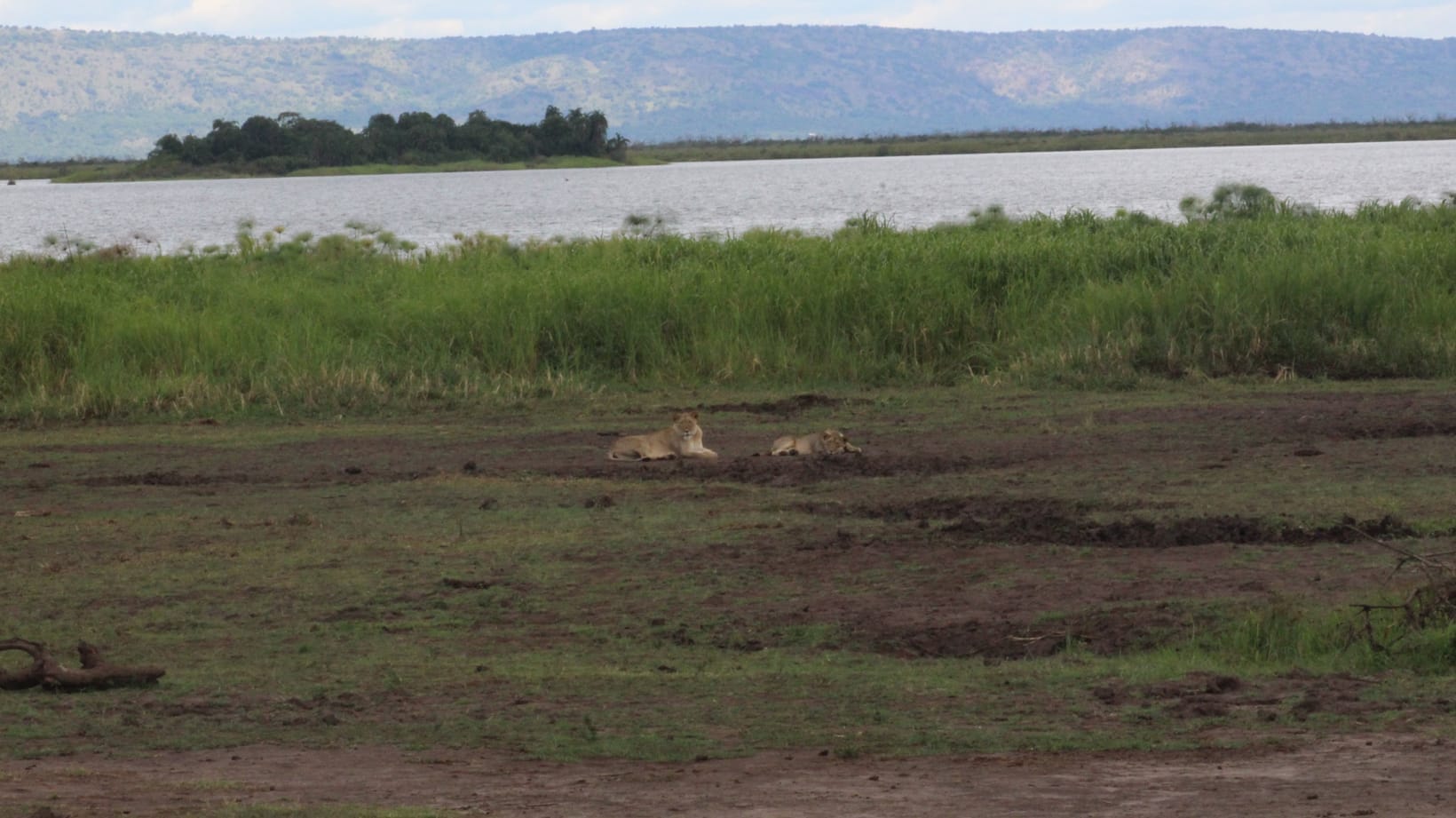
Short answerYes — Rwanda has all five, in Akagera National Parkin the east. It is a genuinely recent achievement: lions returned in 2015 after roughly two decades of local extinction, black rhino from 2017 and white rhino from 2021. That makes Rwanda one of very few countries where you can see the Big Five and trek mountain gorillas on the same trip, about half a day's drive apart.
This is a misconception in the useful direction. Most people assume Rwanda means gorillas and nothing else — a two-day stop bolted onto a bigger trip. That was fair a decade ago. It is now out of date, and the reason is one of the more remarkable conservation turnarounds in Africa.
Yes — and only since recently
| Animal | In Akagera? | Status |
|---|---|---|
| Lion | Yes | Reintroduced 2015 and 2017 after local extinction. Population now well established. |
| Black rhino | Yes | Reintroduced from 2017, with further translocations since. |
| White rhino | Yes | Introduced from 2021, with a further group arriving more recently. |
| African elephant | Yes | Present throughout; a resident population, not reintroduced. |
| Cape buffalo | Yes | Abundant. The easiest of the five by a distance. |
| Leopard | Yes | Resident, rarely seen — as everywhere. |
How Akagera got them back
Akagera nearly ceased to exist. In the aftermath of the 1994 genocide the park was settled by returning refugees and their cattle, roughly two thirds of its area was formally degazetted, and poaching went essentially unchecked. The lions were killed off entirely — largely poisoned by herders protecting livestock. The rhino were already long gone.
Management passed to a joint venture between the Rwanda Development Board and the non-profit African Parks in 2010. What followed was fencing, a serious ranger and canine anti-poaching operation, community revenue-sharing, and then the reintroductions: seven lions from South Africa in 2015, more in 2017, eastern black rhino in 2017, white rhino from 2021.
Where each of the five is
Buffalo and elephant — throughout, and concentrated near the lakes in the north. A boat trip on Lake Ihema is the reliable way to see elephant, hippo and crocodile at close range, and it is the activity most visitors rate highest.
Lion — mainly the central and southern savanna. Early morning and late afternoon drives; the population has grown enough that sightings are now routine rather than remarkable.
Rhino — the hardest of the five here. Black rhino are secretive and nocturnal by preference; white rhino are easier but fewer. Some lodges and the park offer a dedicated rhino-tracking activity with the monitoring team, which improves the odds considerably.
Leopard — resident, and as elusive as anywhere. Night drives are offered and are the best chance.
What you'll realistically see
| Animal | Realistic chance |
|---|---|
| Buffalo | Effectively certain |
| Elephant | Very likely, especially with a Lake Ihema boat trip |
| Lion | Good — routine on morning and evening drives |
| White rhino | Moderate. Better with a dedicated rhino-tracking activity. |
| Black rhino | Low. Genuinely a matter of luck. |
| Leopard | Low, as everywhere. Night drives improve it. |
Set expectations accordingly and Akagera is a delight. Arrive expecting Ngorongoro density and you will be disappointed — that is a comparison the park cannot win and does not need to.
The sixth animal nobody counts
Here is the argument for Rwanda that the Big Five framing obscures entirely.
Rwanda is small. Volcanoes National Park, where you trek mountain gorillas, is about two hours from Kigali on excellent tarmac. Akagera is about two and a half to three hours from Kigali in the other direction. A single week gets you gorillas, golden monkeys and all five, with short drives and no domestic flights.
Add Nyungwein the south-west for chimpanzees and a canopy walk, and you have great apes, Big Five and montane forest in a country roughly the size of Wales. That density of experience per day travelled is Rwanda's real advantage, and no checklist captures it.
Fitting Akagera into a Rwanda trip
Seven days — gorillas and the Big Five. Kigali (1) → Volcanoes (2, trek plus golden monkeys) → Kigali → Akagera (2) → Kigali. Everything on tarmac, nothing rushed.
Ten days — the whole country. Add Lake Kivu and Nyungwe for chimpanzees and the canopy walk. This is Rwanda done properly.
Combined with Uganda.Fly into Kigali, trek in Uganda's Bwindi on the cheaper permit, then return east for Akagera — the routing logic is in combining Uganda and Rwanda.
Akagera against the Mara and Serengeti
| Akagera | Masai Mara / Serengeti | |
|---|---|---|
| Big Five | All five present | All five present |
| Wildlife density | Moderate and improving | Among the highest on earth |
| Great Migration | None | The main event, seasonally |
| Crowding | Very low — you will often have sightings alone | High in peak season |
| Scenery | Lakes, papyrus swamp, rolling hills — unusually pretty | Open plains |
| From the capital | Under three hours by road | A flight, or a long drive |
| Combines with gorillas | Same country, same week | A flight to Uganda or Rwanda |
If the Big Five is the whole purpose of the trip, go to Kenya or Tanzania — the comparison is in Uganda vs Kenya vs Tanzania, and the full case for Kenya specifically is in Can You See the Big Five in Kenya?. If gorillas are the purpose and you want savanna alongside without adding a country, Akagera is the reason Rwanda now answers that on its own.
We route Rwanda trips that take in both ends of the country without wasted days. See how our Rwanda itineraries are built, or tell us how long you have and we will say what fits.
The Big Five in Rwanda: common questions
Does Rwanda have the Big Five? Yes, all five, in Akagera National Park in the east of the country. It is a recent achievement: lions were reintroduced in 2015 after two decades of local extinction, and rhino followed from 2017. Akagera is Rwanda's only savanna park, so it is the only place in the country with any of the five apart from buffalo and elephant.
Can you see the Big Five and gorillas in the same country? In Rwanda, yes — it is one of very few countries where you can. Volcanoes National Park in the north-west has mountain gorillas and Akagera in the east has all five, roughly a half-day drive apart. Uganda comes close but has no wild rhino, only a sanctuary population.
Are there lions in Rwanda? Yes, in Akagera National Park. Rwanda's lions were wiped out in the aftermath of the 1994 genocide, when the park was largely unmanaged. Seven were reintroduced from South Africa in 2015, more followed in 2017, and the population has grown substantially since.
Are there rhinos in Rwanda? Yes, both species, and both reintroduced. Eastern black rhino were translocated to Akagera from South Africa in 2017 with further arrivals since, and white rhino followed from 2021. Sightings are not guaranteed — black rhino in particular are secretive and the park is large.
How many days do you need at Akagera? Two nights is the sensible minimum, giving you a full day plus two half-days of game drives. Akagera is around two and a half to three hours from Kigali, so a single night means most of your time is spent driving rather than looking.
Is Akagera as good as the Masai Mara or Serengeti? No, and it does not claim to be. Wildlife densities are lower and it has no migration. What it offers is all five species in an uncrowded park with genuinely beautiful lake and papyrus scenery, a short drive from a capital city, on the same trip as mountain gorillas. Judged as a companion to Volcanoes rather than a rival to the Serengeti, it is excellent.
Sources
- African Parks — Akagera National Park — wildlife and reintroductionsAccessed 29 Jul 2026
- Rwanda Development Board — Akagera National ParkAccessed 29 Jul 2026