Short answerWhere you stay in Bwindi is decided by your gorilla permit, not the other way round. The forest has four trekking sectors — Buhoma, Ruhija, Rushaga and Nkuringo — with no road through the middle, so moving between them costs two to four hours. Book the permit, note the sector, then choose a lodge within reach of that sector's briefing point.
Almost every guide to Bwindi accommodation is a list of lodges ranked by how nice they look. That ranking is close to useless, because the most beautiful lodge in Bwindi is the wrong choice if it sits three hours from the trailhead your permit is issued for. Bwindi is not one place. It is a 321 km² forest draped over a range of steep hills, with four separate trekking sectors around its edge and no through road linking them.
This guide is organised the way the decision actually gets made: sector first, then price point, then property. Every lodge named here is one we book clients into, drawn from the same list our itinerary pages use, so the names stay current when properties close, rebrand, or change hands.
First decide the sector, then the lodge
The Uganda Wildlife Authority issues each gorilla permit for a named gorilla family, and each family belongs to a sector. You do not get to turn up in Buhoma with a Rushaga permit and be waved through. The briefing happens at the sector's own headquarters at 07:30, and missing it means missing the trek.
So the sequence is fixed: permit first, lodge second. If you have not read up on how permits are allocated, start with our guide to gorilla permit prices and how booking works — the sector is assigned at that point, and everything below follows from it.
| Sector | Character | Accommodation choice | Habituation permits |
|---|---|---|---|
| Buhoma | The original sector, north side. Most developed. | Widest — all three price points, several properties each | No |
| Ruhija | High and cool, east side. Best birding. | Limited — a handful of properties | No |
| Rushaga | South. Most habituated families of any sector. | Good — growing steadily | Yes |
| Nkuringo | South-west, highest trailhead. Steepest treks. | Moderate — a few strong properties | Yes |
Buhoma: the easiest place to stay
Buhoma is the north-western sector and the one most first-time visitors end up in. It has been receiving trekkers the longest, which shows in the infrastructure: a proper cluster of lodges, a community rest camp, a few restaurants, craft stalls, and the park headquarters all within a short drive of one another.
For a first gorilla trek, Buhoma is the low-friction choice. If your trip also takes in Queen Elizabeth National Park, the northern approach through the Ishasha sector lands you here naturally.
| Tier | Indicative rate | Properties we book |
|---|---|---|
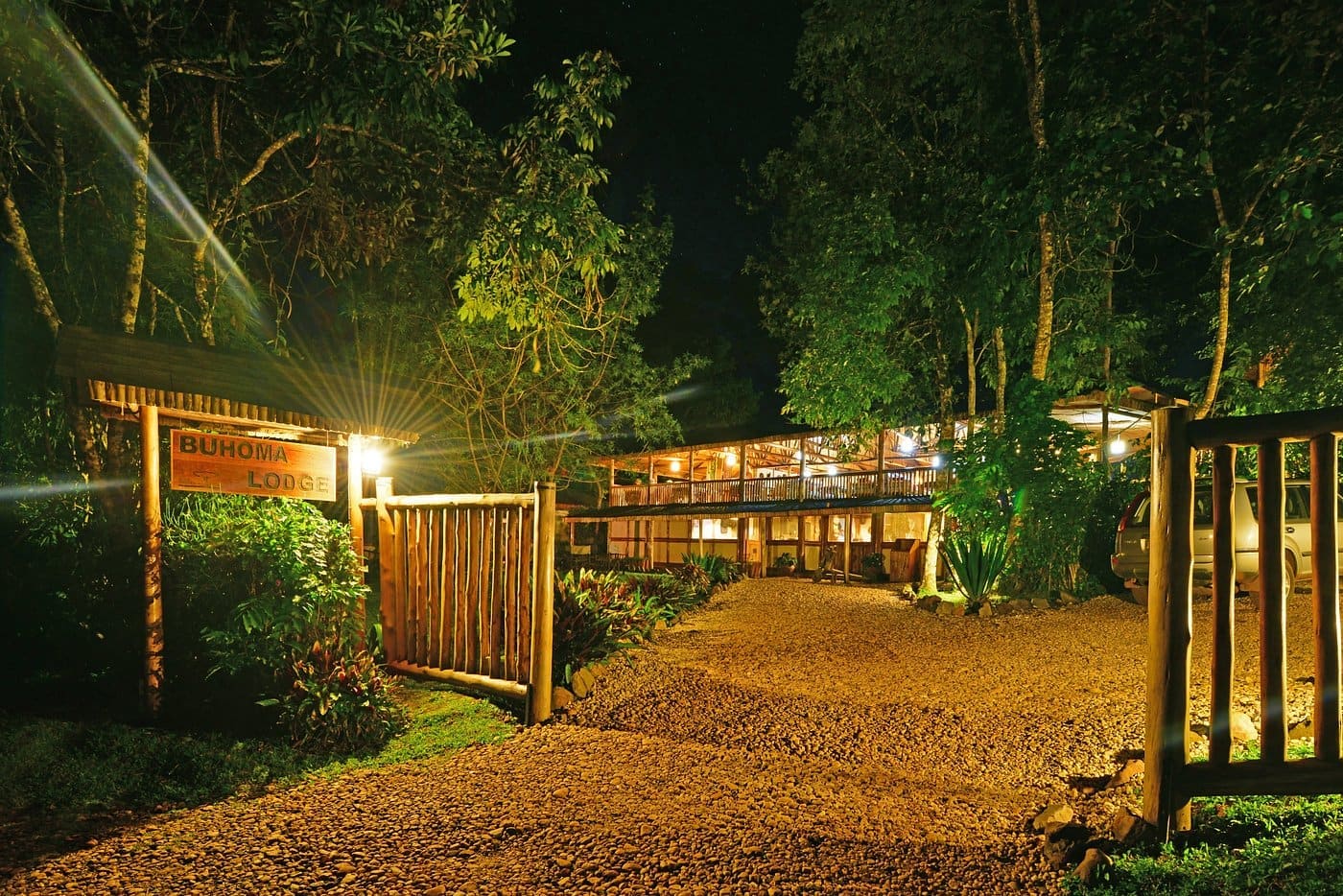
| Luxury | $300–900 pp/night | Buhoma Lodge · Bwindi Lodge · Mahogany Springs Lodge |
| Mid-range | $100–300 pp/night | Engagi Lodge · Buhoma Haven Lodge · Gorilla Forest Camp |
| Budget | $30–100 pp/night | Buhoma Community Rest Camp · Trekkers Tavern Cottages · Bwindi Backpackers Lodge |
Rushaga & Nkuringo: the southern sectors
Rushaga holds more habituated gorilla families than any other sector, and along with Nkuringo it is the only place in Uganda where the Gorilla Habituation Experience is offered — four hours with a family still being habituated, rather than the standard one. Anyone doing that stays south by necessity.
Nkuringo sits highest, and its treks have a reputation for being the most demanding in Bwindi: the trailhead is on a ridge and a good number of treks start by descending into the forest, which means finishing with the climb back out. Worth knowing before you book a lodge there on the strength of the view.
| Tier | Properties we book |
|---|---|
| Luxury | Nkuringo Bwindi Gorilla Lodge · Chameleon Hill Lodge · Gorilla Safari Lodge |
| Mid-range | Ichumbi Gorilla Lodge · Gorilla Mist Camp · Bakiga Lodge |
| Budget | Rushaga Gorilla Haven Lodge · Rushaga Gorilla Camp · Broadbill Forest Camp |
Ruhija: the quiet middle
Ruhija sits high on the eastern side, cooler than the rest of the forest and noticeably quieter. It is the sector serious birders choose — the Mubwindi Swamp trail is the classic site for the African Green Broadbill, and the road through Ruhija is among the best stretches of Albertine Rift birding anywhere.
Accommodation is the thinnest of the four sectors, which is the trade-off for the quiet. There are a handful of properties, mostly simple, and no luxury tier to speak of. Travellers combining gorillas with a serious bird list base here and accept that; everyone else usually does not. If birds are the reason for the trip, our guide to Africa's raptors and large birds gives a sense of what the Albertine Rift holds.
Ruhija also sits at altitude — noticeably higher and colder than Buhoma. Nights need a warm layer in a way they don't lower down, and the cloud sits on the ridge for much of the morning. Beautiful, but not everyone's idea of comfortable.
What each price point actually gets you
The trek itself is identical at every tier. Same rangers, same trackers, same forest, same hour. What changes is everything either side of it — and after six hours in wet forest, some of that matters more than it does on a normal holiday.
| Budget | Mid-range | Luxury | |
|---|---|---|---|
| Hot water | Scheduled | On demand | On demand |
| Power | Solar, limited hours | Solar + generator | Solar + generator, in-room sockets |
| Drying room for boots and kit | Rare | Sometimes | Standard |
| Transfer to briefing point | Often shared | Private | Private, usually shortest |
| Room heating | No | Rare | Fireplace or heater |
| Packed lunch quality | Basic | Good | Good |
Why distance to the briefing point matters most
Briefing is at 07:30. That is not a soft start. A lodge 20 minutes from the headquarters means breakfast at 06:30; a lodge 75 minutes away on a mountain road in the dark means being up before 05:00, and arriving already tired for what may be a six-hour hike.
This is why we treat transfer time as the first filter and the property as the second. A very good mid-range lodge close to the briefing point generally produces a better day than a superb lodge an hour further out.
Staying outside the park: Lake Mutanda and Bunyonyi
Two lakes sit within reach of southern Bwindi and both are genuinely worth a night — just not necessarily the night before a trek.
Lake Mutanda is the closer of the two, with the Virunga volcanoes on the skyline, and works as a base for Rushaga and Nkuringo. Lake Bunyonyi is the more famous, and the better decompression stop — terraced hills, island-dotted water, and one of the few lakes in the region with no hippos or crocodiles, so you can actually swim. Our Lake Bunyonyi guide covers it properly.
Our advice: trek from a lodge in your sector, then move to a lake afterwards. Doing it the other way round means a pre-dawn start on winding roads on the one morning of the trip you cannot afford to be late.
| Tier | Properties we book |
|---|---|
| Luxury | Chameleon Hill Lodge |
| Mid-range | Mutanda Lake Resort · Travellers Rest Hotel |
| Budget | Mutanda Eco Community Centre |
What changes by season
Bwindi is a rainforest close to the equator, which means it rains in every month of the year. The distinction is not wet versus dry but wet versus wetter. What that does to your stay is worth planning around, and it is covered in more depth in our guide to the best time to visit Uganda.
| Period | Conditions | What it means for accommodation |
|---|---|---|
| Jun–Aug, Dec–Feb | Drier, busiest, permits scarcest | Book 6–12 months out. Closest lodges go first; expect peak rates. |
| Mar–May | Heaviest rain, quietest | Widest availability and softest rates, but access roads deteriorate and transfer times stretch. |
| Sep–Nov | Shorter rains, moderate crowds | The value window. Good availability without the worst of the mud. |
Questions worth asking before you book
If you are booking directly rather than through us, these are the questions that actually change your experience. Most lodge websites answer none of them.
- How long is the transfer to the briefing point, in the rain? Ask for the wet-season figure, not the dry-season one.
- Is there somewhere warm to dry boots and clothing overnight?
- Are there power sockets in the room, and for how many hours? Solar-only properties often power a central charging point rather than each room.
- Is the packed lunch included on trek day, and can it handle dietary needs? You will be eating it in the forest with no alternative.
- Do they arrange porters, or is that done at the trailhead? Hiring a porter is both genuinely useful and one of the most direct ways trekking money reaches the surrounding community.
- What is the cancellation policy if the permit date moves? Permits do occasionally get reassigned, and a lodge that won't flex leaves you paying twice.
How to choose, in order
- Confirm the permit and note the sector. Nothing else can be decided before this.
- Filter to properties within an hour of that briefing point. This usually cuts the list by more than half.
- Pick the price point honestly. Consider the evening and the morning after, not the photographs.
- Check the drying room and power situation if you are trekking more than once or travelling in the wet season.
- Book it at the same time as the permit. The closest lodges are small and fill alongside permits, not after them.
If you would rather not run that process yourself, it is exactly what we do when we build a trip — permit, sector, lodge, and transfers arranged as one thing rather than three. Tell us your dates and we will come back with the sector we can get and the properties that match it.
Bwindi accommodation: common questions
Where should I stay for gorilla trekking in Bwindi? Stay in the sector your gorilla permit is issued for. Bwindi has four trailheads — Buhoma, Ruhija, Rushaga and Nkuringo — spread around a forest with no road through the middle, and driving between them takes two to four hours on mountain roads. Book the permit first, then the lodge that matches it. Buhoma has the widest choice of accommodation at every price point.
How far in advance should I book a Bwindi lodge? Book as soon as your gorilla permit is confirmed, which for peak season (June to September, December to February) usually means six to twelve months ahead. The lodges closest to each briefing point are small — often eight to ten rooms — and they fill in step with permit availability rather than after it.
Is it worth paying for a luxury lodge in Bwindi? It depends on what you want from the evenings rather than the trek itself. The trek is identical regardless of where you sleep — same rangers, same forest, same hour with the gorillas. What the luxury tier buys is a hot shower that reliably works after a wet trek, a proper drying room for boots and kit, better food, and usually a shorter transfer to the briefing point.
Can I stay in Kisoro or Lake Bunyonyi and trek gorillas in Bwindi? Yes for the southern sectors, with caveats. Lake Mutanda and Kisoro are within reasonable reach of Rushaga and Nkuringo. Lake Bunyonyi is further and better treated as a post-trek stop than a base — an early start from Bunyonyi to a Bwindi briefing means leaving in the dark on winding roads.
Do Bwindi lodges have electricity and hot water? Most run on solar with generator backup, so power is available but not always around the clock, and sockets in rooms are not universal at the budget tier. Hot water is generally available at all three tiers, though at budget properties it may be heated to a schedule rather than on demand. Charge camera batteries at dinner rather than overnight.
What is the difference between Buhoma and Rushaga for accommodation? Buhoma is the older, more developed sector and has the widest spread of properties, from community-run camps to high-end lodges, all within a short drive of the briefing point. Rushaga and Nkuringo have fewer properties but are the only place to book the Gorilla Habituation Experience, so travellers doing that stay south by necessity.
Sources
- Uganda Wildlife Authority — Bwindi Impenetrable National Park — tariffs and gorilla permitsAccessed 28 Jul 2026
- UNESCO World Heritage Centre — Bwindi Impenetrable National ParkAccessed 28 Jul 2026