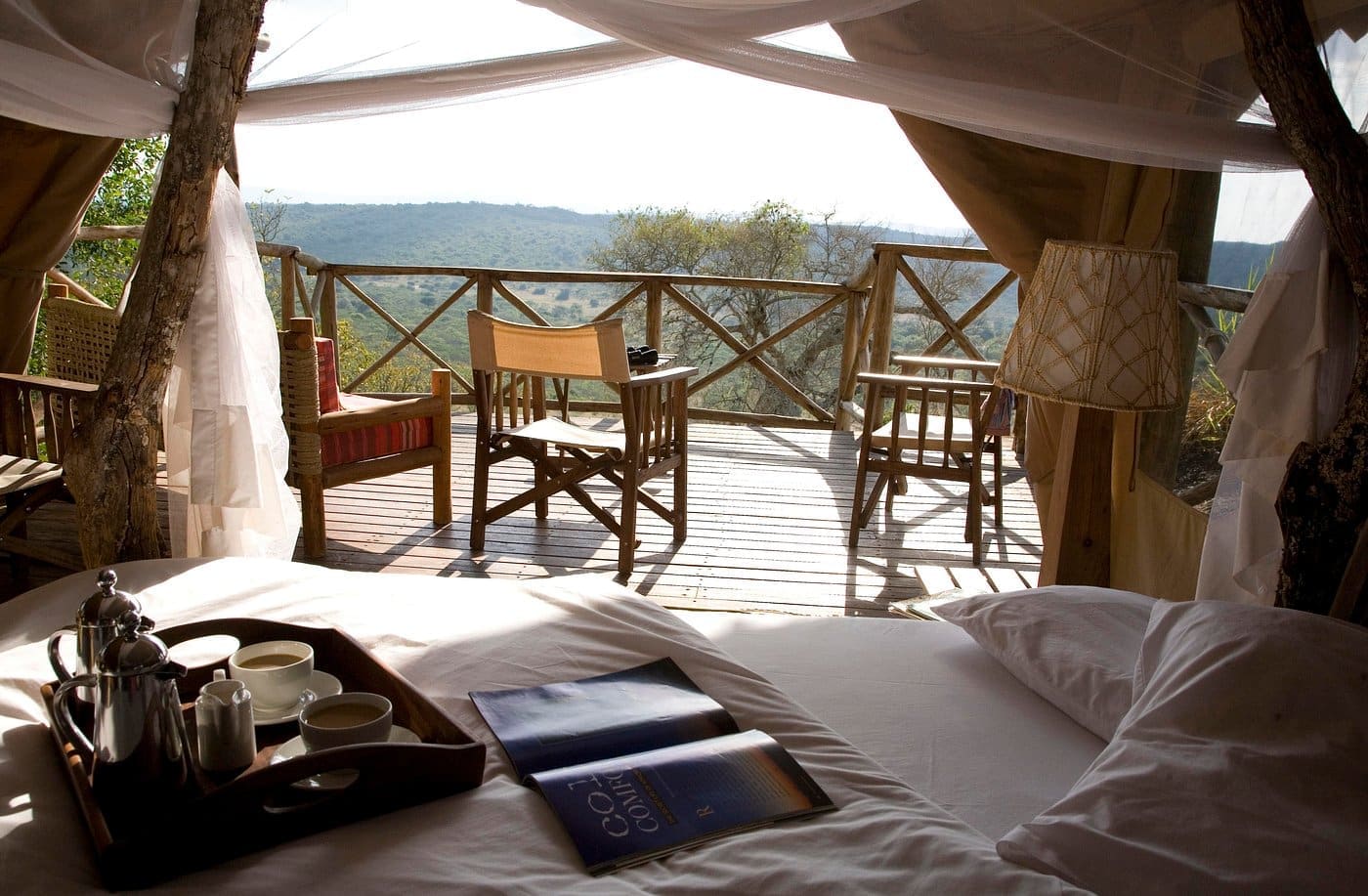
Short answerLake Mburo is the closest national park to Kampala and works best as a first or last night on a south-western itinerary rather than a destination in itself. Stay inside the park or on its boundary — it is small enough that either works, and staying close is what makes the walking safaris and night drives practical.
Mburo is Uganda's smallest savanna park and its most underestimated. It has no elephants and no lions to speak of, which sounds like a criticism until you realise that is exactly why you are allowed to walk here.
This guide covers where to sleep and how to use the stop. For the park itself, see the Lake Mburo National Park guide.
What Lake Mburo is actually for
Almost nobody flies to Uganda to see Lake Mburo. Its value is positional: it sits on the road between Kampala and the south-west, so it converts a punishing drive to Bwindi into two civilised days with a game drive in the middle.
It also offers things the bigger parks cannot. Zebra are common here and essentially absent from the rest of Uganda's park system. Impala occur here and nowhere else in the country — the animal that gave Kampala its name, as our impala facts post explains. And you can get out of the vehicle.
Inside the park or on the boundary
| Inside the park | On the boundary | |
|---|---|---|
| Early game drives | No gate to clear | Short transfer plus the gate |
| Night drives | Straightforward | Possible, but a longer evening |
| Walking safaris | Start from the lodge in some cases | Drive to the start point |
| Horseback safaris | Not offered in-park | This is where they operate |
| Price | Generally higher | Often better value |
| Wildlife around camp | Zebra and impala routinely wander through | Varies |
Where to stay at Lake Mburo
| Tier | Properties we book |
|---|---|
| Luxury | Mihingo Lodge · Kigarama Safari Lodge |
| Mid-range | Rwakobo Rock Lodge · Arcadia Cottages Mburo |
| Budget | Eagle's Nest Mburo · Leopard Rest Camp |
The activities that decide your lodge
More than at any other Ugandan park, what you want to do at Mburo should drive where you sleep.
- Walking safari. The headline activity. Guided, armed ranger, on foot among zebra, impala, eland and buffalo. Not possible in most Ugandan parks because of elephant and lion density.
- Horseback safari. Operated from a boundary property. Genuinely unusual in East Africa and a superb way to get close to plains game, which ignores a horse in a way it does not ignore a vehicle.
- Boat trip on the lake. Hippo, crocodile and excellent waterbirds, including African finfoot for the birders.
- Night game drive. Mburo is one of the few Ugandan parks that permits them. Bushbabies, genets, and a chance of leopard.
- Quad biking and cycling. Offered on the boundary.
Book the activity when you book the lodge. The horseback operation in particular has limited capacity and cannot usually absorb a walk-in request the night before.
One night or two
One night is what most itineraries give it, and it works: arrive in the afternoon, evening game drive or boat trip, continue in the morning. That is a fair use of a transit stop.
Two nights makes sense if you want the walking safari or the horseback ride, both of which need a proper morning. Given how rare those are in Uganda, and how little the extra night costs relative to the rest of a safari, it is a better-value addition than it looks.
Mburo pairs naturally with Bwindi to the south-west and with Lake Bunyonyi on the return leg.
How to choose
- Decide the activity first — walking and night drives point you inside the park, horseback points you to the boundary.
- Use it to break the Kampala–Bwindi drive, in one direction or the other.
- Book activities with the room, not on arrival.
- Consider two nights if walking or riding appeals — this is the cheapest place in Uganda to add a day.
We place Mburo on most south-western itineraries precisely to make the long drive humane. Look at how our trips are routed, or send us your dates.
Lake Mburo accommodation: common questions
Where should you stay at Lake Mburo National Park? Inside the park or right on its boundary. Mburo is small and the lodges are close to the game-viewing areas either way, but staying inside means you can do the walking safaris and night drives that make this park distinctive without a long transfer at either end of the day.
Is Lake Mburo worth stopping at? Yes, as a break on the long drive between Kampala and the south-west. It is the closest national park to Kampala, it holds species you will not see elsewhere in Uganda — zebra and impala in particular — and it permits walking safaris and horseback riding, which most Ugandan parks do not.
Can you do a walking safari at Lake Mburo? Yes. Mburo has no elephants and a low predator density compared with the big savanna parks, which is why guided walking safaris are permitted here and rarely elsewhere in Uganda. Horseback safaris and quad biking are also available from lodges on the park boundary.
What animals can you see at Lake Mburo? Zebra in numbers, impala, eland, topi, buffalo, warthog, and hippo and crocodile on the lake. Leopard and hyena are present but rarely seen. It is the only Ugandan national park where impala are found, and the best place in the country for zebra.
How long does it take to get to Lake Mburo from Kampala? It is the closest national park to Kampala and comfortably reachable in a morning's drive, which is precisely why it works as a first or last stop on a south-western itinerary rather than a destination in its own right.
Sources
- Uganda Wildlife Authority — Lake Mburo National Park — park information and activitiesAccessed 28 Jul 2026