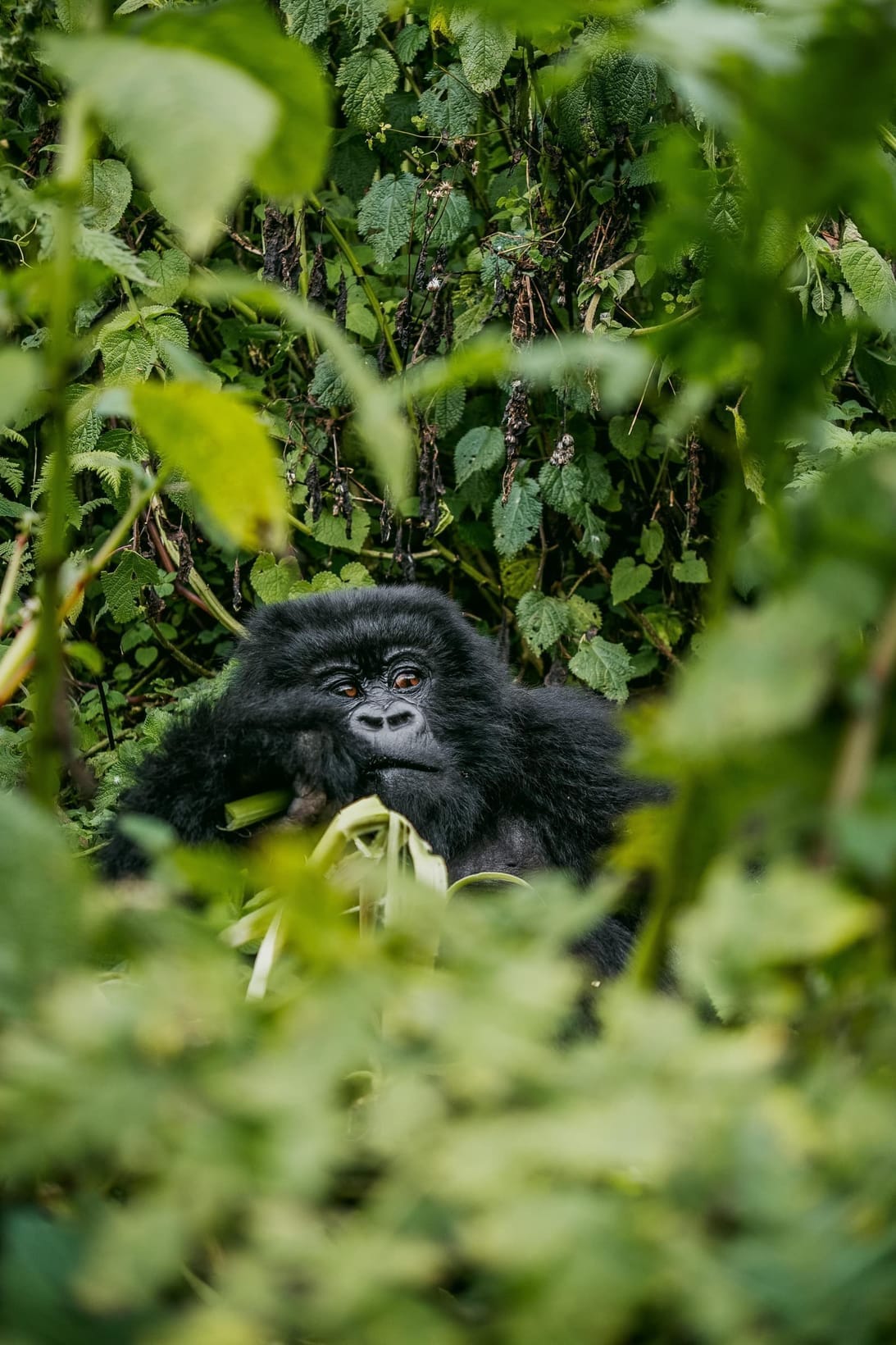
Short answerThe Gorilla Habituation Experience gives you 4 hours with a gorilla family still being habituated, in a group of 4 visitors, alongside the researchers doing that work. It costs $1,800 against $800for a standard permit, and it exists only in Bwindi's Rushaga and Nkuringo sectors.
One hour with a gorilla family is the global standard, and for good reason — it limits stress on the animals and disease transmission risk. Uganda offers one exception, and it is genuinely unusual: four hours, with a family that is still being taught to tolerate people.
This guide explains what that actually involves and, more usefully, who should and should not pay for it.
What habituation actually is
Wild gorillas avoid humans. Turning a wild family into one that can be visited takes two to three years of trackers and researchers approaching daily, a little closer each time, until the group treats human presence as unremarkable background.
The Habituation Experience places you inside that ongoing process. You go out with the research and tracking team, and you are there while the work happens. The family is part-way along the curve: not wild-shy, not fully settled either.
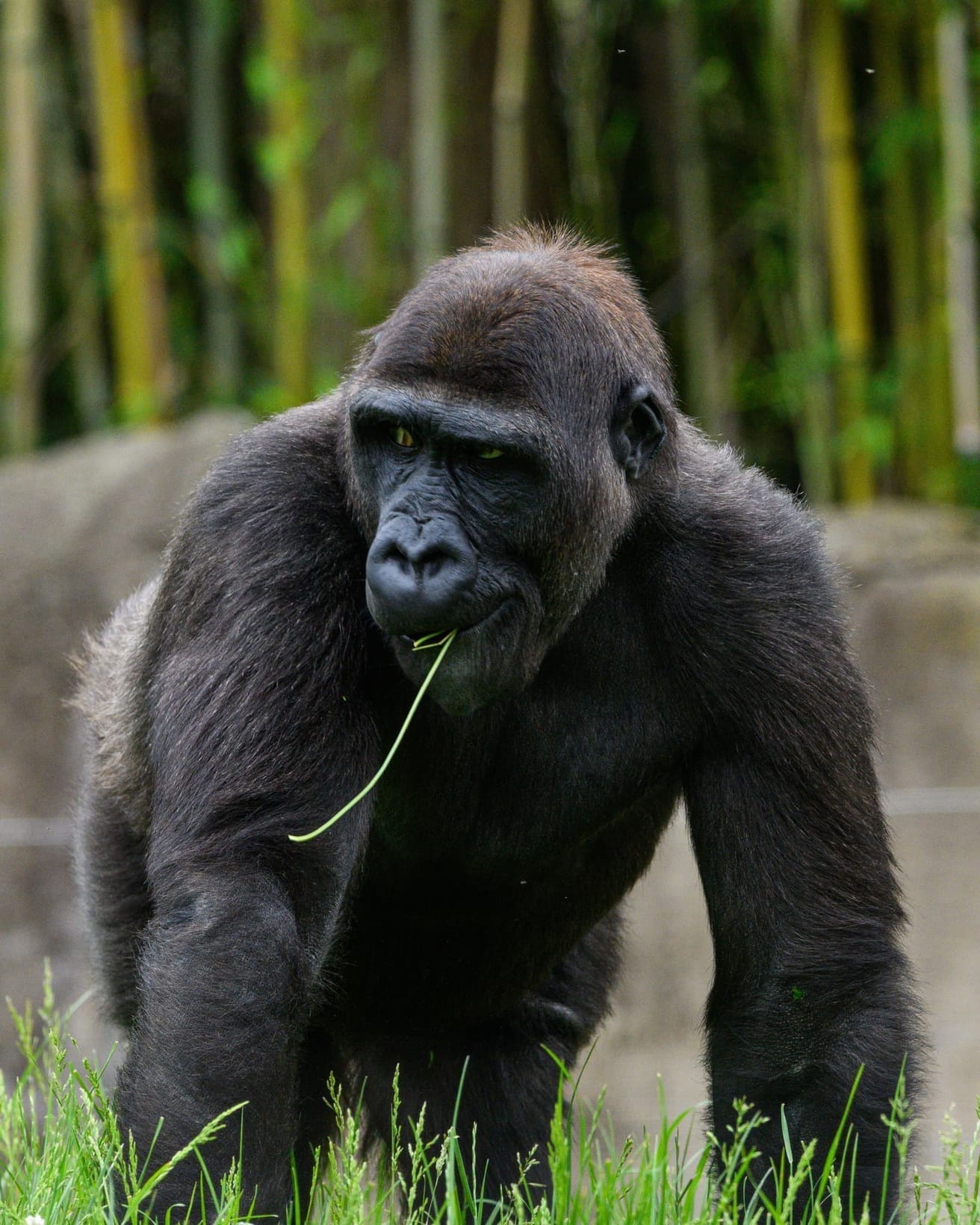 Habituation is measured in the years it takes a group to feed calmly this close to people
Habituation vs a standard trek
| Habituation Experience | Standard trek | |
|---|---|---|
| Time with the family | 4 hours | 1 hour |
| Group size | 4 visitors | 8 visitors |
| Permit cost | $1,800 | $800 peak / $600 low |
| Where | Rushaga and Nkuringo only | All four Bwindi sectors, Mgahinga, Rwanda, DRC |
| Family status | Semi-habituated, still in process | Fully habituated |
| Who you're with | Researchers and trackers | Rangers and trackers |
| Typical day length | Full day | Morning, sometimes into the afternoon |
| Sighting predictability | Lower | Higher |
What the four hours are like
The day starts as any trek does: an early briefing at the sector headquarters, then out with the team. Tracking may take longer than on a standard trek because the family is less predictable in its ranging.
Once you are with them, the difference becomes obvious around the forty-minute mark. On a standard trek that is when you start thinking about the clock. Here, you have barely begun — and what happens next is the actual point of the exercise.
People stop photographing. The family stops being a subject and starts being a group of individuals with relationships you can follow: which juvenile is pestering which adult, where the silverback positions himself, how the group moves as a unit when it decides to feed elsewhere. That shift almost never happens in an hour.
Is it worth double the price?
The comparison worth making is not habituation versus one standard trek. It is habituation versus two standard treks, which cost about the same.
| One habituation permit | Two standard permits | |
|---|---|---|
| Total time with gorillas | 4 hours, one family | 2 hours, two different families |
| Group size | 4 people | 8 people each time |
| Days used | One long day | Two mornings |
| Variety | One family, deeply | Two families, two sectors possible |
| Second chance if weather is bad | No | Yes — a washout on day one isn't fatal |
| Physical demand | One hard day | Two moderate days |
There is no universally right answer, but there is a pattern: people who want depth choose habituation, people who want insurance against a bad day choose two treks. Our comparison of permit prices and what they pay for goes further into the economics.
Who it suits — and who it doesn't
Good fit:
- Second or third-time gorilla visitors who found an hour frustrating
- Serious wildlife photographers who need time for behaviour, not portraits
- Anyone specifically interested in the conservation and research work
- Small groups of four travelling together — you fill the permit exactly
Poor fit:
- First-time visitors on a tight budget — the standard trek delivers the core experience for far less
- Anyone worried about the physical demand; this is a longer, harder day than a standard trek. See fitness and difficulty
- Travellers who need certainty — the semi-habituated family is less predictable
- Anyone on a short trip who would rather see two families in two sectors
Booking and where to stay
Permits are limited by the small group size and go early — treat six to twelve months ahead as normal for peak season. Because the experience runs only from Rushaga and Nkuringo, you sleep in the southern sectors; there is no version of this that works from Buhoma.
| Tier | Properties we book |
|---|---|
| Luxury | Nkuringo Bwindi Gorilla Lodge · Chameleon Hill Lodge · Gorilla Safari Lodge |
| Mid-range | Ichumbi Gorilla Lodge · Gorilla Mist Camp · Bakiga Lodge |
| Budget | Rushaga Gorilla Haven Lodge · Rushaga Gorilla Camp · Broadbill Forest Camp |
Our guides to Bwindi's sectors and where to stay in Bwindi cover the southern sectors in detail.
We book habituation permits alongside the accommodation that matches them. Tell us your dates and we will check availability honestly, including whether two standard treks would serve you better.
The Habituation Experience: common questions
What is the Gorilla Habituation Experience? A permit that lets a small group spend four hours with a gorilla family still undergoing habituation, alongside the researchers and trackers doing that work — rather than the one hour a standard trek allows. It is offered only in the Rushaga and Nkuringo sectors of Bwindi in Uganda, and nowhere else in the world.
How much does the Gorilla Habituation Experience cost? $1,800 per person in Uganda for foreign non-residents, against $800 for a standard peak-season gorilla permit. The premium buys four hours instead of one, a group capped at four visitors instead of eight, and time with the research team. Foreign residents pay $1,500 and East African citizens considerably less.
Is the Gorilla Habituation Experience worth it? For a second-time visitor or a serious photographer, often yes — four hours is enough to stop taking photographs and simply watch, which one hour rarely is. For a first gorilla encounter it is harder to justify: the family is less settled around people, sightings are less predictable, and the standard trek already delivers the core experience.
Where can you do the Gorilla Habituation Experience? Only in the Rushaga and Nkuringo sectors of Bwindi Impenetrable Forest, Uganda. Rwanda does not offer it and neither does DR Congo, which makes it one of the few genuine reasons to choose Uganda over Rwanda for gorillas.
How many people can do the habituation experience at once? Four, against eight on a standard trek. Permits are correspondingly scarce and sell out well in advance in peak season.
Is the habituation experience harder than a normal gorilla trek? Yes, in practice. The family is semi-habituated and may move more and range further, so tracking can take longer. Add four hours with them and it becomes a full, demanding day rather than a morning.
Sources
- Uganda Wildlife Authority — Gorilla Habituation Experience — permits and guidelinesAccessed 28 Jul 2026