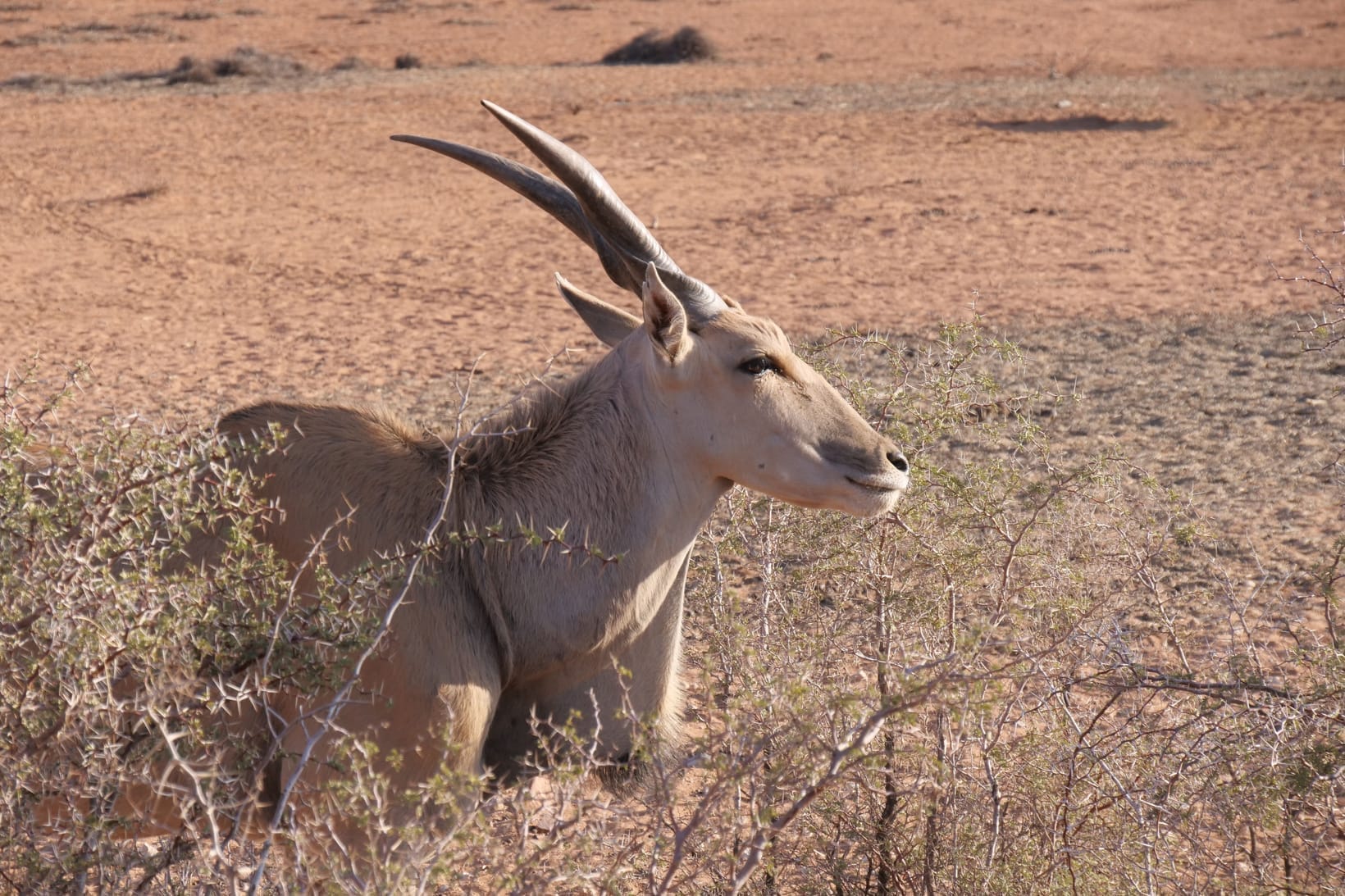
Short answerUganda holds a wide range of antelope, from the 500 kg-plus eland down to duikers the size of a spaniel. The Uganda kob is the national antelope and appears on the coat of arms. Impala occur in Lake Mburo and nowhere else in the country — which makes Mburo the best single park for antelope variety.
Antelope are the animals everyone drives past. They are also most of what you will actually see, they are what the predators eat, and knowing a topi from a hartebeest turns a monotonous plain into a legible one.
This is a field guide to Uganda's antelope, organised by size — which is how you will actually identify them from a vehicle. For the wider picture see African safari animals.
Why antelope are worth learning
Three reasons. They are the base of the predator economy, so knowing what is around tells you what might be hunting it. They are extremely varied in behaviour — some territorial, some herding, some solitary and secretive. And several of Uganda's are found in only one or two parks, which makes seeing them an actual achievement rather than a default.
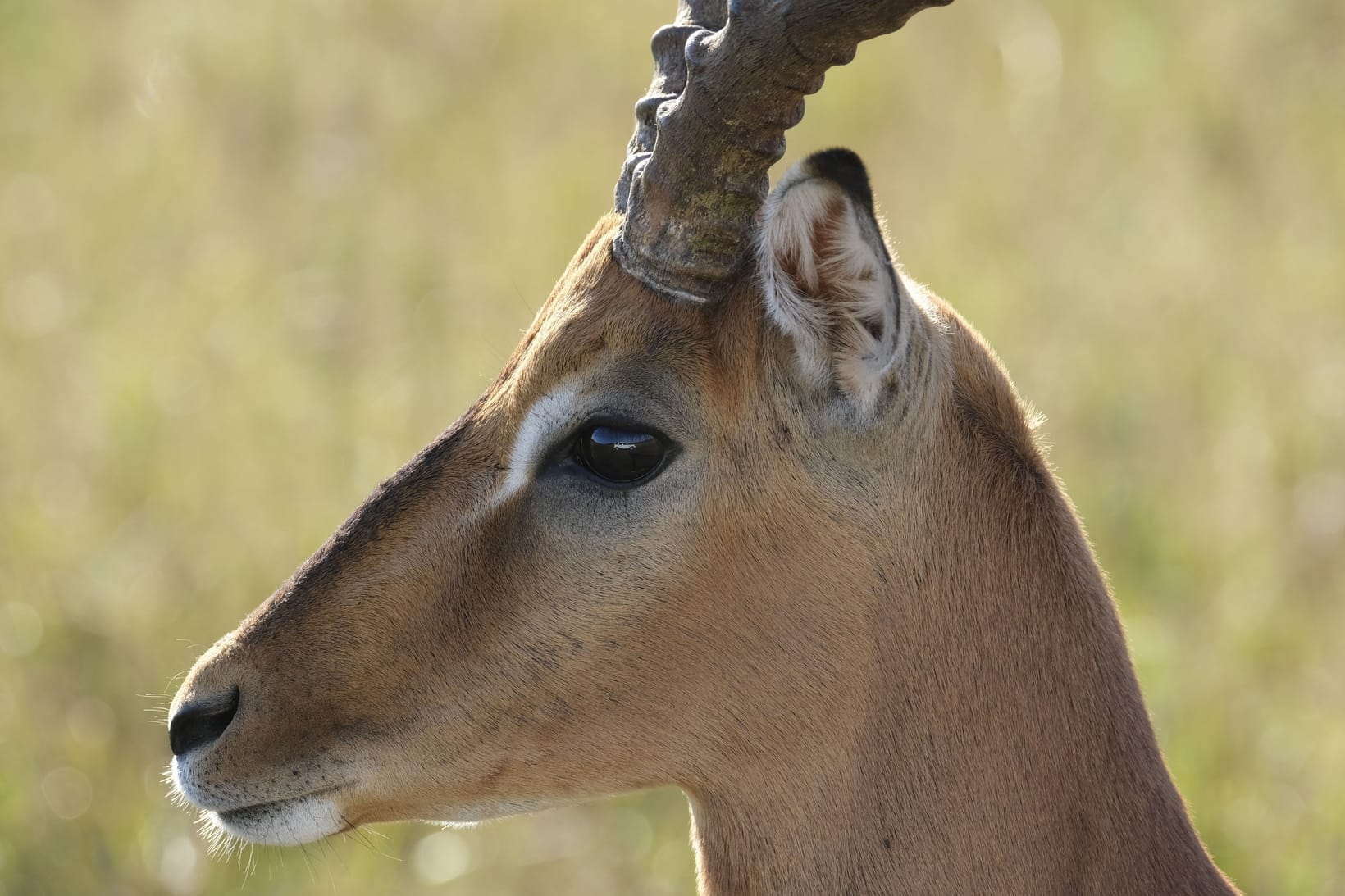 The Uganda kob appears on the country's coat of arms
The large antelope
| Species | How to know it | Where |
|---|---|---|
| Common eland | Africa's largest antelope. Ox-like, dewlap, spiral horns on both sexes. | Lake Mburo, Kidepo |
| Defassa waterbuck | Large, shaggy, greyish. Males have long forward-curving horns. | Queen Elizabeth, Murchison, Lake Mburo |
| Jackson's hartebeest | High shoulders, sloping back, oddly long face, angular horns. | Murchison, Kidepo |
| Topi | Rich reddish-brown with dark purplish patches on the thighs. Often stands on termite mounds. | Lake Mburo, Queen Elizabeth (Ishasha), Kidepo |
| Greater kudu | Grey with vertical white stripes; enormous spiral horns on males. | Kidepo — scarce in Uganda |
| Roan antelope | Large, reddish-grey, distinct black-and-white face pattern. | Kidepo — rare |
Our dedicated post on Jackson's hartebeest covers the disputed origin of that particular animal.
The mid-sized ones
| Species | How to know it | Where |
|---|---|---|
| Uganda kob | The national antelope. Golden-brown, lyre-shaped horns on males; gathers on breeding grounds called leks. | Queen Elizabeth (Kasenyi), Murchison |
| Impala | Sleek, rufous, black 'M' on the rump. Spectacular leapers. | Lake Mburo only |
| Bushbuck | Chestnut, white spots and stripes, solitary and shy. Forest and thicket edges. | Widespread but rarely obvious |
| Bohor reedbuck | Sandy-brown, forward-hooked horns on males, in wet grassland. | Murchison, Queen Elizabeth |
| Sitatunga | Swamp antelope with splayed hooves for floating vegetation. Semi-aquatic. | Mabamba Swamp, papyrus fringes |
The Uganda kob is worth pausing on. It is on the national coat of arms, and its breeding system is unusual — males hold tiny territories on a communal display ground while females move between them. The Kasenyi plains in Queen Elizabeth are the classic place to watch it, and our Uganda kob facts post goes further.
The small and secretive
- Oribi — small, sandy, upright posture, usually in pairs on open grassland. Murchison and Kidepo.
- Duikers — several species, small and forest-dwelling, named for their habit of diving into cover. Bwindi, Kibale, Semuliki. Almost always a fleeting glimpse.
- Klipspringer — tiny, stands on the very tips of its hooves, lives on rocky outcrops. Kidepo and rocky country.
- Bush duiker and blue duiker — the ones you will see on a Kibale night walk rather than a game drive.
How to tell them apart
Four questions, in order, will identify almost any antelope you see in Uganda:
- How big is it? Eland and waterbuck are large; kob and impala mid-sized; oribi and duikers small.
- What is the rump doing?White ring means waterbuck. Black “M” means impala. Rump markings are the single most reliable field character at distance.
- What shape are the horns, and who has them? Both sexes on eland; males only on most others. Lyre-shaped on kob, angular on hartebeest, spiralled on kudu.
- Where is it standing? Swamp means sitatunga. Rocks mean klipspringer. Termite mound in open grass, very often topi.
Where to see what
| Park | What it delivers |
|---|---|
| Lake Mburo | The best variety in one place — and the only impala in Uganda. You can walk among them. |
| Kidepo Valley | Dry-country specialists: greater kudu, roan, klipspringer, eland. |
| Murchison Falls | Uganda kob and Jackson's hartebeest in numbers on the Buligi plains. |
| Queen Elizabeth | Kob leks at Kasenyi; topi in the Ishasha sector. |
| Mabamba Swamp | Sitatunga, alongside the shoebill. |
| Forest parks | Duikers, and the occasional bushbuck at the trail edge. |
For the animals that eat them, see lion facts, leopard facts and spotted hyena facts. For walking among antelope rather than driving past them, see walking and night safaris in Uganda.
Tell us if the smaller game interests you — it changes which parks are worth the days.
Uganda's antelope: common questions
What is the largest antelope in Africa? The common eland, which can weigh well over 500 kg for a large bull — heavier than many buffalo. Despite the bulk, eland are capable jumpers and remarkably nervous animals, usually moving off long before a vehicle gets close.
What antelope are found in Uganda? Uganda holds a wide range including the Uganda kob (the national antelope, on the coat of arms), eland, waterbuck, bushbuck, topi, Jackson's hartebeest, oribi, reedbuck, duiker, klipspringer, sitatunga and — in Lake Mburo only — impala.
Where can you see impala in Uganda? Lake Mburo National Park, and nowhere else in the country. This is a genuine oddity given how common impala are across East Africa, and it makes Lake Mburo the only place in Uganda to see the antelope that gave Kampala its name.
What is a sitatunga? A swamp-dwelling antelope with splayed, elongated hooves that let it walk on floating vegetation without sinking. They are shy, semi-aquatic and hard to see — Mabamba Swamp and the papyrus fringes of Lake Victoria are among the better chances in Uganda.
What's the difference between a waterbuck and a bushbuck? Waterbuck are much larger, greyish, and males carry long forward-curving horns; the common ellipsen waterbuck has a distinctive white ring on the rump. Bushbuck are smaller, chestnut-brown with white spots and stripes, and far more secretive — usually seen alone at forest edges.
Which Ugandan park is best for antelope? Lake Mburo for variety in a small area — impala, eland, topi, bushbuck and the rest, and it is one of the few parks where you can walk among them. Kidepo Valley for the dry-country species, and Murchison for Jackson's hartebeest and Uganda kob in numbers.
Sources
- Uganda Wildlife Authority — Uganda's national parks — wildlife checklistsAccessed 28 Jul 2026