Short answerThe Maasai are a Nilotic pastoralist people of southern Kenya and northern Tanzania — around 1.2 millionin Kenya alone, with a comparable population in Tanzania. They speak Maa, they are cattle herders, and their territory overlaps almost exactly with the region's most famous national parks. That overlap is the whole story.
The Maasai are probably the most photographed people in Africa and among the most misrepresented. Most of what circulates is either a tourist-brochure version — red cloth, jumping, spears — or a museum version that treats a living society as a survival from the past.
This is an attempt at the actual picture, including the parts that are uncomfortable for the safari industry.
Who the Maasai are
| Detail | |
|---|---|
| Where | Southern Kenya and northern Tanzania |
| Population, Kenya | around 1.2 million |
| Language | Maa — an Eastern Nilotic language |
| Livelihood | Semi-nomadic cattle pastoralism |
| Social structure | Age-sets, clans, and elders' councils |
| Homestead | Enkang or manyatta — a thorn-fenced circle of houses |
| Associated parks | Maasai Mara, Amboseli, Serengeti, Ngorongoro, Tarangire |
They arrived in the Rift Valley from the north over several centuries, moving south with their herds. By the nineteenth century Maasai territory stretched across most of the grasslands that are now the region's flagship parks — which is precisely why the two overlap today.
Cattle, and why everything runs through them
Cattle are not simply livestock. They are wealth, social standing, bridewealth, food, and the organising fact of the calendar — where a family moves, and when, is decided by grass and water.
Traditional diet centres on milk, with meat at ceremonies and blood drawn from living animals for the sick, for new mothers and at specific occasions. That last detail is the one every guidebook leads with; in practice most Maasai today eat a much broader diet, and maize meal is a staple.
The age-set system
Maasai men move through life in cohorts rather than as individuals. A group of boys is initiated together, becomes moran together, and graduates to junior and then senior elder together, decades later. Each age-set has a name and an identity that lasts a lifetime.
Moranhood is what visitors have heard of — the warrior grade, historically responsible for defending herds and territory. It is worth being clear that this has changed enormously. Lion hunting as a rite of passage has been formally discouraged and largely replaced, in several areas by conservation programmes that employ young men as wildlife monitors instead.
Women have their own parallel structures of seniority, and elders' councils remain the mechanism for resolving disputes and allocating grazing.
Dress, beadwork and the shuka
The shuka is the wrapped cloth — frequently red, but blue, purple, striped and checked are all common. Red is widely held to deter predators and carries its own significance. The cloth itself is comparatively modern; earlier dress used treated hides.
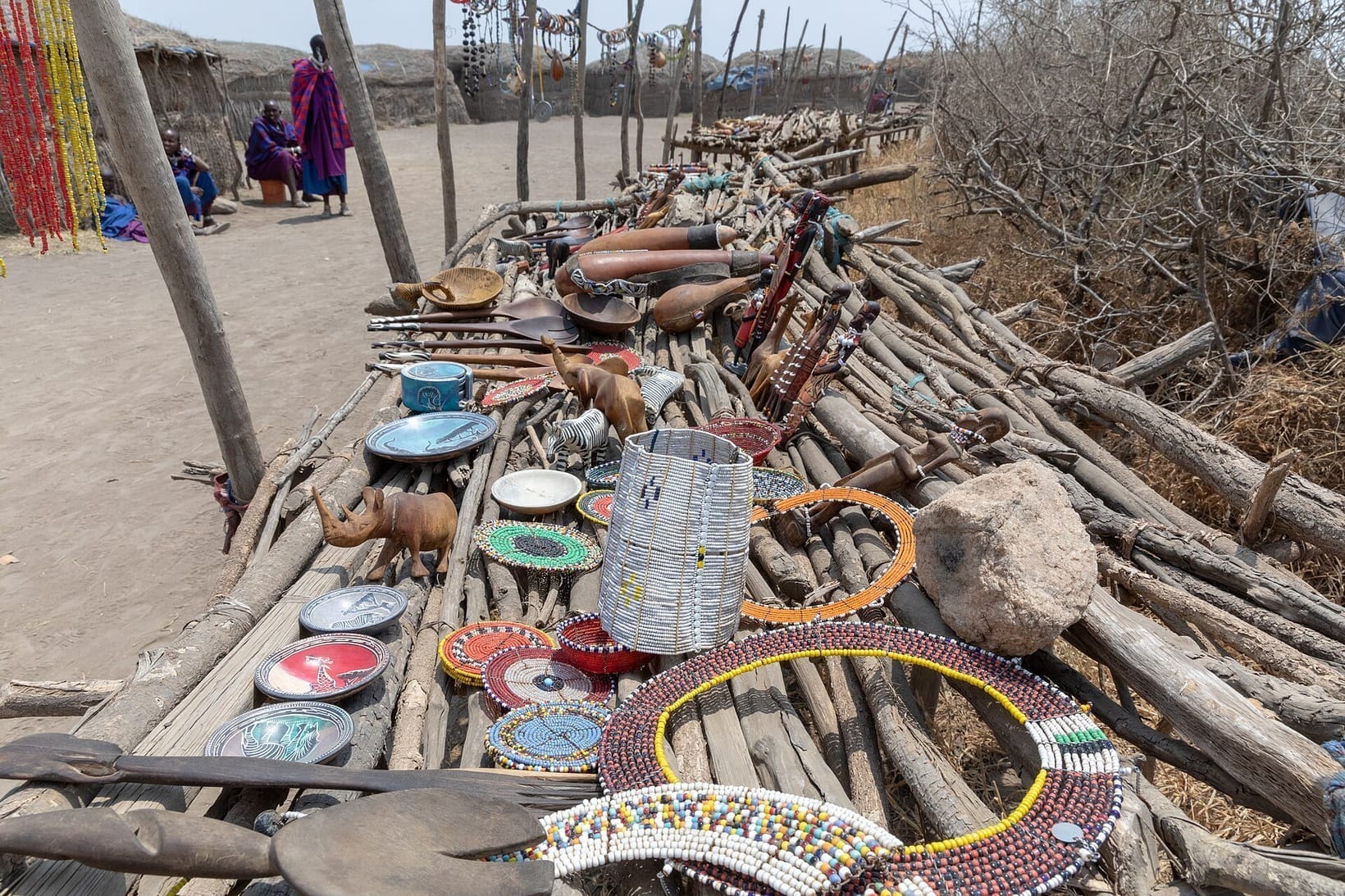
Beadwork is the more interesting system. Colours and patterns encode information — age, marital status, social standing — and the work is done by women. What is sold at markets and lodges is real craft rather than a tourist invention, though quality and provenance vary.
The adumu, the jumping dance, is performed by morans at ceremonies. It is genuine, and it is also the single most staged thing in East African tourism.
The land question
This is the part usually left out, and it is the reason the Maasai are so entangled with safari tourism.
Colonial-era agreements in the early twentieth century moved Maasai off much of the best grazing in the Kenyan highlands. Through the twentieth century the creation of national parks removed more — Maasai were excluded from areas including Amboseli and the Serengeti, land they had grazed for generations.
The parallel in Uganda is the Batwa, evicted from Bwindi and Mgahinga in 1991 when the forests became national parks — see the Batwa, Uganda's forest people. The pattern of conservation displacing the people who lived alongside the wildlife is not unique to Kenya.
Conservancies — the modern arrangement
The most significant recent development, and one that directly affects where you stay. The private conservancies bordering the Maasai Mara are land leased from Maasai landowners, who receive payment in return for keeping it as wildlife habitat rather than fencing or cultivating it.
| National Reserve | Conservancy | |
|---|---|---|
| Land ownership | Government | Maasai landowning families |
| How communities benefit | Via park revenue distribution | Direct lease payments |
| Vehicle numbers | Uncapped | Capped per camp |
| Night drives and walking | Not permitted | Generally permitted |
| Cost to you | Lower | Higher — a conservancy fee on top |
Visiting respectfully
Village visits are widely offered and vary enormously in quality. What separates a good one from a bad one:
- Ask who receives the fee. A community enterprise and a performance staged for a lodge are different things.
- Go with a guide who knows the community, not one delivering a coach to a fixed stop.
- Ask before photographing anyone. Always, and accept no as an answer.
- Buy beadwork directly if you buy it, and pay properly.
- Ask questions rather than taking pictures. The people you are meeting have views on tourism, land and conservation, and are rarely asked for them.
- Do not treat it as a museum. This is a contemporary society with phones, schools, elections and disagreements.
For where the Maasai sit relative to the parks, see our guides to the Maasai Mara, Amboseli and Ngorongoro. For planning a trip around them, see planning a safari in Kenya.
Tell us if cultural depth matters to you — it changes which conservancies and which guides we use, and it is not something most operators ask about.
The Maasai: common questions
Who are the Maasai? A Nilotic pastoralist people of southern Kenya and northern Tanzania, numbering around 1.2 million in Kenya alone according to the 2019 census, with a comparable population in Tanzania. They speak Maa, they are semi-nomadic cattle herders, and their territory overlaps almost exactly with the region's most famous national parks.
What language do the Maasai speak? Maa, an Eastern Nilotic language — which is where the name Maasai comes from. Most Maasai today also speak Swahili and often English, particularly younger people and anyone working in tourism or towns.
Do the Maasai really drink cattle blood? Blood mixed with milk is a traditional food, drawn from a living animal without killing it and used particularly for the sick, for new mothers and at ceremonies. It is not an everyday meal for most Maasai today, and diets have broadened considerably — maize meal and other staples are now common.
What is a Maasai warrior called? A moran. Moranhood is an age-grade rather than a job — young men enter it together as a cohort after initiation and pass out of it together years later, becoming junior elders. The role has changed enormously, and today's morans are as likely to be in school or employment as guarding cattle.
Why do the Maasai wear red? The shuka — the wrapped cloth most visitors associate with the Maasai — is often red, which is held to deter predators and carries cultural significance. In practice you will see blue, purple, striped and checked cloth just as often. The cloth itself is a relatively modern material; earlier dress used hides.
Can you visit a Maasai village? Yes, and many lodges and conservancies arrange it. The quality varies enormously — some visits are genuine community enterprises with money going to the households involved, others are staged performances. Ask who receives the fee, go with a guide who knows the community, and ask before photographing anyone.
Sources
- Kenya National Bureau of Statistics — 2019 Kenya Population and Housing CensusAccessed 29 Jul 2026
- UNESCO World Heritage Centre — Ngorongoro Conservation Area — multiple land use and pastoralismAccessed 29 Jul 2026