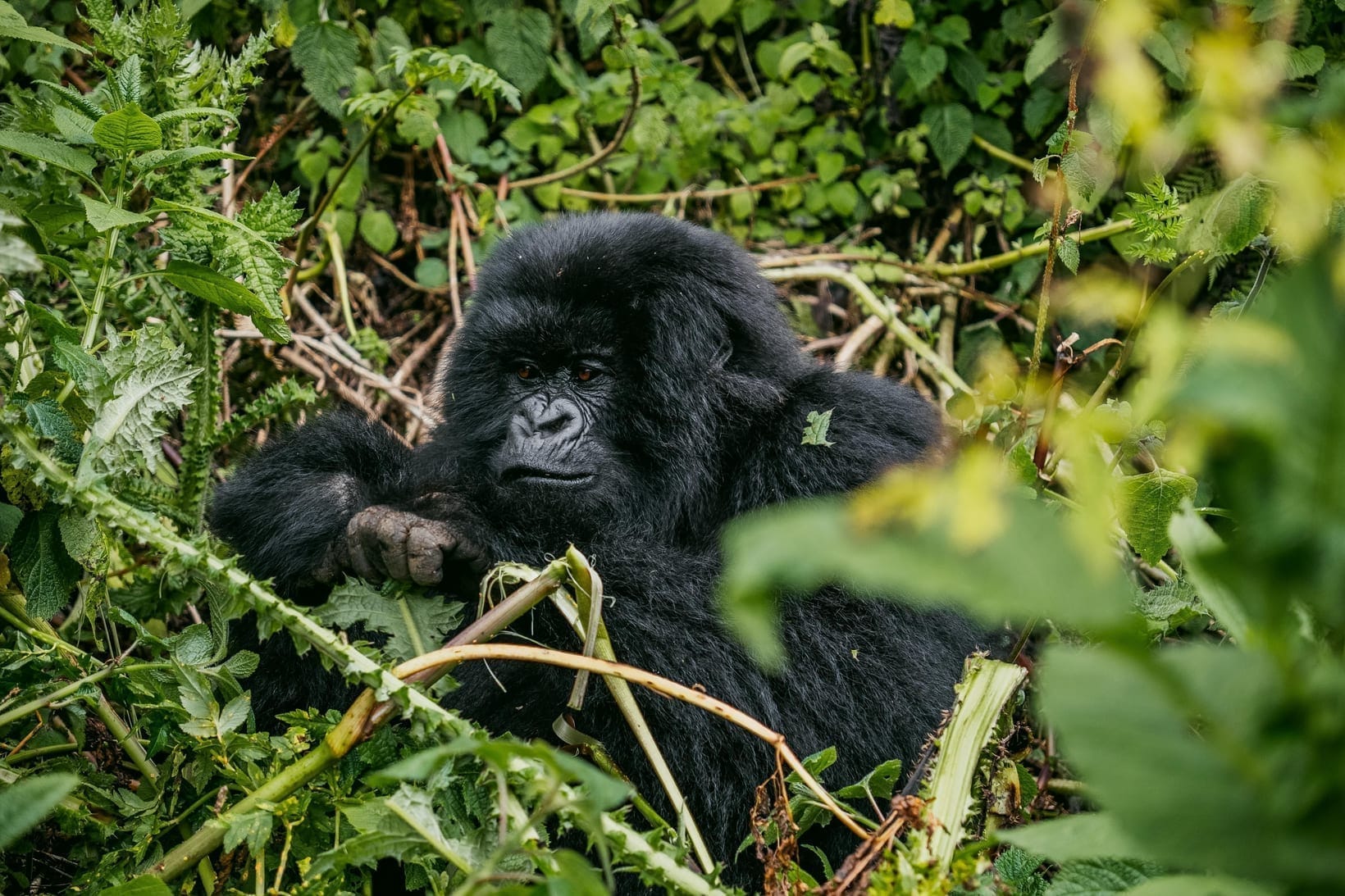
Short answerBook six to twelve months ahead for peak season. Each habituated gorilla family takes only 8 visitors per day, so national daily supply is small and fixed. Book the permit first, then the lodge — the permit names a sector, and a lodge in the wrong sector can be two to four hours from your briefing point.
Gorilla permits are the one element of an East African trip where supply genuinely runs out, and where booking in the wrong order costs real money. This guide covers how the system works, what is negotiable, and what is not.
For what the permit costs and what the fee funds, see gorilla permit prices explained.
Why permits are scarce
The arithmetic is simple and unforgiving. Each habituated family accepts 8 visitors per day, for 1 hour. Multiply by the number of habituated families and you have the entire daily capacity of a country.
There is no surge capacity. Nobody can add a slot because you are willing to pay more. The caps exist to protect the animals — see the rules and why they exist — and they are not commercial decisions that can be flexed.
| Permit | Price |
|---|---|
| Uganda — standard, peak season | $800 |
| Uganda — standard, low season | $600 |
| Uganda — Gorilla Habituation Experience | $1,800 |
| Rwanda — Volcanoes National Park | $1,500 |
| DR Congo — Virunga National Park | ~$400 |
How far ahead to book
| When you're travelling | Book by | Notes |
|---|---|---|
| Jun–Sep, Dec–Feb (peak) | 6–12 months ahead | The busy windows. The Habituation Experience goes earliest of all. |
| Mar–May (heaviest rain) | 3–6 months ahead | Widest availability, lowest permit price in Uganda. |
| Sep–Nov (shorter rains) | 4–8 months ahead | The value window — decent availability without the worst mud. |
| Any season, group of 4+ | As early as possible | Consecutive slots on one family for a group are the hardest thing to find. |
Who can buy direct, and who cannot
This is not a matter of preference in Uganda. It is set by the rules, and it differs by country and by your residency status.
| You are | Uganda (UWA) | Rwanda (RDB) |
|---|---|---|
| Foreign non-resident | Licensed tour operator only — no direct sale | Direct booking available |
| Rest of Africa | Licensed tour operator only — no direct sale | Direct booking available |
| Foreign resident in-country | Direct with UWA, at a reduced rate | Direct booking available |
| East African citizen | Direct with UWA, at the EAC rate | Direct booking available |
So if you are visiting Uganda from overseas the question is not whether to use an operator but which one, and the permit line in your quote should match the government rate exactly. Details in can you book a gorilla permit yourself. For Rwanda, direct booking is possible — the reason most people still do not is the sequencing problem below.
The order things must happen in
This is the part that costs people money when they get it wrong.
- Fix your dates. Everything else keys off them.
- Secure the permit. It is the scarcest thing and it names a sector.
- Note the sector. Buhoma, Ruhija, Rushaga or Nkuringo — see Bwindi's sectors compared.
- Book accommodation in that sector. Per where to stay in Bwindi.
- Build the rest of the trip around that fixed point.
Last-minute permits: what's actually possible
Cancellations do occur and permits do occasionally come back into the system. If you are already in the region with flexible dates, it is worth asking. Rushaga is the best bet simply because it holds more habituated families than any other sector.
What is not realistic is planning a trip on the assumption that a permit will appear. In peak season it very often does not, and you will have flown a long way for a trip built around something you could not get.
If you have limited notice and it must happen, the honest options are: travel in the low season, be flexible on sector, be flexible on date, or consider Rwanda — where the higher price means demand is thinner even when Uganda is full.
Cancellations, changes and refunds
Policies differ between Uganda and Rwanda and have changed within recent tariff cycles, so anything stated definitively online — including here — should be confirmed at the time you book. The durable principles:
- Treat a permit as substantially non-refundable once purchased.
- Date changes are discretionary, usually need notice, and may carry a fee.
- Full payment at booking is increasingly the norm rather than a deposit.
- Not seeing gorillas does not generally trigger a refund — success rates are high but the permit buys the attempt.
- Illness on the day is not usually refundable either, which matters given you must not trek with a cold.
The practical conclusion is the same in every case: buy travel insurance that covers cancellation and curtailment, and read what it actually covers. It is the only mechanism that protects a four-figure permit.
Booking checklist
- Dates fixed, with a day of slack either side if possible
- Decided Uganda or Rwanda — see Uganda vs Rwanda for gorilla trekking
- Decided standard trek or the Habituation Experience
- Everyone in the party is at least 15 years
- Passport details ready — permits are issued against them and checked at the briefing
- Permit secured, sector noted
- Accommodation booked in that sector
- Travel insurance covering cancellation, curtailment and trekking
- Fitness discussed honestly — see fitness and difficulty
We secure permits first and build the itinerary around the sector we are issued, which is the only order that reliably works. Send us your dates and we will tell you what is genuinely available rather than what we would like to sell you.
Booking permits: common questions
How far in advance should you book gorilla permits? Six to twelve months for peak season — June to September and December to February. Three to six months is usually workable in the low season. The binding constraint is that each habituated family takes only eight visitors a day, so daily supply across the whole country is small and fixed.
Can you book gorilla permits yourself? It depends on the country and your residency. For Uganda, no — the UWA Conservation Tariff for 2026–2028 states that gorilla and chimpanzee permits for foreign non-residents and Rest-of-Africa visitors can only be booked through licensed tour operators. East African citizens and foreign residents in Uganda can deal with UWA directly. Rwanda's permits are sold by the Rwanda Development Board and can be arranged directly. Either way the permit price is fixed and identical.
Can you get a last-minute gorilla permit? Sometimes. Cancellations happen, and Rushaga has more habituated families than any other sector so it is the most likely place to find one. But it is genuinely unreliable, especially in peak season, and building a trip around the hope of a last-minute permit is not a plan.
Can you get a refund on a gorilla permit? Partially, sometimes, depending on how far ahead you cancel and the current policy of the issuing authority — and rules differ between Uganda and Rwanda. Treat a permit as substantially non-refundable once bought, and take travel insurance that covers cancellation and curtailment.
Can you change the date of a gorilla permit? Sometimes, at the authority's discretion and usually with notice and a fee. It is never guaranteed, and in peak season there may simply be no alternative date with availability. Do not book assuming you can move it.
Do you pay for a gorilla permit in full at booking? Increasingly yes — Uganda moved to requiring full payment at booking rather than a deposit. Confirm the current terms when you book, since this has changed within recent tariff cycles.
Sources
- Uganda Wildlife Authority — Gorilla permits — booking, tariffs and conditionsAccessed 28 Jul 2026
- Rwanda Development Board — Volcanoes National Park — permit bookingAccessed 28 Jul 2026