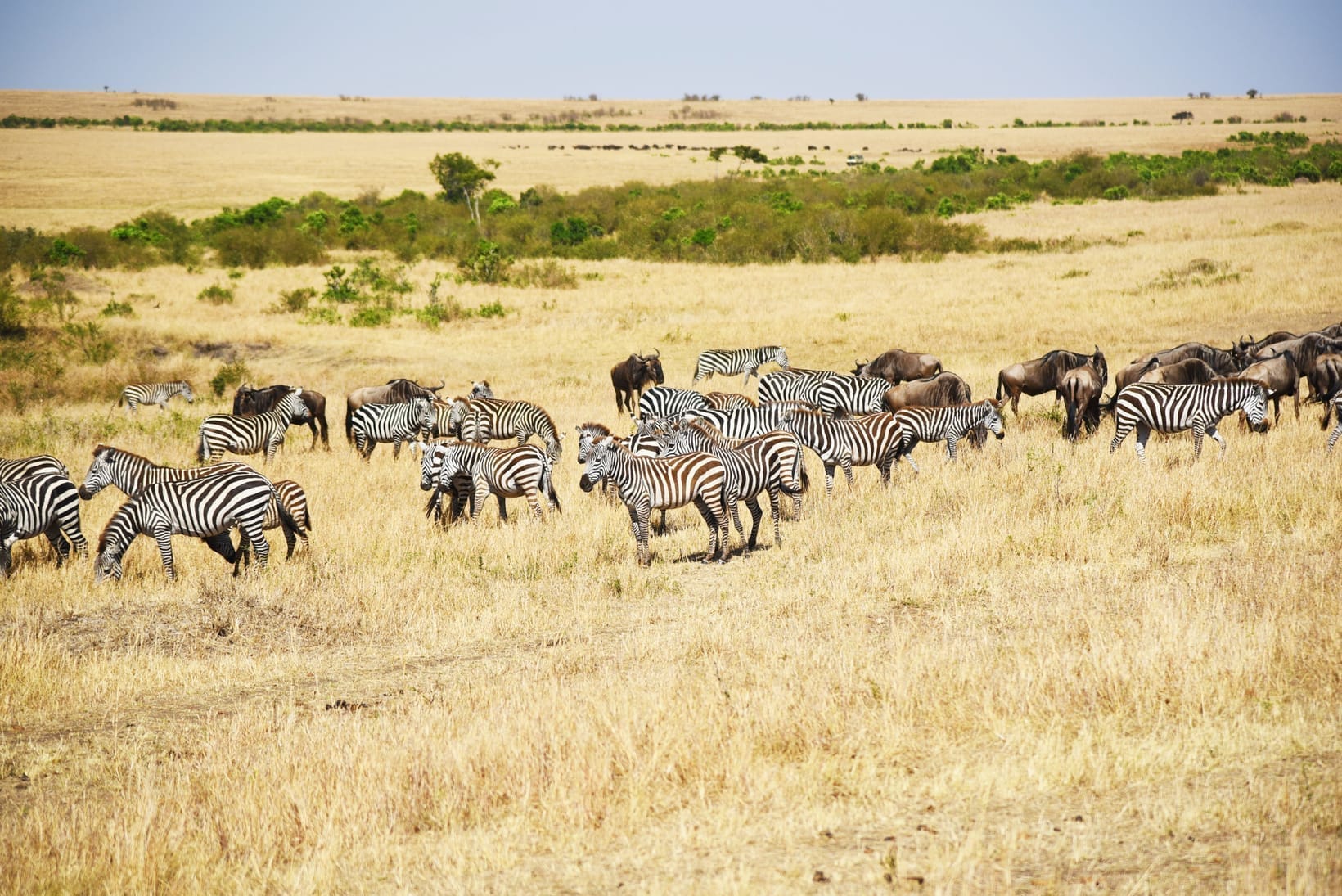
Short answerThe Serengeti is ~14,750 km² — vast enough that which region you stay in matters more than the park itself. Southern plains for calving around late January to March, central Seronera for year-round predators, north for the Mara River crossings July to October. A UNESCO World Heritage Site since 1981.
The Serengeti is the benchmark against which other savanna is measured, and the mistake most first-time visitors make is treating it as a destination rather than a region. Booking “the Serengeti” without deciding which part is like booking “Scotland”.
The scale of the place
~14,750 km²inside the national park boundary, and the ecosystem it belongs to is far larger — continuing north into Kenya's Maasai Mara and south into the Ngorongoro Conservation Area.
Practically, that means driving from the southern plains to the northern Mara River is a full day inside a single park. Internal flights between airstrips are common and often the sensible choice.
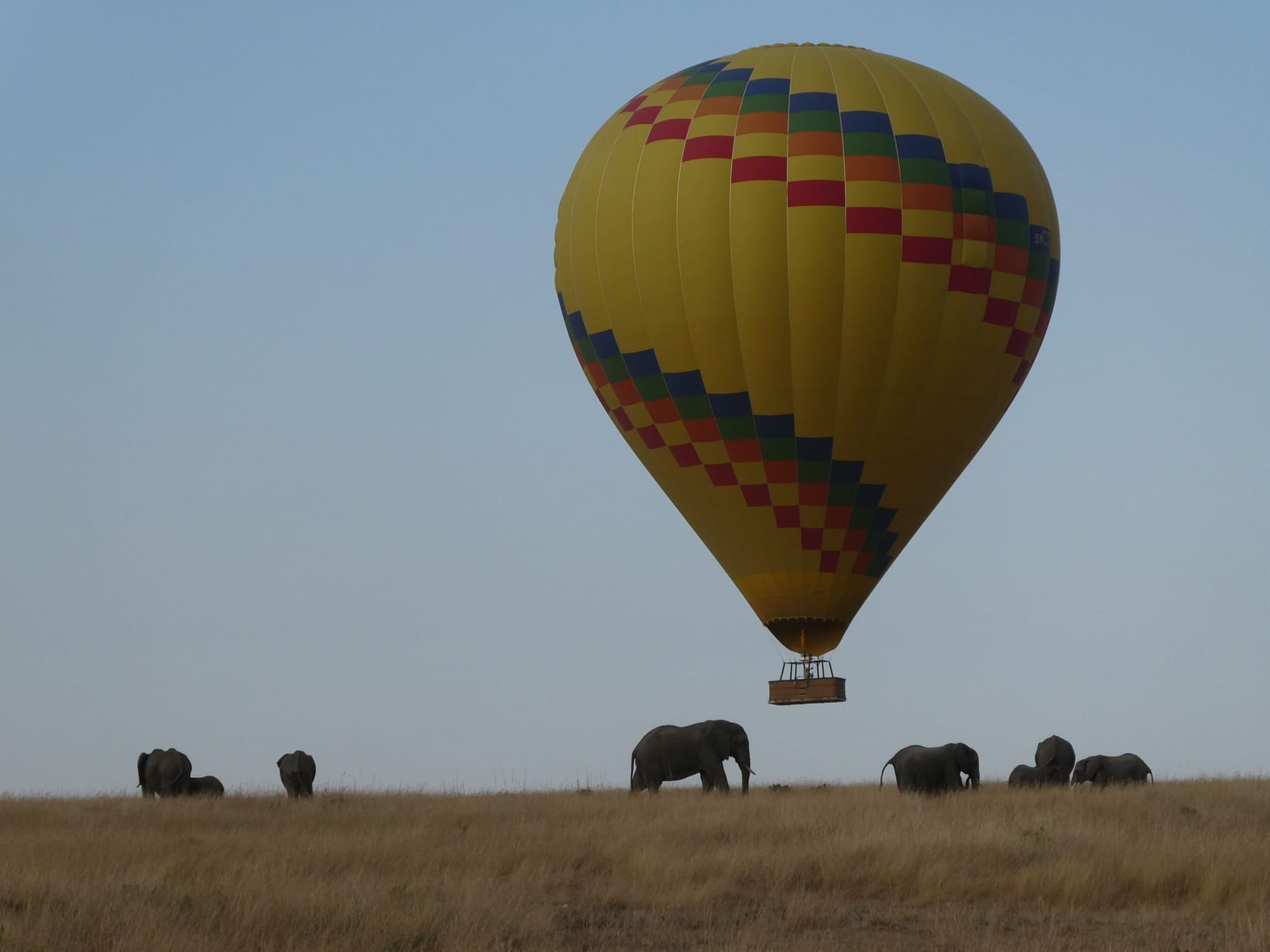 Balloon flights launch at first light, before the wind gets up
The Serengeti is several places
| Region | Character | Best for |
|---|---|---|
| Southern plains / Ndutu | Short-grass plains, treeless, enormous horizons | Calving season and concentrated predator action, late Jan–Mar |
| Seronera (central) | Kopjes, river valleys, acacia | Year-round resident game; the most reliable big-cat area |
| Western Corridor | Grumeti river, riverine forest | Grumeti crossings around June; fewer visitors |
| Northern Serengeti (Kogatende) | Rolling hills, the Mara River | River crossings Jul–Oct, with far fewer vehicles than the Mara side |
| Loliondo / eastern | Remote, wild, minimal infrastructure | Travellers who want emptiness above all |
Where to be, and when
| When | Stay | Why |
|---|---|---|
| Dec–Mar | Southern plains / Ndutu | Herds on the short grass; calving from late January |
| Apr–May | Seronera | Long rains, herds moving; quiet and cheap |
| Jun | Western Corridor | Grumeti crossings, rutting season |
| Jul–Oct | Northern Serengeti | Mara River crossings, fewer vehicles than Kenya |
| Nov | Central / southern | Short rains pulling herds back south |
| Any month | Seronera | Resident predators regardless of the migration |
Our guide to the Great Migration tracks the circuit in more detail.
Wildlife beyond the wildebeest
The migration dominates the marketing and the Serengeti would be a world-class park without it. The resident populations are exceptional in their own right.
- Lion. Among the highest densities anywhere, with prides studied continuously for decades — see lion facts.
- Leopard.The Seronera valley's riverine trees are one of the more reliable places in Africa to find one; see leopard facts.
- Cheetah. The short-grass plains are ideal habitat.
- Spotted hyena. Large, well-studied clans; see spotted hyena facts.
- Elephant, giraffe, buffalo, topi, eland — all abundant.
- Kopje specialists — the granite outcrops hold klipspringer, hyrax and often lion using them as lookouts.
The balloon safari
The Serengeti balloon flight is one of the few expensive add-ons that consistently justifies itself. You lift off before dawn, drift low over the plains as the light comes up, and land to a champagne breakfast in the bush.
What makes it worth it is the perspective — the scale of the plains only resolves from the air, and during the migration the sight of herds strung out beneath you is genuinely different from anything at ground level.
Where to stay
| Tier | Properties we book |
|---|---|
| Luxury | Serengeti Serena Safari Lodge · Lake Ndutu Tented Lodge |
| Mid-range | Serengeti Sopa Lodge · Mbalageti Lodge · Serengeti Kati Kati Tented Camp |
| Budget | Serengeti Mawe Camp · Serengeti Bush Camp |
The Serengeti is classic tented camp country, and mobile camps that relocate seasonally with the herds are the distinctive option here — they put you where the migration is rather than where a building was constructed. Our comparison of lodges and tented camps covers the trade-off.
Planning notes
- Choose the region before the camp. The single most consequential Serengeti decision.
- Three nights minimum, more if you want two regions.
- Consider flying between airstrips rather than losing a day driving north–south.
- Pair it with Ngorongoro — they are adjacent and the crater delivers something the Serengeti does not.
- Book the balloon in advance.
- Consider a mobile camp in migration season.
For how the Serengeti compares with Uganda's parks, see Uganda vs Kenya vs Tanzania, for combining savanna with gorillas, our trip-length guide, and for pairing it with a Kilimanjaro climb, Combining Kilimanjaro and the Serengeti.
See our Serengeti itineraries, or tell us your dates and we will place you in the right region.
The Serengeti: common questions
How big is the Serengeti? Around 14,750 km² for the national park itself, and it forms part of a much larger ecosystem continuing north into Kenya's Maasai Mara and south into the Ngorongoro Conservation Area. It was inscribed as a UNESCO World Heritage Site in 1981.
Which part of the Serengeti should you stay in? It depends entirely on when you go. The southern plains and Ndutu for calving around late January to March; the central Seronera region for reliable year-round predator viewing; the Western Corridor around June; and the north for the Mara River crossings from July to October.
Is the Serengeti better than the Maasai Mara? They are two halves of one ecosystem. The Serengeti is far larger, holds the herds for most of the year including calving, and feels wilder and emptier. The Mara is more compact, has higher predator density per square kilometre, and is where the famous river crossings occur. Your dates should decide.
How many days do you need in the Serengeti? Three nights minimum, and four or five if you want to cover more than one region. The park is vast — driving between the southern plains and the north is a full day — so a short stay means committing to one area.
Can you see the Big Five in the Serengeti? Lion, leopard, elephant and buffalo are all seen regularly, and the Serengeti has one of the highest lion densities in Africa. Rhino are present in small numbers and rarely seen — the Ngorongoro Crater is the more reliable place for black rhino in northern Tanzania.
What does Serengeti mean? It comes from the Maasai word 'siringet', usually translated as 'the place where the land runs on forever' — which is an accurate description of the short-grass plains in the south, where the horizon is genuinely uninterrupted in every direction.
Sources
- UNESCO World Heritage Centre — Serengeti National ParkAccessed 29 Jul 2026
- Tanzania National Parks (TANAPA) — Serengeti National ParkAccessed 29 Jul 2026